Berlin disrupts Kremlin’s plans: Siemens Energy blocks component supply for Turkey’s nuclear plant


By Asif Aydinli
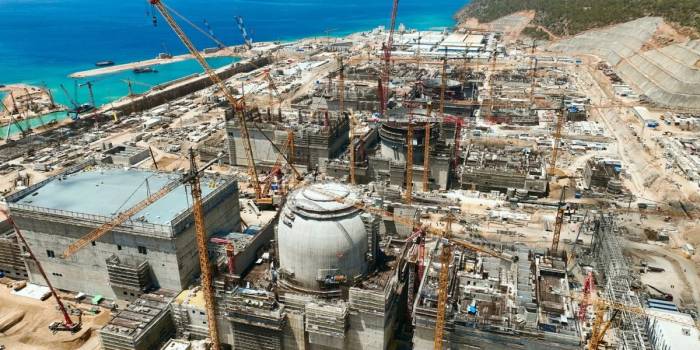
The construction project for Turkey's first nuclear power plant, Akkuyu NPP, involving the Russian state corporation Rosatom, has once again encountered significant obstacles. This time, the issue arises from the decision of the German company Siemens Energy to suspend the delivery of key components needed for the completion of the plant's first power unit. As a result, the reactor's launch, initially scheduled for 2023, has been delayed by several months. This situation reflects not only growing international tensions but also the West's efforts to exert pressure on Russia through economic sanctions.Siemens Energy’s official statement, citing German export regulations as the reason for halting deliveries, comes across as formal and straightforward. However, the true cause lies deeper—in the sanctions imposed by the West in response to Russia's military actions in Ukraine. These restrictions, disguised as formal export control procedures, illustrate how politics and geopolitical interests can directly influence energy projects and, consequently, the energy security of entire nations.
Germany likely sees Akkuyu not merely as an infrastructure project but as a strategic Russian asset used to bolster its position in Turkey and on the international stage. Supporting such a project might be perceived by Germany as indirect collaboration with a regime under sanctions. Therefore, Siemens Energy, while seemingly acting on purely technical grounds, is, in fact, aligning with international efforts to pressure Moscow.
For Turkish President Recep Tayyip Erdoğan, this project is not just about energy security but also political prestige. He aimed to inaugurate the first power unit in 2023, coinciding with the centennial of the Turkish Republic’s founding, turning it into a symbol of the country's technological and energy progress. However, German interference and related delays complicate the fulfillment of this ambitious plan.
Erdoğan has already expressed dissatisfaction to German Chancellor Olaf Scholz , stressing that such delays jeopardize Turkey's energy plans. For him, the Akkuyu NPP is more than just a power plant—it is a symbol of Turkey's sovereign energy policy, which aims to reduce dependence on hydrocarbon imports.
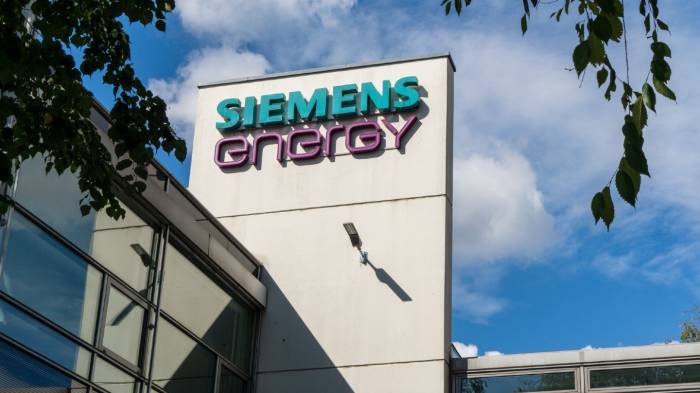
In response to Siemens Energy's refusal, Rosatom has found an alternative in Chinese suppliers. This move demonstrates that Moscow continues to successfully find ways to bypass sanctions. China, in turn, is increasingly stepping into fields traditionally dominated by European and American companies, further expanding its economic and political influence.
The delays at Akkuyu can be seen as part of a larger picture—complex geopolitical maneuvers between Russia, Turkey, and the West. What was meant to symbolize Russian-Turkish energy cooperation is now caught in the middle of a sanctions battle. The West seeks to restrict the export of technologies that could strengthen Russia's position, while Moscow looks for alternative routes through China and other countries.
Siemens Energy's interference in the Akkuyu project is yet another example of how sanctions and international pressure can delay the implementation of large infrastructure projects. Despite Rosatom's confidence in its ability to build nuclear plants independently of the West, real obstacles persist. Nonetheless, Moscow and Ankara, with China's backing, are likely to press ahead with the project, even if it comes with delays.
Thus, the situation at Akkuyu reflects the complexity of today's world, where politics, economics, and geopolitics are intricately intertwined. This project has become a stage for strategic maneuvers, with each party pursuing its interests, and its fate will depend on how international relations unfold in the near future.


Similar news