Black Sea Energy gathers momentum – Now it’s up to the EU


By Tural Heybatov
The 10th meeting of the Ministerial/Steering Committee overseeing the implementation of the Agreement on Strategic Partnership in the Development and Transmission of Green Energy between the governments of Azerbaijan, Georgia, Romania, and Hungary took place in Budapest.
As reported by Azerbaijan’s Ministry of Energy, the country was represented by Energy Minister Parviz Shahbazov, while Hungary was represented by Minister of Foreign Affairs and Trade Péter Szijjártó, Georgia by First Deputy Prime Minister and Minister of Economy and Sustainable Development Levan Davitashvili, and Romania by Minister of Energy Sebastian-Ioan Burduja. In addition to the founding members of the agreement, Bulgaria’s Minister of Energy, Zhecho Stankov, representatives of the European Commission, the joint venture GECO Power Company, and the company CESI also attended the meeting.

Source: Azerbaijan’s Ministry of Energy
The discussions focused on progress in implementing the Caspian–Black Sea–Europe Green Energy Corridor (Black Sea Energy), operational matters of the Green Energy Corridor (GECO) energy company, Bulgaria’s inclusion in the project, the preparation of the feasibility study, and collaboration with the European Union on securing project financing.
Parviz Shahbazov emphasized the proposal to establish two workstreams within the working group in cooperation with GECO and CESI. The first workstream will focus on project business models, conducting preparatory work to engage potential investors and buyers. The second workstream will address technical aspects and ensure compliance with ENTSO-E and other relevant industry standards. The Azerbaijani minister also highlighted the necessity of incorporating the project’s fiber-optic component into the scope of the feasibility study.
Following the discussions, a protocol and a Joint Letter from Azerbaijan, Georgia, Romania, and Hungary were signed and addressed to European Commissioner for Energy, Dan Jørgensen. The letter seeks appropriate support to secure the designation of the Caspian–Black Sea–Europe Green Energy Corridor as a "Project of Common Interest." A formal application for the project’s inclusion in the EU’s Ten-Year Network Development Plan (TYNDP) will be submitted by Transelectrica, the transmission system operator, between April 1 and May 9, 2025.

Source: Azerbaijan’s Ministry of Energy
Additionally, a decision was made to initiate Bulgaria’s accession process to the agreement signed in Bucharest. The next ministerial meeting will take place in Georgia.
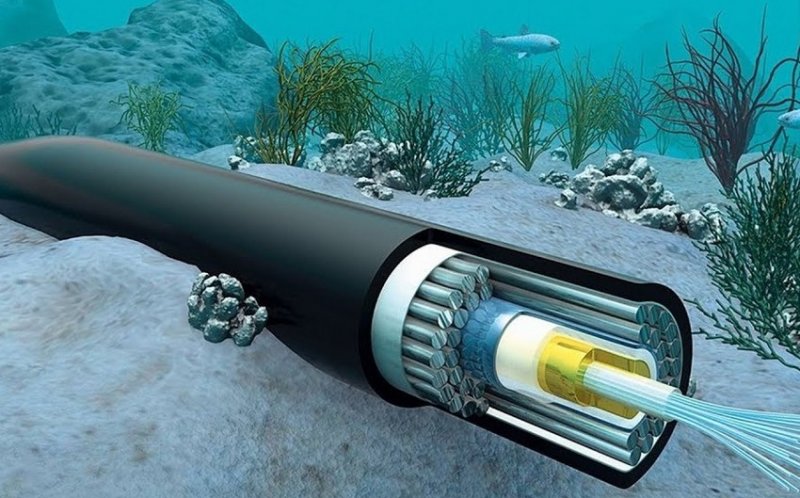
It is worth recalling that on December 17, 2022, Azerbaijan, Georgia, Romania, and Hungary signed a strategic partnership agreement in Bucharest for the construction of the Black Sea Energy submarine power cable, spanning 1,195 km. In May 2024, energy operators from Azerbaijan, Romania, Georgia, and Hungary signed a memorandum to establish a joint venture for the project’s implementation. In September, power distribution companies from the four countries signed an agreement in Bucharest to create a joint production facility that will be part of the project. In June 2023, Bulgaria announced its intention to join the initiative, while Serbia and Moldova have also expressed interest in participating. The Black Sea Energy cable is expected to export up to 4 GW of green energy to Europe annually. The feasibility study is nearing completion.
European policymakers already regard Black Sea Energy as a flagship project under the EU’s Global Gateway strategy, opening doors for EU funding through international cooperation mechanisms. At the end of 2024, project initiators submitted an application for inclusion in the Projects of Mutual Interest list for cross-border energy infrastructure under the TEN-E Regulation. Attaining this status would qualify the project for financial support from the Connecting Europe Facility. Previously, it was noted that the European Commission plans to allocate €2.3 billion for the project, with ongoing consultations currently taking place.
Notably, the Black Sea Energy Cable not only plays a crucial role in regional infrastructure development but also underscores Azerbaijan’s global significance as a country contributing to economic growth and security beyond its immediate region. Furthermore, this project—without the involvement of major world powers—demonstrates that countries with strategic vision can independently play a pivotal role in similar initiatives. Despite shifting geopolitical dynamics, energy security remains a critical issue for Europe.

Source: ABC News
Azerbaijan’s participation in the project, which was originally conceived as a Georgia-Europe link, has paved the way for its further expansion—not only westward but also eastward.
In August 2024, in Astana, the energy ministers of Azerbaijan, Kazakhstan, and Uzbekistan agreed on a Strategic Partnership Agreement for the Development and Transmission of Green Energy between the three nations. By the end of the year, their national electricity companies signed a Founding Agreement to establish the Green Corridor Alliance joint venture. This energy corridor is set to be connected to Black Sea Energy, creating a gateway for Central Asian countries to access Europe’s green energy market.
The resources generated from the interconnection of the three countries’ power systems will have to travel a long way to reach Europe, but the project is undoubtedly worth the effort.


Similar news