BRICS on the brink of change: What to expect from the alliance in the near future - INTERVIEW


News.Az presents an interview with Zhiqun Zhu, PhD, Professor of Political Science and International Relations at Bucknell University. As a distinguished expert on Chinese foreign policy and global geopolitics, Dr. Zhu shares his insights on the significance of BRICS for China, the evolving global power dynamics, and Beijing’s stance on the Russia-Ukraine conflict. In this interview, he reflects on how China navigates international challenges and promotes diplomatic solutions, including its efforts to mediate the ongoing war in Ukraine. Dr. Zhu also addresses China’s role in fostering cooperation beyond the Western-dominated system and offers perspectives on future global cooperation amidst the increasing tensions between the East and the West.

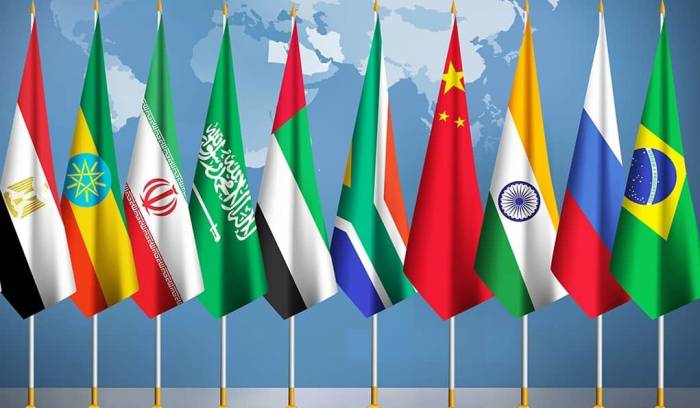
-Russia will host the BRICS Summit of Heads of State from October 22 to 24. The event is expected to bring together leaders from 24 countries, including Chinese President Xi Jinping. How does China perceive BRICS, and why is it important for Beijing to develop cooperation on this platform?
- From the beginning, BRICS has aligned with China’s strategic and economic interests. China views BRICS members as essential actors in the emerging multipolar global system. In essence, BRICS complements the Western-dominated international order, which often fails to reflect the voices and concerns of the Global South.
Given the current high tensions between China and the US-led West, it is natural for China to expand economic and strategic cooperation with non-Western countries, particularly through platforms like BRICS and ASEAN.
- With 24 heads of state participating in the BRICS summit, how does China view the organization’s expansion? What does this mean for BRICS’ influence on global processes?
- The recent expansion of BRICS in 2024 is significant, and further growth is expected. The group is becoming a powerful force in today’s global political economy. Notably, BRICS' combined GDP, based on purchasing power parity (PPP), now exceeds that of the G7—35% compared to 30% of global GDP.
As BRICS' influence grows, Western discomfort is also increasing, given the West’s tendency to frame global politics as a zero-sum game. However, there is no inherent reason for BRICS and G7 countries to view each other as adversaries. Both can collaborate to address global challenges, such as supporting the development of the Global South and ensuring financial stability worldwide.
- Bilateral talks between Chinese President Xi Jinping and Russian President Vladimir Putin are anticipated during the summit. What are the key priorities and mutual benefits of Russian-Chinese cooperation?
- Western pressure and sanctions have drawn Russia and China closer together. The main priorities for both nations are maintaining domestic stability and asserting their global status as major powers, despite Western hostility. High-level meetings between Russia and China typically lead to strengthened political, diplomatic, and economic cooperation, which benefits both countries.
- China has been actively proposing initiatives to resolve the Ukraine conflict. Russia has expressed openness to dialogue, provided its interests are respected, while the West continues to supply weapons to Ukraine, escalating the confrontation. In this context, how does China envision a possible settlement, and what tools could be used?
- The Russia-Ukraine war has caused immense casualties and devastation. The international community’s priority should be to end the conflict and pursue a diplomatic solution. Two BRICS members—China and Brazil—recently led a peace initiative at the United Nations, seeking a resolution with support from countries like South Africa, Indonesia, and Turkey. However, the United States and other Western powers have not backed this effort, with NATO countries continuing to supply arms to Ukraine, showing no intention of ending the conflict soon. This war has effectively become a proxy battle between Russia and the US/NATO.
Meanwhile, China faces criticism from the US for continuing trade with Russia, which allegedly supports Russia’s defense industry and prolongs the war. Unfortunately, given the deep divisions among major powers, a resolution to this tragic conflict remains elusive.
- Despite the West’s hardline stance, including calls from American "hawks" to militarily defeat Russia, China remains firm on the importance of negotiations and respecting Russia’s security concerns. Why does China prioritize diplomacy in this conflict?
- Despite perceptions of China as an aggressive power, Beijing has long adhered to a policy of peaceful conflict resolution, whether in the Middle East, the South China Sea, or the Korean Peninsula. This tradition traces back to the "Five Principles of Peaceful Coexistence," established with India in the 1950s, emphasizing mutual respect and non-aggression.
In the Russia-Ukraine conflict, while many believe that Russia invaded Ukraine without provocation, alternative views exist—both in the US and China. Scholars like John Mearsheimer and Jeffrey Sachs argue that NATO's eastward expansion provoked Russia's military response. China's official stance has been intentionally ambiguous. While China upholds the principle of national sovereignty, it has neither condemned Russia's actions nor directly blamed NATO for the conflict.
Ultimately, China, the US, and other powers must focus on their shared goal—peace. Finding common ground is crucial not only for ending the Russia-Ukraine war but also for resolving other pressing conflicts, such as the ongoing Israel-Gaza war.


Similar news