Dmitry Galkin: Trump seeks to restore relations with Russia - INTERVIEW


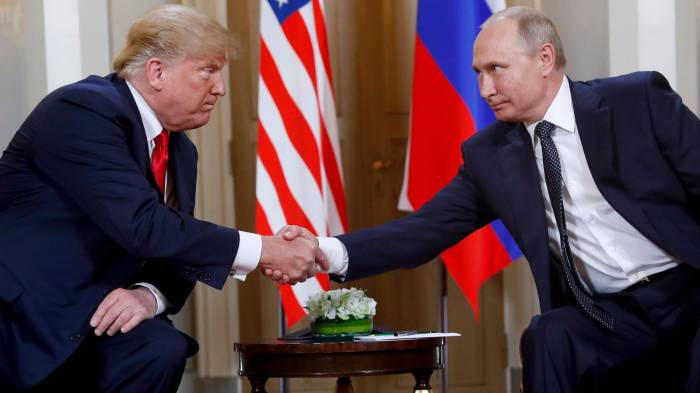
Photo: AP
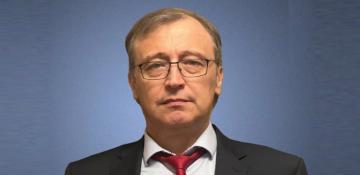
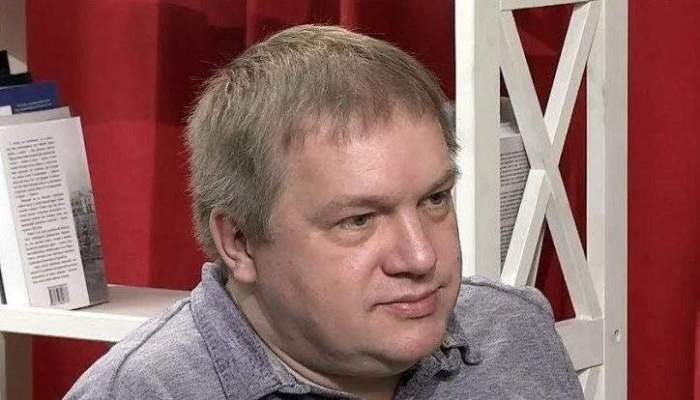
News.Az presents an interview with political analyst Dmitry Galkin.
-Trump stated that the U.S. “blew up the Middle East and then left, killing many people.” What is this about? Is it a moment of remorse for past wrongdoings or another attempt to blame his predecessor?
When examining U.S. foreign policy under Trump, we are witnessing a pivotal historical shift. For the first time since World War II, the United States has elected a president who openly embraces isolationist views. Prior to this, there had been no president since the interwar period who adopted such a strong isolationist stance. In this sense, Trump marks the beginning of a new era in U.S. foreign policy.
He may have started down this path during his first term, but back then he was heavily dependent on the Republican Party. He was forced to work with individuals whose views often clashed with his own, resulting in frequent dismissals and scandals as he tried to implement an isolationist approach.
Trump’s attempts to withdraw from NATO and his strained relations with Europe were direct results of this isolationist agenda. Now, however, Trump has become more independent, with key administration officials selected by him rather than imposed by party structures. This shift suggests he will pursue his foreign policy objectives more decisively. Whatever he could not accomplish before, he may now attempt to achieve.
Trump blames the international situation for drawing the U.S. into conflicts in which it played a major role, leaving the country mired in these wars. In contrast, Biden has been more cautious in foreign affairs, avoiding new international entanglements. While, in my view, the U.S. withdrawal from Afghanistan was a blow to America’s reputation, Biden took that step specifically to avoid further involvement in that conflict.
Trump’s recent remarks about the Middle East are most likely directed at Bush and Cheney. It is well-known that the Bush and Cheney families are staunch Trump opponents; during the election campaign, they openly encouraged voters to oppose him. Trump’s criticism of their Middle East policies is arguably justified. The 2003 invasion of Iraq was a disastrous move with catastrophic consequences. Instead of the “Greater Middle East” Bush had envisioned, the region has suffered over two decades of instability, conflict, and civil wars. Trump’s comments serve both as a jab at Bush and Cheney and as an illustration of why he believes an isolationist policy is the only correct course for the U.S.
- Trump advised Putin not to destroy Russia and to reach a deal on Ukraine. Do these words amount to a threat against Russia, or are they referencing the figure of 700,000 casualties (killed and wounded) that Russia may have suffered or could suffer in Ukraine?
I do not believe Trump is threatening Putin. On the contrary, Trump wants to restore and maintain normal relations with Russia. Considering the likelihood of a future confrontation with China, the U.S. must preserve a balance in international politics. Trump also suggested that if necessary, the U.S. could regain control of the Panama Canal, which makes sense in the context of competition with China. Therefore, he is likely to avoid any direct confrontation with Russia.
Rather than a threat, this appears to be a straightforward statement about the current reality.
- As for Russia, the situation since the war began in Ukraine in 2022 has indeed had catastrophic consequences. The longstanding model of Russia’s foreign economic relations—developed largely since Soviet times—has been shattered, including energy exports to Europe.
- By 2022, that strategy had collapsed, largely due to what many see as irrational actions by the Russian authorities in launching a full-scale military conflict on the country’s borders with the European Union. Europe has little incentive to keep buying Russian energy and is moving away from it, even at significant cost to its own economy—particularly in Germany.
This could end disastrously for Russia. Looking at a map, the major industrial centers lie in Russia’s western regions, up to the Ural Mountains—areas that are more developed. The most modern and well-maintained highways also extend northwest, southwest, and west. Routes to the east are in noticeably poorer condition. Now that Russia’s foreign economic orientation has fundamentally changed, it faces a rupture in its external relations.
Russia must explore new economic pathways. However, while China does need hydrocarbons, it is not necessarily a reliable long-term partner. China is actively working to reduce its dependence on fossil fuels, which limits its future role in this new economic framework.
Consequently, Russia’s strategy of redirecting resource exports to China cannot fully replace its former relationships with Europe, making it an economically unsatisfactory alternative. Russia’s future success will depend heavily on how quickly it can restore normalized relations with Europe. If the rift persists, the outcomes could be extremely severe—catastrophic, even. This is not solely a matter of heavy casualties and a declining birth rate; Russia already faces significant demographic challenges.
- Zelensky has invited 200,000 European peacekeepers to Ukraine. How realistic is this? Can we truly expect these forces to act as peacekeepers, or might they serve a different role under that label?
- Zelensky is in a difficult position. First, he is not prepared for elections, as his current electoral prospects are weak. The rise of a strong rival could have serious repercussions for him. He must ensure that no such rival appears and that the West—especially the United States—continues to see him as the only viable candidate.
Second, he needs to end the conflict with Russia without appearing to lose outright. The current situation is not in Ukraine’s favor, and though he may attempt to raise the stakes, he likely aims for a peace deal that allows him to save face and avoid an admission of defeat.
Bringing in European peacekeepers could be a significant success for Ukraine, providing security against renewed hostilities and symbolizing European support and Ukraine’s international standing. However, it will be challenging for Zelensky to ensure this does not look like a loss. Thus, he is unlikely to accept peace with Russia without securing certain conditions. He will seek more mediators to strengthen his position and prove that Ukraine merits reliable protection from European countries.
It is worth noting that Zelensky seems to be using a negotiation tactic reminiscent of the Soviet era—demanding more in order to secure at least a portion of what he ultimately needs.


Similar news