EU signs trade deal with the US: What Trump forced Europe into


Despite all efforts to resist pressure from Washington, the European Union eventually had to yield to terms favorable to the United States. Delaying the negotiations any further became impossible, as did expecting any softening of demands from President Donald Trump.
On Monday, news broke of a trade deal signed between the US and the EU. According to the BBC, the two sides announced they had agreed on the parameters of the agreement: US tariffs on EU imports will be set at 15%, while the EU will impose a 10% tariff on American goods.
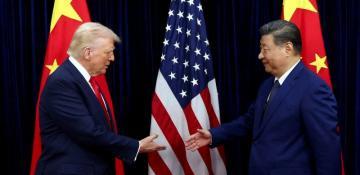
The meeting between Trump and European Commission President Ursula von der Leyen took place at Trump's golf club in Scotland. Officially, Trump framed his trip to Scotland as a private visit, which lowered the formal status of the meeting. In effect, von der Leyen appeared to be visiting Trump as a guest, and the negotiations were presented as a secondary matter.
But behind this informal setting was a very real and serious deal. Following the talks, Trump announced that in addition to the 15% tariffs, the EU had agreed to purchase US military equipment and energy resources worth $750 billion over the next four years. Furthermore, the EU committed to investing $600 billion in the American economy.

Von der Leyen attempted to maintain a firm stance, telling reporters the deal was mutually beneficial. However, trade statistics paint a different picture: EU exports to the US nearly double American exports to the EU. Trump had long viewed this trade imbalance as a serious issue. He had previously threatened to impose 30% tariffs on European goods starting August 1—a threat that would almost certainly have been carried out had the EU not backed down.
“This is a good deal for everyone. It brings us closer together. In a way, it’s a partnership,” Trump told the BBC. The phrase “in a way” is telling. The agreement only resembles a partnership on the surface.
In reality, it reflects a clear imbalance. The 50% tariffs on steel and aluminum imports imposed by Trump on all countries, including the EU, remain in place. Europe was also forced to accept American auto standards and to relax requirements on agricultural imports—moves that open the European market to a flood of US farm products. Even more controversial is the commitment to purchase American weaponry.
German industrialists were the first to voice dissatisfaction with the deal, warning that the agreement could have serious negative consequences not just for Europe, but also for the US. Clemens Fuest, head of the IFO Institute for Economic Research, told AFP that the deal was humiliating for the EU and reflected a stark imbalance of power.
French political leader Marine Le Pen wrote on social media platform X that the agreement should be considered a failure on political, economic, and moral grounds. She noted that, politically, the UK had secured better terms than the collective EU bloc—even after Brexit.

For context: Trump imposed only a 10% tariff on goods from the UK.
“Hundreds of billions of euros’ worth of gas and arms will have to be imported annually from the US. This is a total surrender of France’s industrial base, and of our energy and defense sovereignty,” Le Pen wrote.
In an effort to soften the political backlash, Ursula von der Leyen made a follow-up statement the day after the talks, focusing on the energy component of the deal. She sought to reassure Europeans that they no longer needed to worry about potential disruptions in Russian gas supplies, as the US would now step in. Still, the bitter aftertaste remained.
According to Bloomberg, the EU had to accept the deal because it was unable to organize a coordinated response among its member states. During the talks, EU countries prioritized defending their national interests over forming a unified EU position. Many member states, fearful of US retaliation, opposed compiling a list of American goods that could be subject to reciprocal EU tariffs.
“People familiar with the discussions said that EU ambassadors were presented with two options this week: accept the 15% tariffs or prepare a response. However, they were warned that a coordinated EU response would require unity and a willingness to bear the associated costs. The ambassadors were not prepared for either,” Bloomberg reported.
Moreover, Bloomberg sources suggest that some EU countries were involved in shaping the very framework of the agreement. In the end, the signed deal was seen as the lesser of two evils.
Far from signaling a rapprochement, the trade deal underscores the true balance of power between the two sides. Once again, the US played the role of the alpha. No matter how hard the EU tried to secure its own preferences, the final outcome satisfied American interests. What Europe received was a document outlining, point by point, what it must do to avoid even harsher consequences.
And yet, some experts say that the EU got off relatively lightly. A bad peace is better than a good quarrel, and certainty is better than ambiguity. And it is precisely ambiguity that has characterized US–EU relations ever since Donald Trump returned to the presidency.
By Tural Heybatov


Similar news