Europe bets on hydrogen


By Asif Aydinli
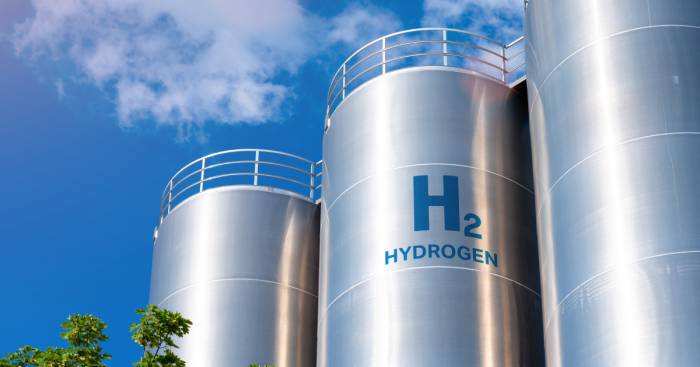
Hydrogen is emerging as one of the most promising energy sources in the global fight against climate change. Its potential as a clean fuel is attracting the attention of governments and companies worldwide. In Europe, hydrogen is considered a crucial component in achieving climate neutrality by 2050, making it a central part of the energy transition strategy.Interest in hydrogen is driven by its ability to generate energy without carbon dioxide emissions, making it attractive for various sectors, including transportation, industry, and energy. The European Union is actively supporting the development of hydrogen infrastructure, viewing it as a way to enhance energy security and reduce dependence on fossil fuels.
Hydrogen projects like H2Med aim to create cross-border networks for transporting and storing hydrogen, ensuring stable supplies of this energy carrier to European markets. Such initiatives also receive support through international cooperation, as countries around the world strive to establish a global hydrogen economy.
The Spanish government has given preliminary approval to begin work on the H2Med project, aimed at creating infrastructure for transporting and storing hydrogen in Spain and Portugal, with subsequent connections to the networks of Northwest Europe. The decision was made on July 29, 2024.
The H2Med project is an ambitious attempt to create transnational hydrogen networks on the Iberian Peninsula and connect them with the networks of France, Germany, and all of Northwest Europe. The project's main goal is to provide Europe with accessible renewable hydrogen by 2030.
Approval from the Spanish government will allow the company Enagas to temporarily perform functions related to the implementation of European Union projects of common interest (PCI) for the hydrogen network. This includes applying for permits, construction, operation, and maintenance of hydrogen networks recognized as European PCI and part of the H2Med corridor.
The project includes the creation of a hydrogen pipeline between Portugal and Spain (CelZa), a marine hydrogen pipeline connecting Spain and France (BarMar), and two underground storage facilities. CelZa will stretch 248 km between the Portuguese Celorico da Beira and the Spanish city of Zamora, while BarMar will extend 450 km between Barcelona and Marseille.
However, the project faces several challenges, including the low profitability of transporting a methane-hydrogen mixture through pipelines and EU requirements that only hydrogen be transported through the pipeline. This increases the project's cost and makes its prospects less certain.
According to Enagas estimates, net investments in hydrogen projects, including the H2Med corridor, will amount to about 3.2 billion euros (3.5 billion USD) by 2030. The cost of the H2Med project is estimated at 2.2 billion euros, of which 2.135 billion are allocated for BarMar and 350 million for CelZa.
To finance its hydrogen plans, Enagas has cut dividends for the next three years and decided to sell assets in the United States.
The H2Med project began in October 2022 when France, Spain, and Portugal agreed to create the BarMar green energy corridor. Germany actively supported the MidCat project; however, France opposed it due to its high cost and environmental concerns.
In January 2023, French President Emmanuel Macron announced that the H2Med system would be extended to Germany.
Significant progress has been made in implementing the project. In June 2023, the project received its first positive technical qualification from the European Commission, and in October, the German operator OGE joined Enagas and the French operators GRTgaz and Teréga to work jointly on implementing H2Med. In March 2024, contracts were signed for preliminary engineering studies and environmental impact assessments, and in June, Enagas, GRTgaz, and Teréga signed a joint development agreement for the BarMar pipeline.
The H2Med project has the potential to become a key element in Europe's transition to environmentally friendly energy sources, but its successful implementation will depend on addressing technical and financial challenges.


Similar news