France’s power play: Is Paris seeking a bigger role in Ukraine talks? - INTERVIEW


Amid shifting global dynamics, the role of key international players continues to evolve. France's positioning in negotiations between the U.S. and Ukraine, discussions about the U.S.-Canada border, and the prospects of American military action against drug cartels in Mexico are just a few of the pressing issues shaping today’s geopolitical landscape.
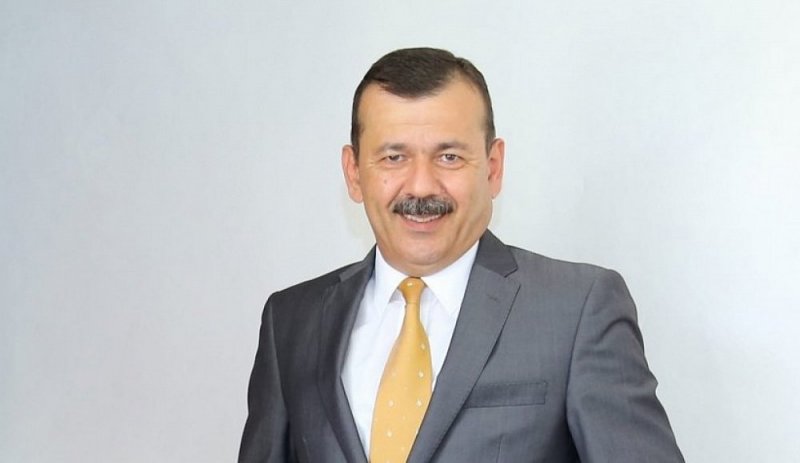 Political scientist Murad Sadaddinov
In an exclusive interview with News.Az, renowned political scientist Murad Sadaddinov shares his expert analysis on these topics, shedding light on France’s geopolitical maneuvering, the implications of Peter Navarro’s statements on U.S.-Canada relations, and the complexities of potential U.S. military operations in Mexico. He also addresses the broader question of Europe's ability to sustain Ukraine’s defense efforts, particularly in light of Macron’s recent visit to Washington. What are France’s true intentions in its involvement with Ukraine? Could U.S.-Canada relations see unexpected shifts? And how does international law view military action against cartels? Murad Sadaddinov offers his perspective on these critical global developments.
- Could France's involvement in resource negotiations between the U.S. and Ukraine indicate an attempt to increase its influence or capitalize on emerging opportunities?
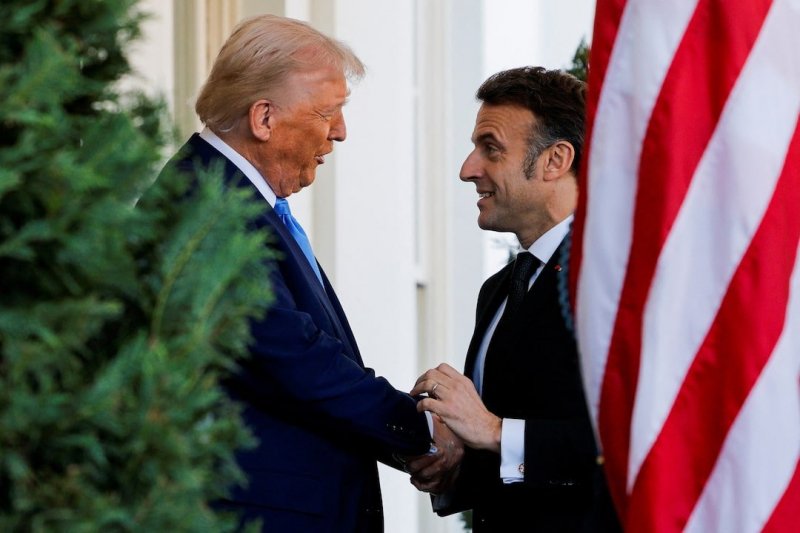
- France's involvement in these negotiations, in my opinion, is not entirely correctly framed. I have not seen evidence that France is directly participating in resource negotiations between the U.S. and Ukraine, as discussions between these two countries cover a wide range of issues. President Macron’s visit to the White House addressed a broader agenda, including Europe’s relationship with the U.S. and broader European security concerns.
Regarding Ukraine, discussions likely encompassed both resource-related matters and security issues. The key objective was to persuade the U.S. to take a more proactive role in ensuring Ukraine's security. However, the exact form of this involvement remains uncertain, as negotiations are ongoing and no concrete decisions have been finalized.
As for leveraging opportunities to expand its influence, France will undoubtedly seek to strengthen its position wherever possible. For instance, there is speculation about France potentially providing a nuclear umbrella for Germany, given its nuclear capabilities. However, at this stage, much of the discourse remains theoretical, with numerous statements but little concrete action. Contradictory remarks from officials further complicate the assessment of the real situation. Therefore, drawing definitive conclusions at this point is premature.
- Peter Navarro's calls for a reassessment of the U.S.-Canada border could be seen as a move toward rethinking bilateral relations. How likely is it that such discussions will lead to border changes, and what impact could they have on relations between the two countries?
-The idea of reviewing the U.S.-Canada border is highly complex, and in reality, its implementation seems virtually impossible. Since the early days of Trump's presidency, he and his administration have consistently exerted pressure on Canada through various means, including tariff increases and other economic measures. In my view, these actions are linked to Canada’s domestic political landscape, particularly its left-leaning government. Meanwhile, the U.S. has employed diplomatic strategies to exert influence over Canada.
We also observe that the current U.S. administration occasionally lends explicit support to right-wing and even far-right movements, which has caused friction with the Canadian government. This tension likely stems from Canada’s political orientation.
Regarding Peter Navarro’s statements, while he is a well-known economist, implementing such ideas in practice would be extremely difficult. Border-related matters are highly sensitive and require extensive negotiations. Even if there were any possibility of change, it would not materialize in the short term. Additionally, Trump’s presidency is not indefinite, and decisions of this magnitude require congressional and senatorial approval. Given these factors, I believe that the legislative bodies are unlikely to align with the White House on such a contentious issue.
-From the perspective of international law, how justified would potential U.S. military operations in Mexico against drug cartels be, considering the challenges faced by Mexican authorities in combating drug-related crime? Could such actions be deemed necessary for security and the fight against transnational crime?
-U.S. military actions against drug cartels on Mexican soil must adhere to international law. If such operations were conducted with the explicit consent of Mexico’s legitimate authorities, they would not constitute a violation of international norms.
Historically, the U.S. has engaged its armed forces and intelligence services in anti-narcotics operations across Latin America. However, should such interventions occur without Mexico’s authorization, they would likely provoke significant international legal concerns.
The drug trade, particularly along the U.S.-Mexico border, remains a pressing issue. Many Latin American countries, including Mexico, struggle with the influence of cartels and the illicit drug trade. While the U.S. position on this matter is understandable, any military action must be carefully coordinated with Mexican authorities to ensure legitimacy and avoid diplomatic fallout.
-The EU called Macron's trip to Washington a waste of time. Did he fail in his mission? Do Trump's past statements suggest that Ukraine will increasingly have to rely on the EU for support against Russia?
-I wouldn’t categorize Macron’s visit to the U.S. as a waste of time. Even if no specific agreements were reached in favor of the European Union—such as securing continued U.S. support for Ukraine and Europe—the visit still served as an opportunity for dialogue and clarification of positions. Such exchanges are valuable in helping Europe make independent policy decisions, particularly regarding its defense strategy.
One of the major challenges facing European nations is their reluctance to allocate sufficient funds to their defense budgets. This issue was raised not only during Trump’s first term but continues to be a point of contention. Macron’s visit, along with the upcoming visit of the British Prime-minister to Washington, underscores the ongoing need for dialogue on European security.
Following these discussions, the EU and the UK will face critical decisions regarding their financial commitments to defense. The combined GDP of the EU and the UK stands at approximately $23 trillion—significantly higher than Russia’s. If we include Canada, which also supports Ukraine and European security, the collective economic power of these nations surpasses that of the U.S. This means that Europe has the financial resources to sustain Ukraine’s defense efforts.
France, Germany, the UK, Italy, and Canada all possess robust military-industrial sectors. What remains is the need for coordinated procurement and governmental assurances to support defense initiatives.
Ultimately, the future trajectory depends on political will. The key question is whether Europe will continue to depend on the U.S. for security or finally take the initiative to finance its own defense efforts independently. This, in my view, is the crux of the matter.


Similar news