French colonialism: A historical review of its emergence, evolution, and influence



By Tural Heybatov
The history of French colonialism began with the first colonies in North America in the 17th century. In 1605, the colony of Acadia was established in what is now Nova Scotia, Canada. Three years later, in 1608, French explorer Samuel de Champlain founded Quebec, which became the center of the New France colony. These early colonies were primarily developed as trading posts focused on the fur trade, though their population and economic development significantly lagged behind those of British colonies.
French colonial expansion also extended into the Caribbean. In 1624, a colony was established on the northern coast of South America, in what is now French Guiana . Soon after, the French began to colonize Caribbean islands, such as Saint Kitts in 1627. However, this island, along with other French possessions, including Acadia, was soon ceded to the British, with Acadia being lost under the Treaty of Utrecht in 1713.
Despite these losses, France continued to expand its colonial holdings in North America, founding Louisiana in 1699. This colony, which stretched from the Gulf of Mexico to the present-day Canadian border, became an important trading hub. However, in 1803, Louisiana was sold to the United States, leaving France with only the small islands of Saint Pierre and Miquelon in North America.
French colonialism was based on a clear system of governance known as the "système de l'Exclusif." Under this system, overseas territories were subordinated to the metropolis and existed primarily to benefit France. Colonial goods, such as sugar, coffee, and tobacco, were produced mainly for export to France, and the colonies were restricted from trading with other countries. This policy ensured that France held a monopoly on the products of its colonies, stimulating economic growth in the metropolis.
The motivations for French colonialism included the desire to secure access to natural resources, expand trade opportunities, and increase France's political influence on the global stage. Colonial expansion was also justified by the ideology of the "civilizing mission," in which Europeans believed they were obligated to bring progress and civilization to "backward" peoples.
Caribbean colonies such as Martinique, Guadeloupe, and Saint-Domingue (modern-day Haiti) became key economic centers of the French colonial empire. These islands, with their favorable climate and fertile soil, were ideal for cultivating sugarcane, which became France's primary export product. The demand for sugar in Europe surged in the 17th and 18th centuries, leading to the rapid development of the plantation economy in the Caribbean region.
However, the success of these colonies was built on the exploitation of enslaved people. In 1685, Louis XIV issued the Code Noir , which legalized slavery in the French colonies and established regulations for the treatment of enslaved people. The indigenous peoples of the Caribbean, such as the Kalinago (Caribs), fiercely resisted French expansion but were eventually subjected to ethnic cleansing and forced relocation.
In 1660, the French expelled the Caribs from Martinique, a stark example of the brutality of colonial rule.
During the 18th century, Saint-Domingue became France's wealthiest colony and the world's largest producer of sugar. Nevertheless, slavery and repression led to widespread slave uprisings, which eventually culminated in the Haitian Revolution (1791–1804). The slave revolt, led by Toussaint Louverture and Jean-Jacques Dessalines, ended with the defeat of French, Spanish, and British forces, and Haiti became the first independent republic founded by formerly enslaved people.
The second phase of French colonial expansion began in the mid-17th century and extended into Asia and Africa. In 1664, the French East India Company was established to strengthen France's trading position in the East. The company founded colonies in India, such as Pondicherry (1674), Yanam (1723), Mahé (1725), and Karaikal (1739). These colonies played a crucial role in the trade of spices, textiles, and other goods.
French presence in Indochina was the result of a long-term strategy to strengthen influence in Southeast Asia. Throughout the 17th and 18th centuries, France consolidated its positions in this region by establishing colonies in Vietnam, Cambodia, and Laos. The Treaty of Huế, signed in 1883, granted France full control over Vietnam and established French Indochina.
In Vietnam, France implemented a harsh system of exploitation based on forced labor. Vietnamese workers on rubber plantations, mines, and rice fields faced appalling conditions. Companies like Michelin used cheap Vietnamese labor for rubber production, where conditions resembled slavery. On one Michelin plantation, 12,000 workers died between 1917 and 1944. Political activists opposing French colonialism faced repression, and their protests were brutally suppressed.
The economic exploitation of Vietnam brought significant profits to France. Vietnam became the world's third-largest rice exporter after Burma and Thailand. The country also produced rubber and coal, which were exported to France. However, the local population lived in poverty, facing hunger and repression despite the wealth produced by their labor.
French colonialism was not without conflicts and losses. In the mid-18th century, France faced a series of colonial wars that resulted in significant losses. The War of Austrian Succession (1744–1748), the Seven Years' War (1756–1763), and the American Revolution (1778–1783) weakened the French colonial empire. The British seized most French colonies in North America and the West Indies, as well as all French outposts in India.
Despite temporary successes, such as the return of Saint Lucia under the Treaty of Paris in 1783, France lost its most important colonies, including Saint-Domingue, which was lost due to the Haitian Revolution. After the Napoleonic Wars (1803–1815), France regained some of its colonies, including Guadeloupe and Martinique, but the British annexed Saint Lucia, Tobago, the Seychelles, and Mauritius.
French colonial expansion in Africa began with the invasion of Algeria in 1830 and continued throughout the 19th and early 20th centuries. During this period, France captured vast territories, including present-day Morocco, Tunisia, Senegal, Mali, Niger, Chad, and others. These conquests were part of the "Scramble for Africa," when European powers sought to secure their influence on the continent.

French colonial policy in Africa was based on the ruthless exploitation of local resources and labor. Colonial administrations established plantation economies where the local population worked under harsh conditions for meager wages. France particularly developed the production of cocoa, coffee, cotton, and peanuts in its African colonies. These products were exported to Europe to meet the needs of French industry and population.
The French colonial empire in Africa included two major administrative units: French West Africa (AOF) and French Equatorial Africa (AEF). These confederations comprised several colonies governed by governors appointed from Paris. Although France claimed that its colonial policy promoted the development of African societies, the reality was far more brutal. The local population faced repression, and colonial authorities often used forced labor to complete infrastructure projects, such as building railroads and roads.
One of the most notorious instances of French colonial brutality was the Malagasy Uprising in 1947, when thousands of Malagasy were killed as a result of the French military's suppression of the revolt. The uprising was fueled by discontent with colonial rule, economic exploitation, and the violation of local people's rights. The French response to the revolt demonstrated the severity of the colonial administration's efforts to maintain control over its possessions.
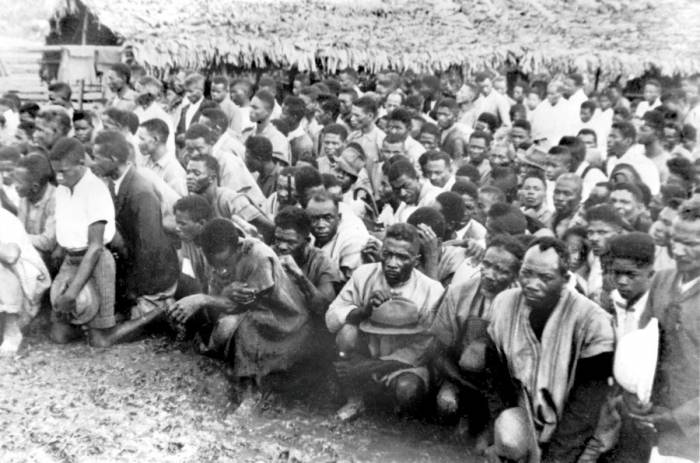
French presence in the Pacific region began in the 18th century and continued through the 19th and 20th centuries. In 1842, France proclaimed a protectorate over the Windward and Leeward Islands (known as the Society Islands), including Tahiti. Later, French colonization spread to other island groups, such as New Caledonia and French Polynesia.
French colonial policy in the Pacific region also focused on economic exploitation and cultural suppression of the local peoples. Formal colonial administration led to the introduction of French laws and customs, gradually replacing local traditions and norms. This was especially noticeable in land matters, where local courts gradually lost their authority, giving way to French courts.
French colonial expansion in the Pacific region was also accompanied by conflicts with other European powers, particularly England and Spain. However, France managed to consolidate its influence on many islands, enabling it to control important maritime routes and access the region's natural resources.
French colonialism had a profound impact on the social, economic, and political structures of the colonized societies. Economic exploitation led to significant impoverishment of the local population, which was forced to work under harsh conditions for meager wages. While colonial goods were exported to Europe and contributed to the development of the French economy, most of the colonized peoples lived in poverty and suffered from food shortages, despite the abundance of resources in their countries.
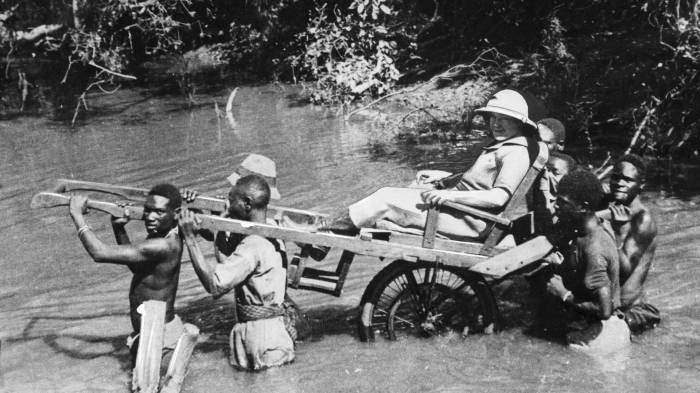
French colonial policy also contributed to cultural and social suppression. The introduction of French laws, religion, and customs displaced local traditions and led to the destruction of social structures that had existed for centuries. As a result, many colonized peoples lost their identity and cultural heritage.
French colonialism also sparked numerous conflicts and uprisings fueled by discontent with colonial rule and economic exploitation. The Haitian Revolution, the Vietnam War, the Malagasy Uprising, and other conflicts illustrate the determination of colonized peoples to fight for their independence and freedom, despite the brutal repression by the colonial authorities.
The process of decolonization, which began in the mid-20th century, was the result of the determined struggle of colonized peoples for independence. In the 1950s and 1960s, many French colonies in Africa and Asia gained independence, marking the end of the French colonial empire. However, the process of decolonization was not without challenges and was often accompanied by bloody wars, as seen in Algeria and Vietnam.
Despite the official end of colonial rule, the legacy of French colonialism continues to affect many countries that were once part of the French empire. Economic, social, and political issues rooted in colonialism remain relevant today. In some cases, such as in French Polynesia and New Caledonia, France continues to maintain its influence, leading to dissatisfaction among the local population and demands for full independence.

France also faces challenges related to its colonial legacy. Issues of reparations, acknowledgment of historical injustices, and the restoration of cultural heritage in former colonies remain important topics in political and public debates, both in France and in the countries that were once its colonies.
French colonialism left a profound mark on history and significantly influenced many countries and peoples. Economic exploitation, cultural suppression, and brutal repression were integral parts of French colonial policy. While France reaped considerable benefits from its colonies, this came at the cost of immense suffering for millions of people.
Today, the legacy of French colonialism continues to influence global politics and economics. Issues of social justice, the restoration of historical justice, and the recognition of cultural rights remain important both for former colonies and for France itself. Analyzing French colonialism allows for a deeper understanding of the complex processes that continue to shape the modern world and underscores the need for a critical reassessment of this significant chapter in world history.


Similar news