From Moscow to Beijing and Paris: Serbia chooses new military partners


Photo: Russian Foreign Ministry
Serbia faces a challenging dilemma in the realm of military supplies. The Chief of the General Staff of the Serbian Army, Milan Mojsilović, has stated that maintaining arms supplies from Russia has become nearly impossible due to sanctions imposed on Moscow.
As a result, the Serbian military has been forced to terminate several contracts, raising questions about the future of its collaboration with Russian manufacturers."Sanctions have severely limited our options, compelling us to reconsider our previous approaches. Several contracts had to be terminated, while others are on hold, awaiting more favorable conditions for their implementation," the general noted in his statement.
However, revising contracts with Russia is not just a logistical challenge but also a geopolitical signal. Serbia, which traditionally maintains warm relations with Moscow, is increasingly compelled to seek alternative arms suppliers. Among these are China and France, raising questions about Serbia’s long-term strategy on the international stage.
Political context
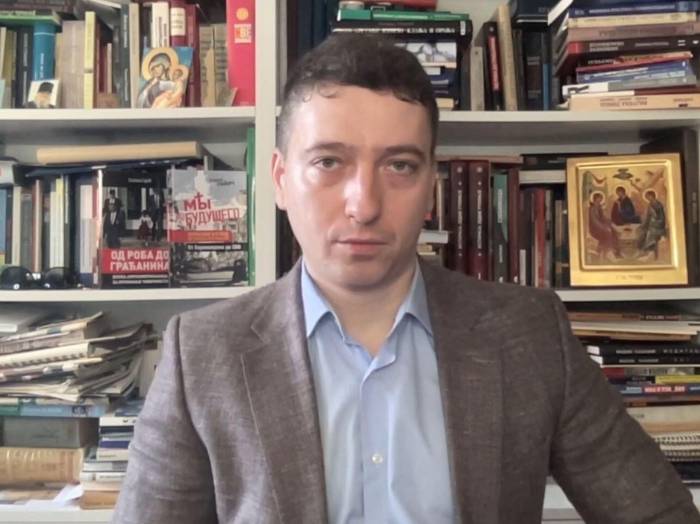
The situation with military contracts reflects broader internal and external challenges facing Serbia’s leadership. Stevan Gajić, a political scientist and research fellow at the Institute of European Studies in Belgrade , told News.az that the termination of contracts with Russia should be viewed in the context of protests against President Aleksandar Vučić. The country has been experiencing growing discontent due to corruption, weakened state institutions, and constitutional violations.
"These protests gained momentum after the tragedy in Novi Sad, where the collapse of a roof at a recently renovated train station claimed 15 lives. This incident has become a symbol of systemic governance failures," Gajić emphasized.
On the international stage, Vučić aims to bolster his position through closer ties with the West. In the past, he actively collaborated with pro-American organizations, including the Clinton Foundation, and openly supported Hillary Clinton in the 2016 U.S. presidential election. However, a potential return of Donald Trump to the U.S. presidency could alter his strategy. Now Vucic appears to be seeking to take a position similar to Maia Sandu in Moldova or Pashinyan in Armenia, counting on the protection of NATO and the European Union.
Implications for relations with Russia
Gajić believes that the termination of arms supply contracts and the removal of Gazprom from Serbia’s oil industry signal Vučić’s attempt to make concessions to the West. However, these actions could weaken Serbia’s strategic partnership with Russia, particularly in the context of rising regional tensions.
"These moves indicate Serbia’s willingness to align with Western demands, but they also pose risks to its long-term security and decision-making independence," the expert noted.
The shift toward Chinese weaponry
Amid the termination of contracts with Russia, Serbia has increasingly integrated Chinese military equipment. The presentation of the FK-3 surface-to-air missile system marked a significant step in this direction. While the system is innovative, its effectiveness in real combat scenarios remains uncertain.
"This is a modern development that could significantly enhance Serbia's defense capabilities. However, it should be evaluated alongside already proven systems like the American Patriot and Russian S-300," Gajić commented.
Serbia now stands at a crossroads. Under the pressure of sanctions and shifting power dynamics in the region, it must find a new balance between the West, Russia, and other key players like China. Each decision in this intricate game will carry far-reaching consequences for the country’s security and foreign policy.


Similar news