Gil Mihaely: Epstein papers expose a justice system afraid of the powerful -INTERVIEW

Photo: Gil Mihaely, a French political expert
The release of the so-called Epstein papers has placed many influential global figures under renewed public scrutiny, but their inclusion in the dossier does not automatically imply criminal wrongdoing.
The documents blend allegations with ordinary social and financial interactions, alongside large amounts of irrelevant material such as name-dropping and gossip. Their real significance lies in what they reveal about the networks of money, status, and institutional deference that operated around Epstein.
As a result, the primary impact is reputational and institutional rather than legal. Fragmentary and chaotic disclosures risk politicization, renewed harm to victims, and a further erosion of public trust in justice systems.
The News.Az analytical portal spoke with Gil Mihaely, a French political analyst, to address several unresolved questions surrounding the case and to offer broader analytical perspective.
– Mr Mihaely, influential global figures feature in the Epstein dossier. How do you assess this, and what impact could the release of the files have?
– The issue with the release of the so-called Epstein papers is that it blends three very different categories of material that the public often conflates. First, there is evidence related to alleged crimes and those who may have enabled them. Second, there is the social and financial networking of a well-connected and successful businessman. Finally, there is the “noise” of name-dropping, vanity, and gossip. The impact depends on whether these disclosures help separate those categories clearly or blur them further.
Having one’s name appear in the dossier is not the same as wrongdoing. For example, a French academic found his name in an email simply because he participated in a colloquium and made a remark that caught Epstein’s attention. Such disclosures place many prominent figures in the public eye, often without any new or legally actionable allegations attached.
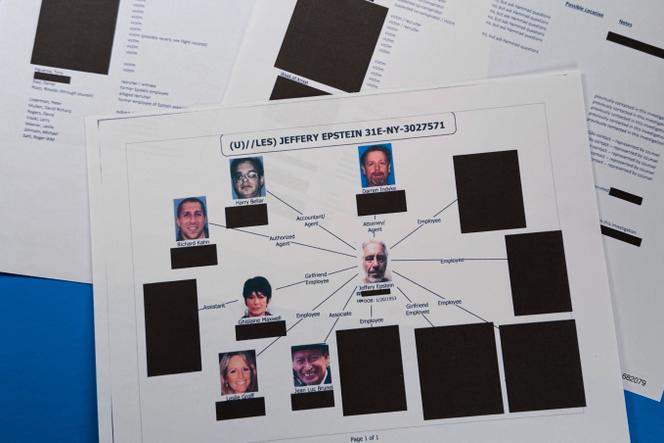
Source: lemde.fr
But the more consequential recent development is that large email caches and government releases can illuminate how the world functioned around him. We learn who met with him, who accepted his money, who introduced whom, and, eventually, who ignored red flags and who helped launder his reputation.
The impact of such disclosures extends well beyond criminal liability and unfolds primarily in the realms of reputation, institutions, and public trust. A broad reputational “blast radius” inevitably affects individuals who may never face legal consequences. At the same time, institutions that intersected with the case, such as law enforcement agencies or philanthropic organizations, find themselves under sustained pressure to account for past decisions, conflicts of interest, and failures of oversight.
This dynamic all but guarantees political weaponization, particularly when document releases are partial and fragmented, allowing competing narratives to flourish. Most troublingly, the risk of renewed harm to victims increases as disclosure processes become chaotic and poorly managed.
– These facts were known for years. Why did authorities avoid dismantling the network — was it to protect powerful individuals?
– You do not need a single, mastermind conspiracy to produce a de facto protection effect. A more prosaic explanation is a stack of incentives and institutional frictions. Taken together, these include elite defense lawyering, prosecutorial risk aversion, jurisdictional fragmentation, and a system that has historically discounted victim testimony, especially when allegations are made against a wealthy defendant.
Regarding the specific handling of the case in Florida between 2006 and 2008, the Department of Justice’s own internal review by the Office of Professional Responsibility concluded that prosecutors did not commit “professional misconduct” under its narrow standards. However, the review explicitly criticized poor judgment and the structural flaws of resolving a federal investigation through an unusual state-based non-prosecution agreement.
This does not disprove favoritism, but it does show how “protection” can emerge from discretion, deference, and asymmetric legal firepower, even without a direct or explicit order to shield anyone.
– What serious gaps in the migration system are exposed by the legal, on-paper transfer of children?
– When trafficking hides behind a façade of administrative legality, the most decisive weaknesses are rarely at the border checkpoint itself. Instead, they lie within the document ecosystem and in the seams between institutions. Guardianship and consent arrangements, whether notarized letters, custody claims, au pair or student statuses, or formal sponsorships, are typically treated as inherently valid, creating a presumption of good faith that benefits the most organized networks.
Questions of identity and provenance reveal a similar systemic vulnerability. These weaknesses are compounded by the blind spots created by private aviation and so-called VIP travel channels, where the level of screening bears little resemblance to that applied to commercial transport.
Source: BBC
Yet the deepest flaw lies in the fragmentation of data and authority itself. Immigration services, child protection agencies, local law enforcement, federal investigators, and prosecutors each hold partial insights that rarely coalesce into a unified mechanism capable of timely intervention. Once a child has been “placed” through schooling, employment, or guardianship, the focus often shifts from safeguarding the individual to verifying administrative compliance.
– Despite evidence and testimony in 2007–2008, no federal case was opened. Why?
– During that period, federal prosecutors in South Florida drafted a substantial proposed federal indictment but ultimately abandoned it in favor of a state-based resolution that effectively terminated the federal investigation through a non-prosecution agreement.
The official explanation that emerged at the time rested on a combination of factors: an assessment of trial risks, including concerns about witness credibility, the treatment of victims in court, and legal uncertainty, coupled with a strategic decision to use federal authority as leverage to secure a harsher outcome at the state level.
This approach was later criticized as ill-judged and structurally fragile. In its most concise form, the explanation is one of prosecutorial discretion: prosecutors possessed the legal latitude to settle, chose to do so, and the resulting agreement proved, in practice, catastrophically lenient.
– How could such crimes occur in a country that portrays itself as a model of democracy and human rights?
– Such crimes can occur because the existence of democratic institutions and a strong human rights culture does not, by itself, guarantee equal or effective enforcement of the law. In systems marked by deep social and economic inequality, justice often operates differently for ordinary citizens than for the ultra-wealthy.
Plea bargaining, while a legitimate procedural tool, can become a form of “reputational damage control,” containing scandal rather than fully confronting harsh realities. These structural biases are compounded by the historical treatment of sexual crimes against minors, which for decades were met with moral discomfort and social pressure to silence victims rather than protect them.
Finally, the fragmentation of authority in the United States across local, state, and federal levels creates opportunities for jurisdictional maneuvering and procedural delay, diluting accountability. The Epstein case thus stands as an illustration of how strict procedural legality can coexist with profound moral failure and institutional breakdown.
– Could unresolved questions further erode public trust in the justice system and democratic institutions?

Source: volkskrant.nl
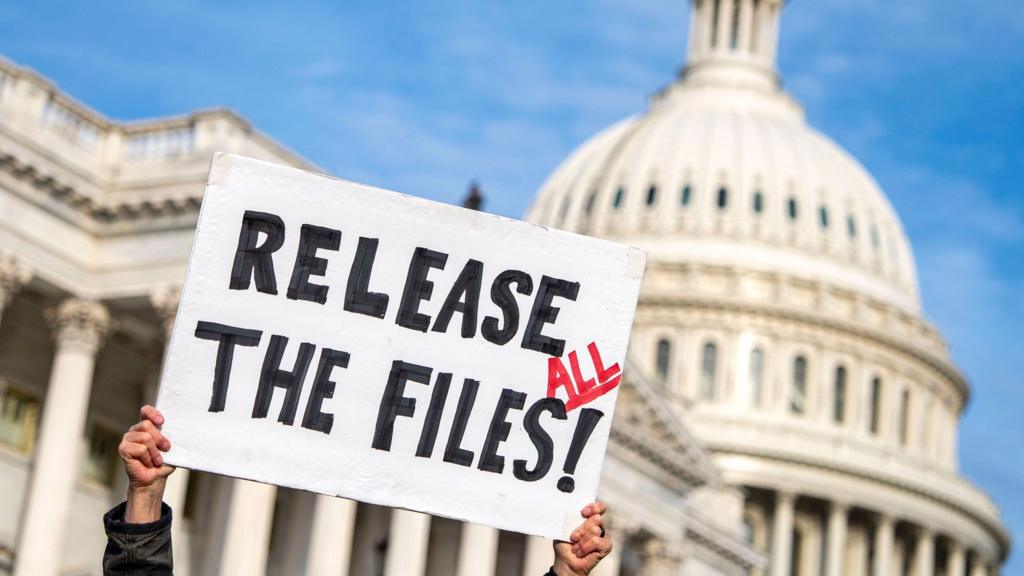
– Unresolved questions of this magnitude inevitably risk deepening public distrust in justice systems and democratic institutions. The mechanism is already visible: partial disclosures, extensive redactions, and shifting or inconsistent explanations create an atmosphere of suspicion rather than clarity.
In the case of the so-called Epstein papers, the disclosure process has itself become a political and institutional controversy, with criticism emerging across partisan lines over whether all relevant records were released and on what basis key passages were withheld.
This dynamic fuels two forms of cynicism simultaneously. On one hand, it reinforces the belief that the system exists to protect the powerful and well-connected. On the other, it fosters a more nihilistic suspicion that nothing is real — that every revelation is merely a partisan construction devoid of objective truth. Both attitudes are deeply corrosive to democratic legitimacy and thrive when transparency appears chaotic, delayed, or selectively applied rather than coherent, timely, and principled.
Many documents published under the title “Epstein papers” are emails sent and received by a wide range of people. Epstein was convicted of sexual offenses, but he was also a businessman, financier, and a man interested in politics, geopolitics, philosophy, psychology, and religion. He was knowledgeable, intelligent, and curious. As a result, one can find comments about parties and insinuations of licentious behavior alongside exchanges on the situation in Egypt, the Caucasus, or reflections on encounters at Davos.
News.Az



.png)