How Azerbaijan is building a renewable energy hub in the South Caucasus


.png)
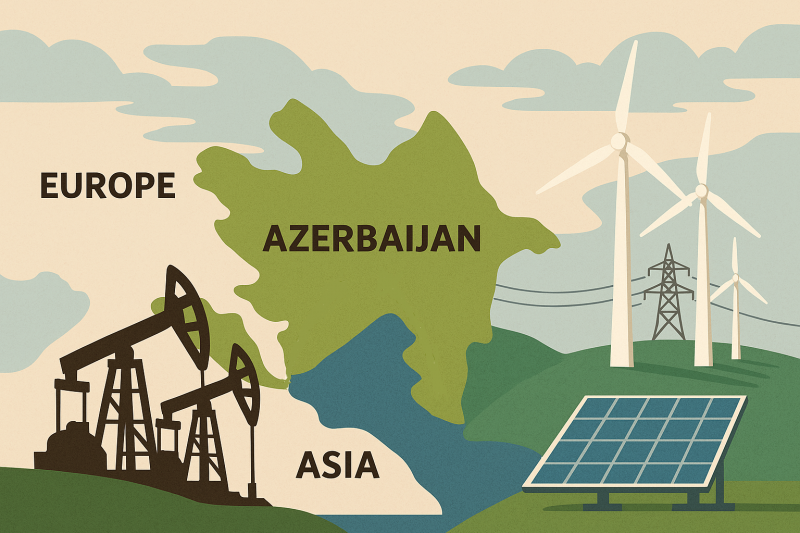
Azerbaijan is entering a new phase in its energy policy, as the country begins to move beyond its long-standing reliance on oil and natural gas. While hydrocarbons remain central to the national economy, the government is gradually diversifying the energy mix, with renewable energy emerging as a key pillar of long-term development.
The shift goes beyond environmental or climate-related commitments. Renewable energy is increasingly being framed as a strategic tool to strengthen economic security, diversify export revenues, modernize industry, and support the growth of energy-intensive and high-technology sectors.
At this stage, the government has outlined clear strategic priorities aimed at ensuring a stable and sustainable domestic electricity supply, improving the efficiency of natural gas use in the power sector, and redirecting saved gas volumes toward exports and higher value-added industrial applications. In parallel, Baku is seeking to position Azerbaijan as one of the region’s emerging hubs for green energy generation and transmission. This integrated approach reflects a broader recalibration of national energy strategy, in which renewable energy is designed to complement hydrocarbons while strengthening the country’s long-term economic resilience and regional relevance.

Source: renewables.az
According to official assessments by Azerbaijan’s energy authorities, the country’s technical renewable energy potential exceeds 27,000 megawatts, underscoring the scale of its untapped green resources. Solar energy accounts for the largest share, with potential estimated at around 23,000 megawatts, reflecting high levels of solar irradiation across most regions. Wind power potential is assessed at approximately 3,000 megawatts, much of it concentrated in the Caspian Sea basin, creating long-term opportunities for offshore wind development and export-oriented electricity generation. In addition, Azerbaijan’s economically viable hydropower potential exceeds 500 megawatts, while bioenergy and other alternative renewable sources are estimated at 300–400 megawatts.
The country’s total installed electricity generation capacity currently stands at about 8,300–8,500 megawatts, with roughly 1,700 megawatts coming from renewable sources. Hydropower remains the dominant component of this segment. However, the commissioning of utility-scale solar and wind facilities in recent years has marked the beginning of a gradual but structurally significant shift in the generation mix.
Annual electricity production averages 28–29 billion kilowatt-hours. Thermal power plants account for roughly 85 percent of total output, hydropower contributes about 12–13 percent, while solar and wind energy together generate approximately 2–3 percent.
Official energy strategy documents envision raising the share of renewable energy in electricity generation to at least 30 percent by 2030. Reaching this target would require a deep structural transformation of the power sector, significantly reduce reliance on natural gas for electricity generation, strengthen export capacity, and align Azerbaijan’s energy system with long-term decarbonization and energy security objectives.
Source: APA
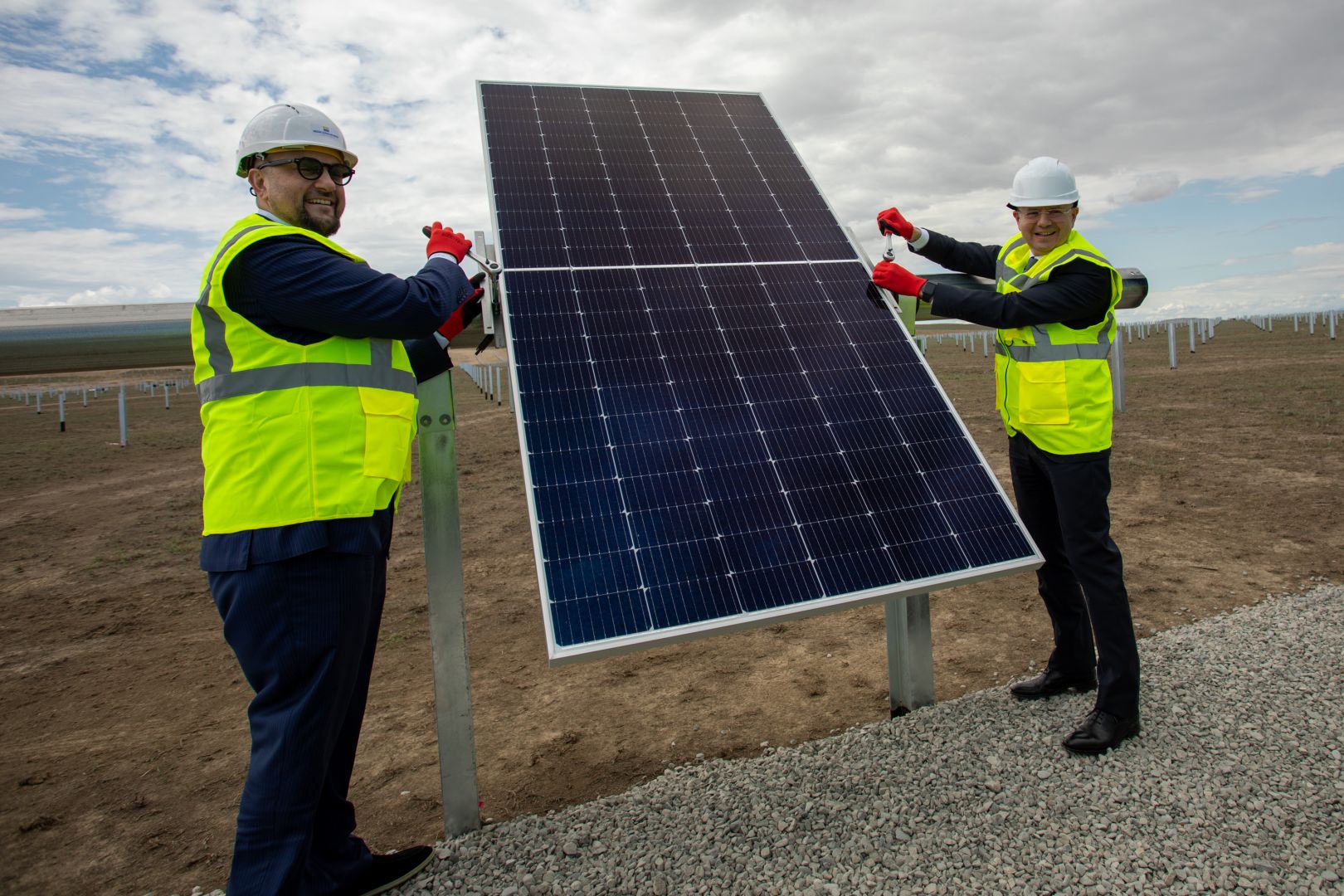
The commissioning of large-scale renewable energy facilities in recent years indicates that Azerbaijan’s energy policy has moved decisively from planning to implementation. A flagship project is the Garadagh Solar Power Plant, which has an installed capacity of 230 megawatts and generates about 500 million kilowatt-hours of electricity annually. According to official calculations by the Ministry of Energy, this level of output allows for annual savings of 110–120 million cubic meters of natural gas and prevents the emission of more than 200,000 tons of carbon dioxide, directly supporting Azerbaijan’s climate commitments.
Another strategically important development is the Khizi–Absheron Wind Power Plant. With an installed capacity of 240 megawatts, the facility produces around 1 billion kilowatt-hours of electricity each year. Official estimates indicate that this output replaces 200–220 million cubic meters of natural gas annually that would otherwise be consumed for power generation, while avoiding more than 400,000 tons of carbon emissions per year. The project has attracted approximately $340 million in foreign direct investment, reflecting growing international confidence in Azerbaijan’s renewable energy framework and regulatory environment.
Taken together, the two projects generate annual natural gas savings of 320–340 million cubic meters. State energy planning documents indicate that once the full portfolio of renewable energy projects scheduled for commissioning through 2030 is implemented, total gas savings could reach 1.5–2 billion cubic meters per year. This volume represents not merely a technical efficiency gain, but a strategically significant resource that can be redirected toward exports, higher value-added industrial use, and enhanced energy security, reinforcing Azerbaijan’s role as a reliable and flexible energy supplier in regional and global markets.
Source: Caspianpost
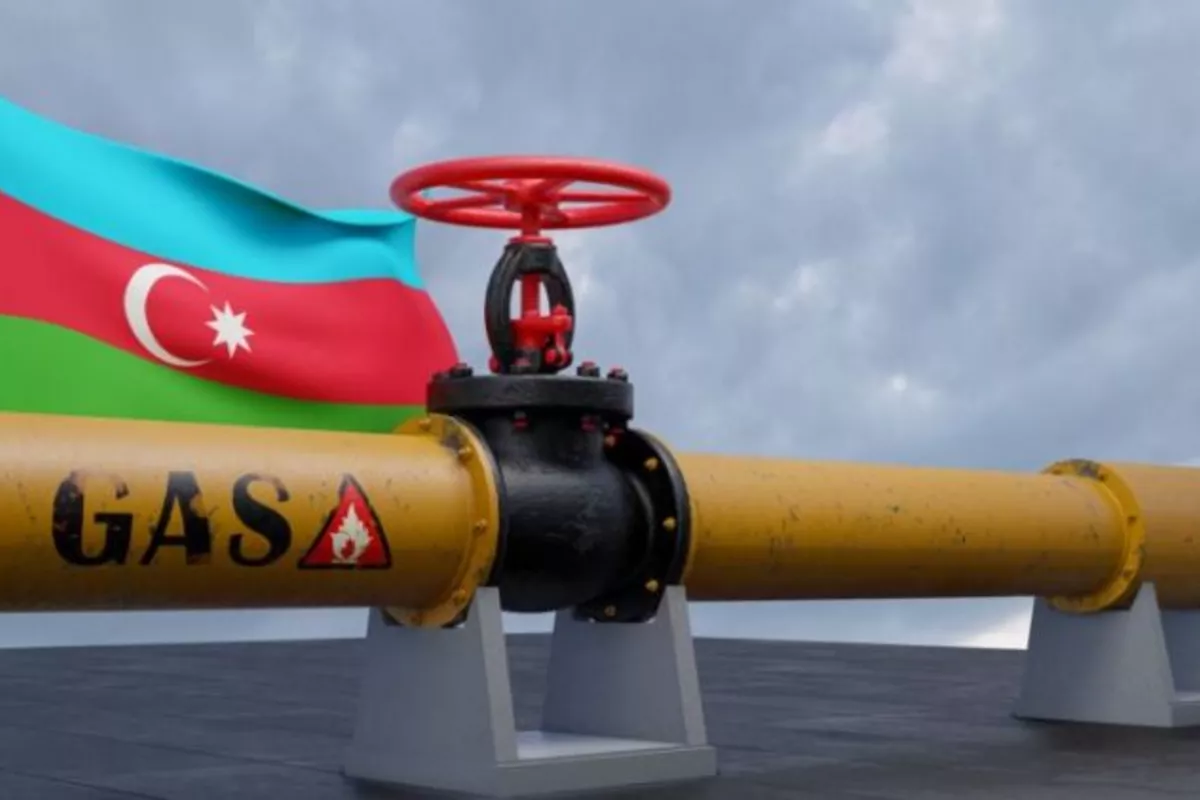
Azerbaijan’s annual natural gas consumption averages 24–25 billion cubic meters, according to data from the State Statistics Committee and the Ministry of Energy. Of this volume, approximately 6–7 billion cubic meters, or nearly 25–30 percent, is used in electricity generation. Gas-fired thermal power plants still account for more than 85 percent of the country’s electricity output, underscoring the strategic role of natural gas within the national energy mix.
The rapid expansion of renewable energy is set to have a direct impact on this segment. Under officially approved plans, Azerbaijan intends to commission more than 2,000 megawatts of new solar and wind capacity by 2030, a level expected to generate 6–7 billion kilowatt-hours of electricity annually. According to Ministry of Energy estimates, this volume of renewable generation could displace up to 1.5–2 billion cubic meters of natural gas per year that would otherwise be burned for power production.
The gas freed through this transition can be redirected in several strategic directions. It can be allocated to exports, strengthening Azerbaijan’s ability to meet long-term contractual commitments. In 2024, the country exported approximately 25 billion cubic meters of natural gas to 14 countries, including 10 EU member states, making export stability a key national priority. Redirected volumes can also support domestic industrial development. Sectors such as petrochemicals, fertilizer production, and metallurgy generate significantly higher value added per cubic meter of gas than power generation, in line with Azerbaijan’s industrial diversification strategy. In addition, part of the liberated volumes can be directed into strategic reserves, enhancing energy security and providing a buffer against global market volatility and seasonal demand fluctuations.
Renewable energy is not replacing natural gas within Azerbaijan’s energy system. Instead, it enhances the economic and strategic value of gas by enabling more efficient allocation, improving export resilience, supporting industrial growth, and strengthening long-term energy security.

Source: COP29
Azerbaijan has officially committed to reducing greenhouse gas emissions by 35 percent by 2030 and 40 percent by 2050 compared with 1990 levels, in line with its nationally determined contributions under international climate frameworks. The energy sector bears the primary responsibility for achieving these targets, as it remains the country’s dominant source of emissions due to a historically gas-based electricity generation model.
Official assessments show that currently operational renewable energy projects prevent the release of approximately 600,000–700,000 tons of carbon dioxide each year, mainly by replacing natural gas–fired electricity generation with solar and wind power. State energy planning projections indicate that once the full portfolio of renewable projects scheduled through 2030 is commissioned, annual emissions reductions could rise to 3–4 million tons of CO₂.
These figures demonstrate that Azerbaijan’s climate commitments are supported by tangible investment, infrastructure development, and technological modernization. Rather than remaining aspirational, the emissions reduction targets are being translated into measurable outcomes that also enhance energy security, export capacity, and long-term economic resilience.
Source: Trend
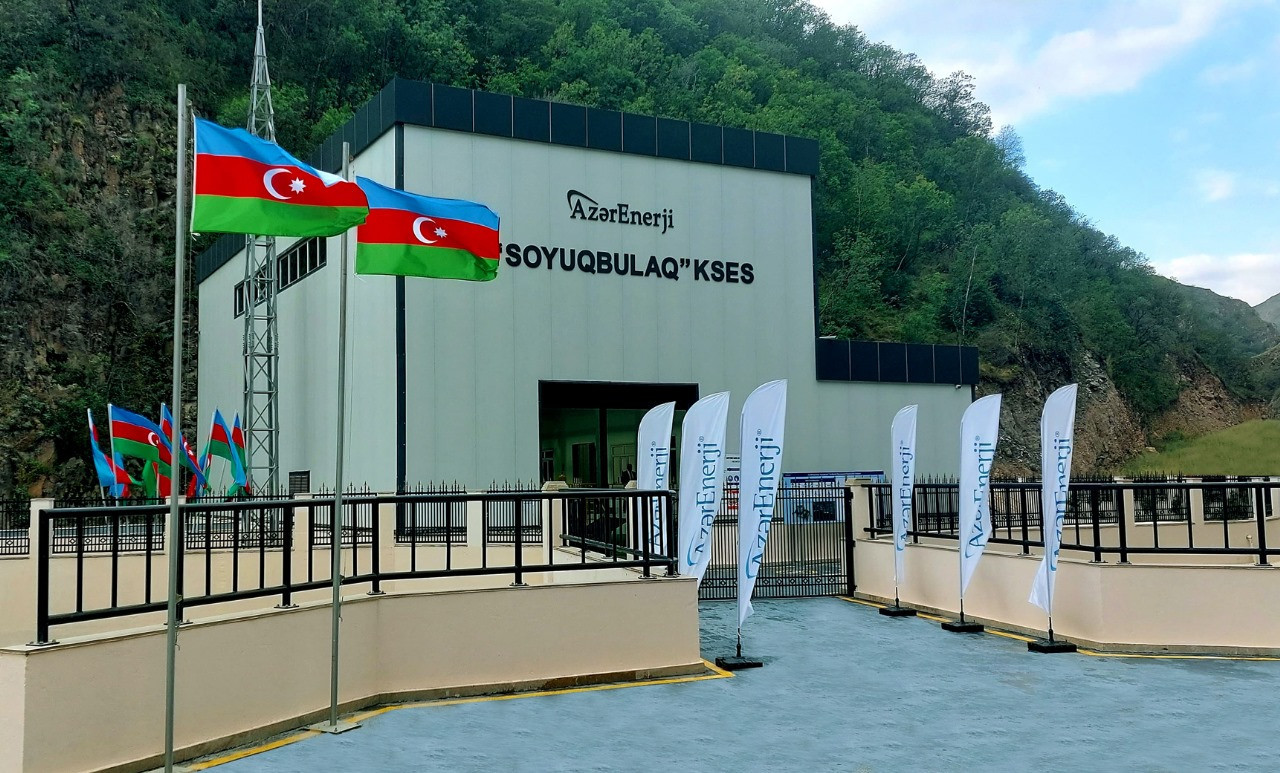
The designation of Azerbaijan’s liberated territories as a “green energy zone” adds a strategically important dimension to the national renewable energy agenda. Official assessments indicate that these territories have a solar energy potential of around 7,200 megawatts and a wind energy potential exceeding 2,000 megawatts, reflecting highly favorable geographic and climatic conditions. This resource base is being directly integrated into post-conflict reconstruction and long-term regional development planning.
Over the past two years, more than 30 small and medium-sized hydropower plants have been commissioned in the liberated areas, with a combined installed capacity approaching 270 megawatts. These facilities already supply a substantial portion of local electricity demand through on-site generation, significantly reducing reliance on the central power grid and minimising transmission losses. Beyond their technical role, the projects are strategically important for economic reintegration, rebuilding critical infrastructure, and creating sustainable settlement models based on self-sufficient, low-carbon energy systems.
By linking renewable energy deployment with post-conflict recovery, Azerbaijan is effectively using the green energy zone concept as both an economic and state-building tool. The approach supports population return, stimulates local investment, and embeds sustainability principles into the long-term development trajectory of the liberated territories.
Source: AI
The rapid global expansion of artificial intelligence and the digital economy is reshaping electricity demand patterns and increasing the strategic importance of reliable, large-scale power supply. A medium-sized data center typically consumes 120–150 million kilowatt-hours of electricity per year, while large AI-focused high-performance computing facilities may require 300 million kilowatt-hours annually or more, according to industry benchmarks used in national energy planning.
Within this context, official energy development projections in Azerbaijan indicate that renewable energy projects scheduled for commissioning through 2030 could generate an additional 15–18 billion kilowatt-hours of green electricity annually. This output is sufficient to power dozens of large-scale data centers or support the creation of multiple regional artificial intelligence and cloud computing clusters, without placing additional pressure on natural gas resources or the existing thermal generation base.
As a result, renewable energy is no longer seen solely as a component of the power sector or a tool for emissions reduction. It is increasingly regarded as a core element of national digital infrastructure, underpinning cloud services, high-performance computing, advanced data processing, and technology-driven industrial growth. Strategically, the availability of competitively priced, low-carbon electricity positions Azerbaijan to attract long-term investment in data-intensive industries and to align energy policy more closely with its broader digital transformation and innovation agenda.
Source: energynews
Azerbaijan’s renewable energy policy is closely integrated with international cooperation frameworks. Attracting foreign direct investment, introducing advanced generation and grid technologies, and participating in regional energy initiatives are all key elements of this strategy. State-level agreements and intergovernmental cooperation mechanisms indicate that green electricity is intended not only to meet domestic demand but also to secure access to regional and cross-border markets. In this context, Azerbaijan is positioning renewable energy as an export-capable asset rather than merely an internal balancing tool.
This approach diversifies the national energy export portfolio and supports Azerbaijan’s transformation into a new type of regional energy hub. While the country has traditionally been seen primarily as an exporter of oil and natural gas, green electricity is increasingly expected to become a meaningful component of its energy exports in the medium to long term, complementing existing pipeline-based supply routes and enhancing overall export flexibility.

Source: APA
Official statistics and state planning documents show that Azerbaijan’s renewable energy policy has moved decisively beyond the conceptual stage. It is now delivering measurable and verifiable outcomes, including billions of kilowatt-hours of additional electricity production, hundreds of millions of cubic meters of annual natural gas savings, millions of tons of avoided greenhouse gas emissions, and the creation of a stable, low-carbon energy base for emerging technology-driven sectors.
Within this framework, renewable energy serves a dual role in Azerbaijan’s development model. It strengthens domestic electricity supply, reduces structural dependence on gas-fired generation, and enhances long-term energy security. At the same time, it creates strategic opportunities for export growth, industrial modernization, and the expansion of high-energy-demand sectors such as artificial intelligence, cloud computing, and data infrastructure. For these reasons, renewable energy is no longer an alternative or supplementary option — it has become one of the core pillars of Azerbaijan’s long-term economic, technological, and energy strategy.


Similar news