Starting January 1, 2027, the US Department of Defense will be prohibited from purchasing rare earth metals, magnets, and components from China, Russia, Iran, and North Korea, according to reports circulating on social media. There is no official confirmation of this information. However, developments over recent months suggest that, if nothing changes within a year, such a decision may indeed be adopted.
When we say “changes,” we mean success by the United States in finding new, economically viable sources of the above-mentioned materials. In principle, these reports are fully in line with US trends and actions aimed at reducing dependence on China in the rare earth sector. However, the specific date and the full list of countries, including Russia, Iran, and the DPRK, require confirmation through official US legislative acts, as the primary focus at present remains China as the dominant supplier.
The United States is actively working to strengthen its domestic supply chain for these metals, recognizing their critical importance for defense and high-tech industries such as the F-35 program, radar systems, solar panels, and others.
China, as is well known, controls a significant share of global mining and processing of rare earth elements, especially dysprosium and samarium, which are critically important for military needs. US legislation, including the National Defense Authorization Act, is aimed at diversifying sources of rare earth elements and expanding domestic capacity in order to avoid dependence on countries considered unfriendly to Washington.

Source: The Aviation Geekclub
Beijing, in response to US restrictions, has begun introducing its own export controls on certain rare minerals, further escalating tensions. As a result, Washington is now seeking ways to reduce dependence on China and other “unfriendly” countries in the supply of critical materials for defense and high-tech industries.
In recent months, China has both imposed and lifted restrictions on certain elements. The process has depended on the state of relations between Beijing and Washington. Each attempt by Donald Trump to pressure the PRC ended with the Chinese side introducing its own restrictions, which in turn forced the United States to make concessions.
In November, several media outlets reported that the Chinese authorities had decided to implement an agreement with Donald Trump on lifting restrictions on rare earth exports in a manner that benefits Beijing. After meeting with Chinese President Xi Jinping in late October, Trump stated that the issuance of general licenses by Beijing would de facto put an end to restrictions on rare earth exports.
However, the situation is not that simple. As The Wall Street Journal reported, Beijing is creating a system that would allow supplies to the United States to resume while preventing these metals from reaching weapons manufacturers. The planned export control rules would require suppliers to identify and verify end users, enabling authorities to block sales of critical materials to representatives of the US defense industry.

Source: NDTV
People familiar with the plan told The Wall Street Journal that, under strict enforcement, the new system would complicate imports of certain metals from China for automotive and aerospace companies that produce both civilian and military goods. China accounts for about 60 percent of global rare earth mining and more than 90 percent of processing. Trump’s predecessor, Joe Biden, had already attempted to wage a trade war with China.
In December 2024, he announced new restrictions on exports of computer chips to the PRC, and the following day China halted supplies of gallium, germanium, and antimony to the United States. In April 2025, the new US president attempted to impose tariffs of up to 145 percent on Chinese goods. In response, Beijing introduced export restrictions on a range of critical materials, after which Washington was forced to retreat, lower tariffs, and seek a truce.
However, in October, Trump once again returned to restrictive measures and imposed controls on semiconductor exports. China then announced the introduction of a global licensing regime for virtually all rare earth elements, as well as for technologies used in their production.
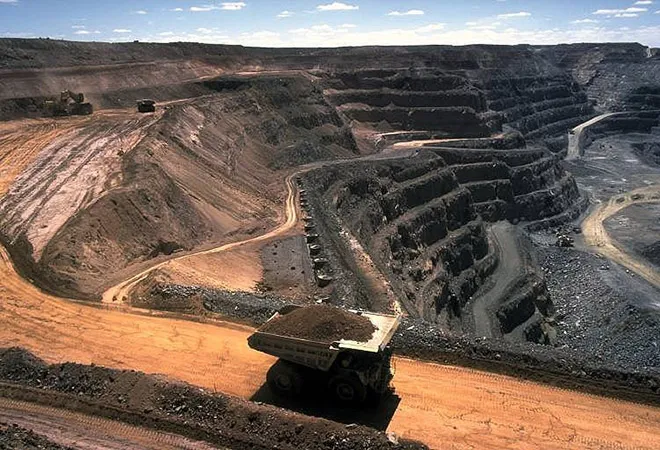
Realizing that China could not be pressured by direct means, Donald Trump began searching for the required elements elsewhere. In October, according to TechCrunch, an agreement was signed with Australia for the supply of rare earth minerals. The value of the deal was $8.5 billion. Moreover, the US-Australia agreement goes beyond simple purchases of rare earth materials. The two countries will also cooperate in developing Australian production capacity. Specifically, the US Department of Defense will finance the development of Alcoa’s Australian gallium processing facility.
Source: Orfonline
Nevertheless, enthusiasm surrounding the deal with Australia cannot conceal the underlying realities, which remain discouraging. The Wall Street Journal, citing industry sources, reports that Chinese restrictions on exports of rare earth metals and other strategically important minerals have already affected US defense companies and their allies. According to the newspaper, these substances are required for the production of almost everything, from bullets to jet fighters. Following the introduction of Chinese restrictions, prices for certain materials increased fivefold or more. One company reported that it was offered samarium, an element necessary for high-temperature magnets in aircraft engines, at a price 60 times higher than normal, The Wall Street Journal writes.
According to The Wall Street Journal, rising prices and shortages are already affecting the cost of defense systems. Industry representatives warn that production may slow if alternative supplies are not secured.
Bill Lynn, chief executive officer of the US division of the Italian conglomerate Leonardo, stated that the company is facing depletion of its germanium reserves. This element is used in infrared sensors installed on missiles and other systems. He acknowledged the possibility of delivery delays and said the firm is seeking ways to diversify its supply chain and replace germanium in its products.
Source: avrasya.ihu.edu.tr
The situation has reached the point where the Pentagon has demanded that contractors remove rare earth magnets of Chinese origin from their products by 2027. Manufacturers of unmanned aerial vehicles are particularly vulnerable.
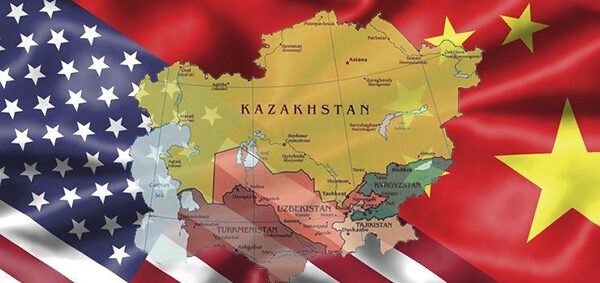
The United States is placing special hopes on Central Asia.
According to the Kazakh website Azh.kz, during the visit of Kazakhstan’s President Kassym-Jomart Tokayev to Washington, a strategic agreement was signed between the national mining company Tau-Ken Samruk and US investors on the joint development of the Upper Kairakty and North Katpar tungsten deposits in the Karaganda region. Kazakhstan ranks second in the world in tungsten reserves, after China.
Under the agreements, the US side will fully finance the project, with total investments of about $1.1 billion, including the construction of two beneficiation plants and a metallurgical plant in Kazakhstan. The new complex is expected to produce not raw concentrate, but high value-added products.
Tau-Ken Samruk will retain a 30 percent stake in the joint venture, while 70 percent will go to the American partners.
The Pentagon has one year to rid itself of dependence on China. Whether China will allow itself to be pushed out of the market remains an open question.
By Tural Heybatov
News.Az