Hüsamettin İnaç: Claims about Türkiye’s unconditional support for Iran are erroneous - INTERVIEW


At the height of Iran’s current crisis, analysts are increasingly asking a pointed question: has Türkiye, intentionally or not, helped sustain the Iranian regime? Despite wielding considerable leverage over Tehran, Ankara has once again chosen restraint, avoiding escalation and prioritizing controlled stability. Some see this as a pragmatic strategy aimed at preserving regional security; others interpret it as indirect support for a regime that has long acted against Türkiye’s interests, from Syria to the Caucasus.
This apparent contradiction — Türkiye’s fundamental opposition to the policies of Iran’s ruling clerics alongside its reluctance to repeat an “Iraq scenario” — lies at the heart of Ankara’s approach to Tehran. Where does the line fall between strategic patience and excessive self-restraint? Why has Türkiye refrained from pushing Iran to the brink, even as the regime’s own logic drives it toward a dead end? And does such caution risk creating deferred threats for Türkiye itself?
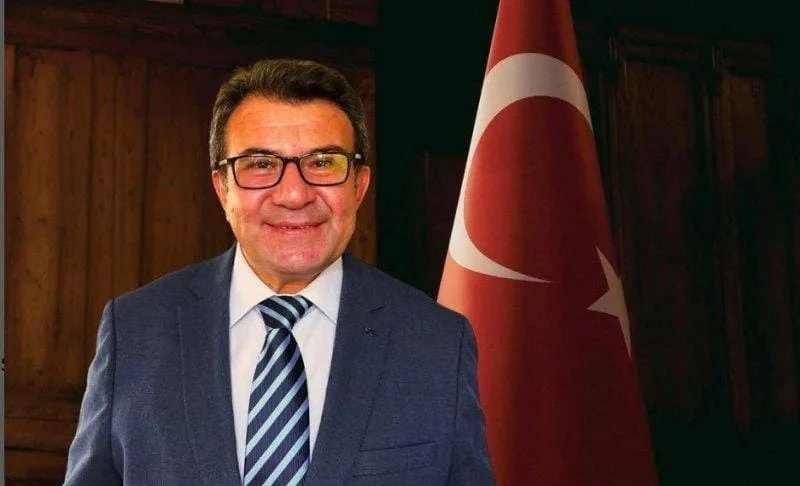
News.Az discusses these questions with Hüsamettin İnaç, a Turkish political scientist and professor at Dumlupınar University.
- If Ankara has repeatedly refrained from pressuring Tehran and deliberately avoided using its leverage, isn’t it time to acknowledge that the core problem lies in Iran’s behavior, not in the myth of “Turkish support”, and that Iran’s zero-sum worldview will eventually push the regime into a strategic dead end?
- First and foremost, claims that Türkiye provides unconditional support to the Iranian regime are fundamentally mistaken. A closer look at developments since the 1979 Islamic Revolution, and particularly since 2009, shows that Iran has consistently pursued policies hostile to Türkiye, not only in the Middle East but also at regional and global levels.
For example, in 2009, when the U.S., citing Iran’s nuclear program, seemed poised for military action, Türkiye, in coordination with Brazil, played a crucial role at the United Nations in largely averting such an outcome.
In the years that followed, particularly during waves of domestic protests in Iran, Türkiye had both the leverage and the opportunity to significantly destabilize the situation, escalate internal unrest, or even facilitate scenarios of internal fragmentation. Despite these options, Ankara deliberately exercised restraint and refrained from such actions. Yet Iran continued to adopt an openly antagonistic stance toward Türkiye, repeatedly opposing Ankara on key regional issues. This behavior stems primarily from the Iranian regime’s adherence to a rigid “zero-sum” logic in international relations.
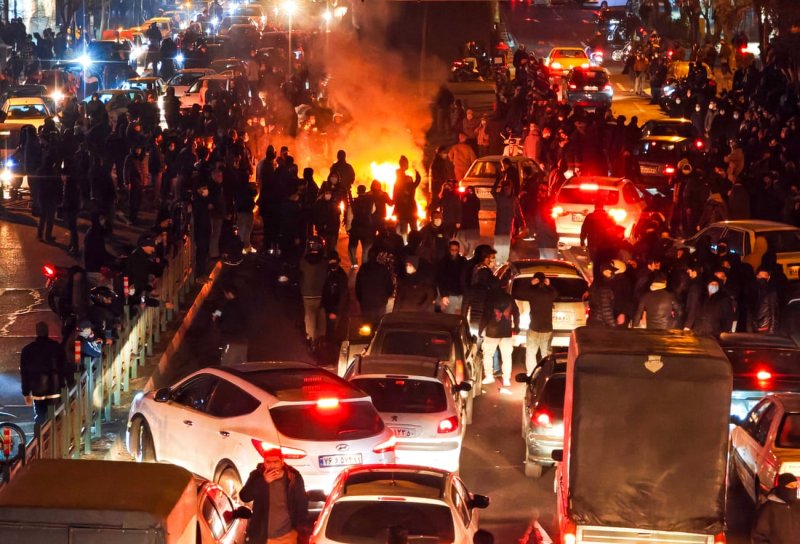 Ongoig protests in Iran (Photo: Getty Images)
- Where is the red line drawn? At what point does Türkiye’s rivalry with Iran move beyond diplomacy and become a direct security concern?
- From Tehran’s perspective, any regional success by Türkiye is automatically seen as a loss for Iran. Operating under this assumption, Iran has repeatedly collaborated, even with Israel or other actors hostile to Türkiye, solely to undermine Ankara.
In the period following the 1979 revolution, Qasem Soleimani played a particularly active role in facilitating the infiltration and expansion of PKK networks within Türkiye, actions that ultimately resulted in the deaths of thousands of Turkish citizens.
In Syria, the contrast between the two countries’ positions has been equally stark. Türkiye supported the opposition to the Assad regime, while Iran, in coordination with Russia, backed Assad, a policy that contributed to the deaths of hundreds of thousands of Muslims. After Hezbollah entered the conflict in 2011, thousands in Eastern Ghouta were besieged and starved simply for opposing the regime.
A similar divergence was evident in Iraq. Türkiye traditionally supported the central government in Baghdad, and earlier, Saddam Hussein’s regime, while Iran backed the Barzani administration in northern Iraq.
Today, Israel and Iran are effectively operating in parallel in Syria, both promoting fragmentation and the emergence of a weak, federalized state. Along the Latakia–Tartus corridor in particular, Iran, together with remnants of the Assad regime, plays a significant role in efforts to detach the region from central authority. In Lebanon, Iran’s support for Hezbollah undermines the country’s territorial and political integrity, while Türkiye pursues a policy focused on preserving national unity.
- If Iran has been systematically working against Türkiye’s rise — from Karabakh to Syria, where does regional rivalry end and overt containment begin? Is Ankara prepared to call this policy by its proper name?
- During the 2020 Karabakh War, Iran openly sided with Armenia, providing logistical, technical, and advisory support. Furthermore, recent reports indicate that Iranian loitering munitions and suicide drones have been deployed in Syria’s Ashrafieh and Sheikh Maqsoud areas, where government forces are attempting to clear PKK elements.
In short, Iran has consistently sought to weaken Türkiye on every front — politically, economically, and strategically. Its aim has been to divide Türkiye, undermine its economy, and limit its influence across the Middle East, the Caucasus, the Balkans, and beyond, using every tool at its disposal.
 Photo: Shutterstock
- Can Türkiye’s approach to Iran be understood as a deliberate effort to avoid an “Iraq scenario” in its foreign policy?
- Türkiye has never pursued, and does not pursue, a policy aimed at dividing or dismantling Iran. It is widely known that more than half of Iran’s population are Azerbaijani , Turks. If Ankara wished, it could potentially attempt to mobilize this population, triggering a radically different scenario that might lead to a fragmented and destabilized Iran. However, Türkiye has never resorted to such measures against Iran or any other state. Dividing or destroying countries is not part of its foreign policy tradition.
At present, Türkiye operates on the principle that external interference is unacceptable unless a strong, capable opposition emerges — one able to institutionally replace the regime in a context where the state and ruling system have effectively merged. This cautious stance is shaped above all by the lessons of Iraq.
Following the U.S. invasion of Iraq in 2003, carried out under the banner of regime change, the Iraqi state itself was effectively dismantled. The destruction of state institutions plunged the country into deep fragmentation, a process that, regrettably, has yet to be fully reversed.
Drawing lessons from this experience, Türkiye advocates for Iran’s continued existence as a unified state, without partition or disintegration. This stance, however, should not be interpreted as support for the current mullah regime. Türkiye fully recognizes that the regime engages in widespread repression, exerts brutal pressure on the population, particularly on Azerbaijani Turks living in Iran, and systematically violates human rights.
Ankara’s position is that any regime change must be determined by the Iranian people themselves. Such a transformation should be controlled, legitimate, and rooted in broad public support. Türkiye remains committed, under all circumstances, to preserving Iran’s territorial integrity and sovereignty. Were that sovereignty to collapse and the country to disintegrate, the greatest harm would fall not on the regime or its elites, but on the Iranian people — a population Türkiye regards as friendly and fraternal.


Similar news