INTERVIEW: Who will win: Trump or Harris? – Professor Donald Green on the 2024 U.S. election


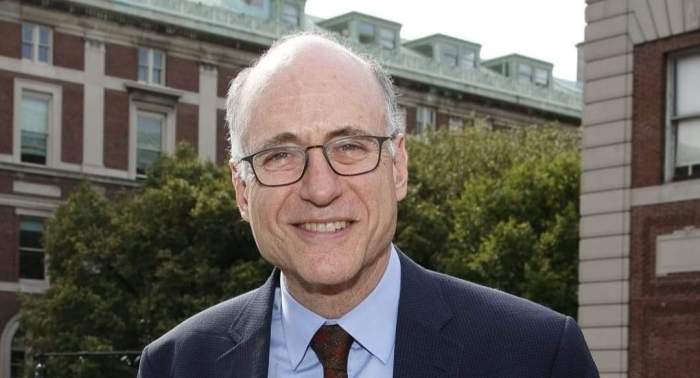
Donald Philip Green (Ph.D., University of California, Berkeley, 1988) is the author of five books and more than one hundred essays. His research spans a wide range of topics, including voting behavior, partisanship, media effects, campaign finance, hate crimes, and research methods. In recent years, Professor Green has focused on using field experiments to explore how political campaigns mobilize and persuade voters.
In 2003, Green was elected to the American Academy of Arts and Sciences, and in 2009, he received the Heinz I. Eulau Award for the best article published in the American Political Science Review. In 2010, he founded the Experimental Research Section of the American Political Science Association and served as its first president.News.Az presents an exclusive interview with Professor Donald Philip Green.
- How do you assess the electorate in the upcoming election between Donald Trump and Kamala Harris? Are there significant changes in voter preferences compared to previous elections?
- The configuration of voter preferences has been remarkably stable over time, reflecting longstanding partisan divisions. Recall that back in 2016, many pundits wondered whether stalwart Republicans would vote for Trump given his unorthodox views, yet more than 90% of them did. The divide between Democrats and Republicans is very close, with Democrats holding a small popular vote edge that is often overturned in the Electoral College. Surprisingly, the many events that have occurred since January 6, 2021, have had little effect on the overall balance of voter preferences.
- What trends do polls show in this election cycle, especially regarding those groups that can decide the outcome? How reliable are polls given the current political climate?
- It’s uncertain whether polls will be accurate, given their low response rates (under 5%) and the challenges of determining which respondents will actually vote. (The U.S. is known for its notoriously low voter turnout.) As for trends, there have essentially been none. Harris saw a slight bump following the debate, but the race remains a 50-50 split.
-There is much discussion about potential voter fraud. How well-founded are these concerns based on real data and field experiments?
- Claims of voter fraud are baseless nonsense. Every serious attempt to investigate these claims reveals them to be either fabricated or exaggerated. This applies to specific allegations about ballot box stuffing, repeated voting by individuals, malfunctioning tabulation systems, or statistical anomalies. These accusations are purely political rhetoric.
- What is your take on the issue of so-called 'dead votes' and their impact on the election results? Is this a real concern or just a politicized topic?
- I’m not quite sure what is meant by 'dead votes.' If it refers to the idea that dead people are voting, that’s complete nonsense. The U.S. maintains open voting records (with some states even providing them online) that allow anyone to verify voter participation. If such incidents occur at all, they are so rare that they could never influence the outcome of an election.
- Based on your experience studying voting behavior, who do you think has a better chance of winning the upcoming election, and what could be the decisive factor in the Trump-Harris race?
- It’s essentially a tie, so the decisive factor will be which side can better mobilize its supporters to vote. It’s still unclear whether either side has a distinct advantage when it comes to voter turnout efforts.


Similar news