Iran is no longer safe




Editor's note: Moses Becker is a special commentator on political issues for News.Az, a PhD in political science and an expert on interethnic and interreligious relations. The article expresses the personal opinion of the author and may not coincide with the view of News.Az.
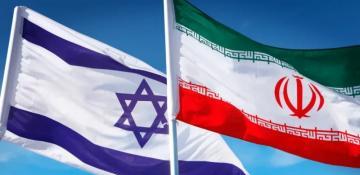
Early in the morning on July 31, 2024, the global community was informed by the media about the elimination of Ismail Haniya, a member of the Hamas politburo, its chief financier, and ideologue. Haniya was killed in his apartment in Tehran by a guided missile attack from a drone (or, according to other sources, an aircraft). Earlier, three of his sons were killed in Gaza in an airstrike. Additionally, on July 13, the commander of Hamas’s military wing, Mohammed Deif, was also eliminated. Thus began the hunt for the organizers and inspirers of the genocidal massacre carried out by Hamas against Israeli civilians on October 7, 2023.These events highlight that Iran is no longer a safe haven for those who harbor ill intentions against the Jewish people and their allies. Examples include the liquidation of Iranian nuclear physicists (such as Mohsen Fakhrizadeh) and the anniversary of the killing of General Soleimani. On the evening of July 30, it was also reported that Fouad Shukri, the second-in-command of Hezbollah, was killed in the Shia district of Beirut with the help of an Israeli drone. Shukri, the chief missile designer and head of the terrorist organization’s general staff, was wanted by the United States, which had placed a $5 million bounty on his head for the 1983 Beirut bombing that killed 241 U.S. Marines. Shukri was eliminated as the organizer of the tragedy on July 27 in the city of Majdal Shams on the Golan Heights, where 12 children were killed as a result of unprovoked aggression.
These attacks have raised concerns about a potential wider regional war. Israeli Prime Minister Benjamin Netanyahu stated that Hezbollah would "pay a high price" for this attack. The global community's fears of possible conflict escalation are well-founded, considering that up to 1.5 million Druze live in the region. The Druze are a closely-knit ethno-religious group that should not be provoked. Amid the increased tension on the Israeli-Lebanese border, France, Norway, Canada, Sweden, and Saudi Arabia have urged their citizens to leave Lebanon immediately. Iranian Foreign Ministry spokesman Nasser Kanaani stated that "any reckless action by the Zionist regime could lead to an expansion of instability, insecurity, and war in the region." This statement should have been directed at Iran's top leadership, which itself is a major source of instability in the Middle East.
Against this backdrop, a statement by Turkish President Recep Erdogan about a possible military intervention in the region was notable. The purpose of this move remains unclear: whether he intends to "enter" Palestine or "visit" Benjamin Netanyahu. The reaction of several European politicians was quite harsh. Recent frictions between Athens and Ankara, supported by France, and the fact that Israel is a strategic ally of the U.S., should not be forgotten. In the eastern Mediterranean, the U.S. aircraft carrier Gerald Ford, along with its accompanying ships, is present.
Turkey and Israel do not share a common border; between them lies Syria, with which Ankara has serious conflicts. The Yemeni Houthis, under Iran's influence, have also announced their entry into a new stage of conflict with Israel. Their leader stated that they are entering a battle with no red lines: "It is time to unite Arabs and Muslims, use their capabilities, and join this battle together." However, such unity does not exist and never will. In response to Netanyahu's speech in the U.S. Congress, Erdogan invited Palestinian Authority leader Mahmoud Abbas to Ankara, who did not come, indicating he had more important patrons.
There are irreconcilable struggles for leadership in the Islamic world. For Iran, Saudi Arabia, and Turkey, the Palestinians play the role of the younger brother that everyone wants to patronize. Geopolitical competition among these countries is complicated by attempts to establish dominance in the region. For the Sunni majority, Iran's attempt to establish Shia dominance is unacceptable, while Turkish leadership is rejected by Arab countries due to historical grievances. The Saudis, as custodians of the holy sites, have financial resources but lack the necessary military-economic potential, which Israel can provide. This is why the Hamas attack on October 7, 2023, disrupted an almost finalized agreement between Saudi Arabia and Israel.
The question of a large-scale war between Israel and Hezbollah remains relevant. The elimination of this terrorist group would weaken Iran's position, benefiting the Gulf countries, Egypt, and Turkey. As a result, the region could be reconfigured, impacting the global balance of power. However, as stated by the Israeli Foreign Ministry, the only way to prevent a full-scale war, which would be devastating for Lebanon, is to force Hezbollah to comply with UN Security Council Resolution 1701. The outcome will depend on Iran's stance, as it is already considering the scenario of a major regional war. Given the region's multiconfessional and fragmented nature, the emergence of new states and alliances can be expected.
(If you possess specialized knowledge and wish to contribute, please reach out to us at opinions@news.az).


Similar news