Is Iran slamming on the brakes?


Editor's note: Moses Becker is a special commentator on political issues for News.Az, a PhD in political science and an expert on interethnic and interreligious relations. The article expresses the personal opinion of the author and may not coincide with the view of News.Az.
Recently, Iran has been showing some promising changes. President Masoud Pezeshkian, in an interview with journalists during the session of the UN General Assembly , stated: "We are ready to sit at the negotiating table with Europeans and Americans to engage in dialogue and negotiations. We have never supported Russian aggression against Ukrainian territory." This is a direct message to the U.S. and its allies. Additionally, the president expressed Iran’s willingness to ease tensions with Israel if a similar initiative comes from the Israeli side. "We are ready to lay down our arms if Israel makes the same decision."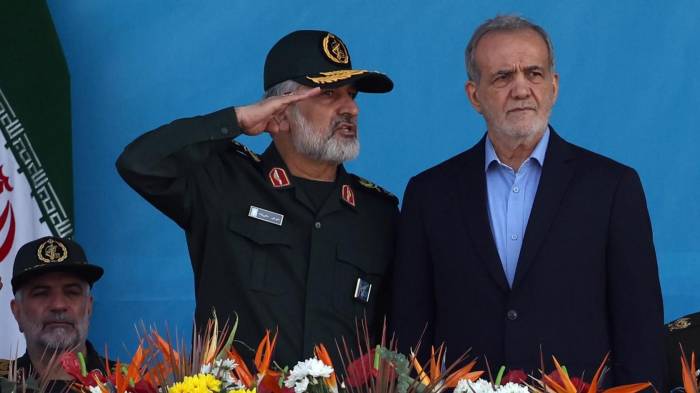
Understanding the complexity of the situation due to the conflict between Hezbollah and Israel and fearing a large-scale war that could involve the U.S. and its allies, Pezeshkian emphasized that Iran does not seek to destabilize the region. Moreover, the Iranian president was seen conversing with a group of rabbis during the UN session. Nevertheless, the situation in the region remains tense, and Iran will find it extremely difficult to accept the potential loss of its main ally — Hezbollah. Hamas has already ceased to exist, which deals a blow to Iran’s prestige and strategic capabilities.
Meanwhile, the situation in the Middle East is heating up again. After dealing with threats in the south, Israel turned its attention to the northern part of the country. The events of September 17 and 18 marked the start of decisive actions, when a series of explosions targeted the pagers and radios used by Hezbollah commanders in different areas of Lebanon, impacting their combat capabilities.
On September 19, Israel began launching intense airstrikes on Lebanese territory, involving a large number of aircraft. All this happened against the backdrop of a speech delivered from a bunker by Hezbollah leader Hassan Nasrallah. On September 23, the Israeli Defense Forces launched Operation "Northern Arrows." Lebanese residents were warned that all facilities where Hezbollah had placed its arsenals would be bombed, regardless of whether it was a residential house or a cattle shed.
In this regard, Iranian leadership realized that Hezbollah might not hold out. Hundreds of thousands of Lebanese fled from the bombings from the south to the north of the country, and many crossed the border into Syria, where Sunni militias suddenly began to form, sensing the weakening of Shia and Alawite groups. The southern suburbs of Beirut , especially the Dahiya quarter, where Hezbollah's "brain" and Nasrallah's bunker are located, were subjected to intensive bombardment. Israeli Prime Minister Benjamin Netanyahu promised to continue the offensive against Hezbollah, which, in his words, is "leading Lebanon to the brink of disaster."
As a result of a series of precision strikes, Ibrahim Muhammad Qubaisi, also known as Abu Issa, the commander of Hezbollah’s rocket division , was killed. Realizing that they could not withstand Israel, Hezbollah's leadership requested Iran to attack Israel, but Tehran refused. According to sources, Iranian officials informed Nasrallah that now was not the right time to strike the Jewish state.
The Shia movement Hezbollah officially confirmed the death of Secretary-General Hassan Nasrallah o n September 28.
Despite statements from the Iranian leadership that Hezbollah is their "red line," Iran has so far shown no signs of providing assistance to its proxy. On the contrary, there is a shift toward a more conciliatory tone. In New York, President Pezeshkian, despite attempts by Iranian Foreign Minister Abbas Araghchi to disavow his position, was supported by former Iranian Foreign Minister Mohammad Javad Zarif, who noted that the president essentially condemned "Israeli crimes" and portrayed Iran as a fighter for peace and a proponent of nuclear disarmament in the region.
It is noteworthy that in recent statements, Israel is no longer referred to as a "cancerous tumor," although it continues to be accused of provoking conflicts in the region. In a conversation with American journalists, Pezeshkian clearly stated, "We do not want war," accusing Israel of setting traps to drag Iran into a conflict in which, according to him, there will be no winners.
A sign of the change in Iran's stance can also be seen in an editorial published in the newspaper Kayhan, with the traditional anti-Israel headline, "The Countdown Has Begun!" Although the headline maintains the usual rhetoric, the article grudgingly acknowledges Israel’s "superiority in technology and intelligence," attributing it to Western support, while Hezbollah is said to be supported only by Iran, Palestine, Yemen, and resistance groups in Iraq.
It seems that the Iranian leadership realizes that the Shia group is doomed and that saving it while risking Iran’s own interests is pointless. Operation "Northern Arrows" will likely transition from airstrikes to a ground phase, which will result in the complete defeat of Hezbollah’s missile and personnel capabilities.
With Hezbollah’s collapse, the power struggle in Syria will intensify, and Iraq may see increased tensions between the Shia majority and the Sunni minority. The Kurdish autonomy in Erbil may seize the opportunity to gain full independence. According to the latest reports, during the bombing of the Shia quarter of Beirut on September 27, 2024, Hezbollah's bunker was destroyed, where its leader Hassan Nasrallah was presumably located. Responding to the event, Iranian politician Ali Larijani stated, "The resistance will produce new leaders." His words likely confirm the elimination of Hassan Nasrallah and his closest associates.
(If you possess specialized knowledge and wish to contribute, please reach out to us at opinions@news.az).


Similar news