Israel’s ‘protection’ of Druze civilians - Geopolitical cover


Editor's note: Aysel Mammadzada is an Azerbaijan-based journalist. The article expresses the author's personal opinion and may not coincide with the view of News.Az.
In recent years, Israel’s military interventions in Syria, often justified under the guise of “protecting the Druze community,” have become a revealing prism through which we can understand the complex geopolitical chessboard in the Middle East.
Yet, this narrative is deeply misleading. The repeated emphasis on protection masks far more calculated, strategic motives that prioritize Israel’s security and regional influence over the well-being of Syrian Druze or any genuine humanitarian cause.
It is crucial to unravel these layers, expose the contradictions inherent in Israel’s rhetoric, and acknowledge how external powers, including Israel, have fueled Syria’s fragmentation and prolonged its suffering.
Israel’s strategic calculations
Geographically, the Druze-majority Sweida region in southern Syria lies alarmingly close to Israel’s occupied Golan Heights and the sensitive Jordanian border. Israel’s anxieties over Iranian-backed militias, Hezbollah forces, and regime troops gaining a foothold in this region are understandable from a security standpoint. However, Israel’s response has been far from a simple defensive posture. The “protection” narrative serves as a diplomatic and propaganda tool to justify incursions and military actions that extend Israel’s reach into Syrian territory.
Israel’s internal Druze community, numbering roughly 150,000 citizens, plays a significant role within the country, including military service in the Israeli Defense Forces. By claiming to safeguard their kin across the border, Israel crafts a narrative of kinship and moral responsibility, which in reality doubles as a strategic campaign to cultivate allies and influence on Syria’s fractured ground. This relationship is less about genuine solidarity and more about leveraging a minority community to create a buffer zone, a politically expedient, militarized perimeter to counter hostile forces.
The instrumentalization of the Druze thus reveals a cynical dimension to Israel’s policy. It is not protection in the traditional humanitarian sense, but protection as a euphemism for geopolitical control.
The contradiction between rhetoric and reality
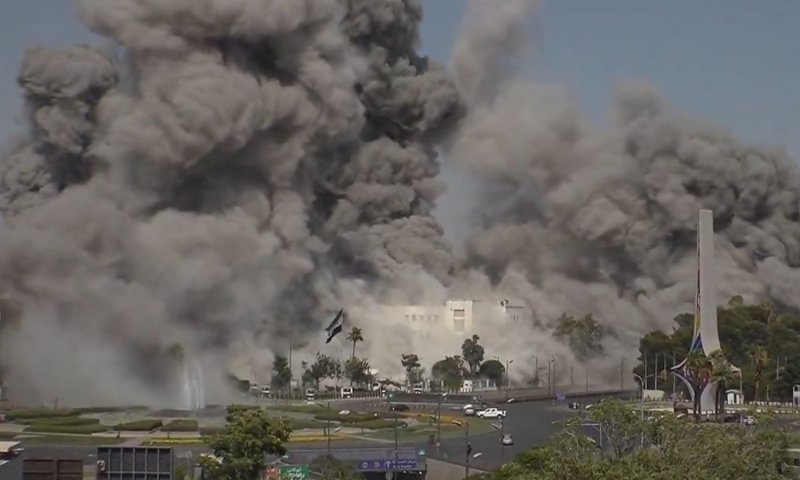
Despite Israel’s high-profile claims of defending Druze civilians, the reality on the ground paints a far different picture. Multiple military strikes attributed to Israel in southern Syria have caused civilian casualties and infrastructural destruction. Such actions reveal the hollow core of the protection narrative, exposing it as a thinly veiled political façade.
When civilian lives are lost or disrupted under the pretext of their defense, it becomes clear that Israel’s interventions prioritize tactical advantage over the sanctity of human life. This contradiction undermines Israel’s moral standing and complicates its relationship with the Druze community, potentially breeding resentment rather than allegiance. Thus, the “protection” argument, while rhetorically powerful, fails both ethically and practically.
Syria’s fragmentation: Power and proxy
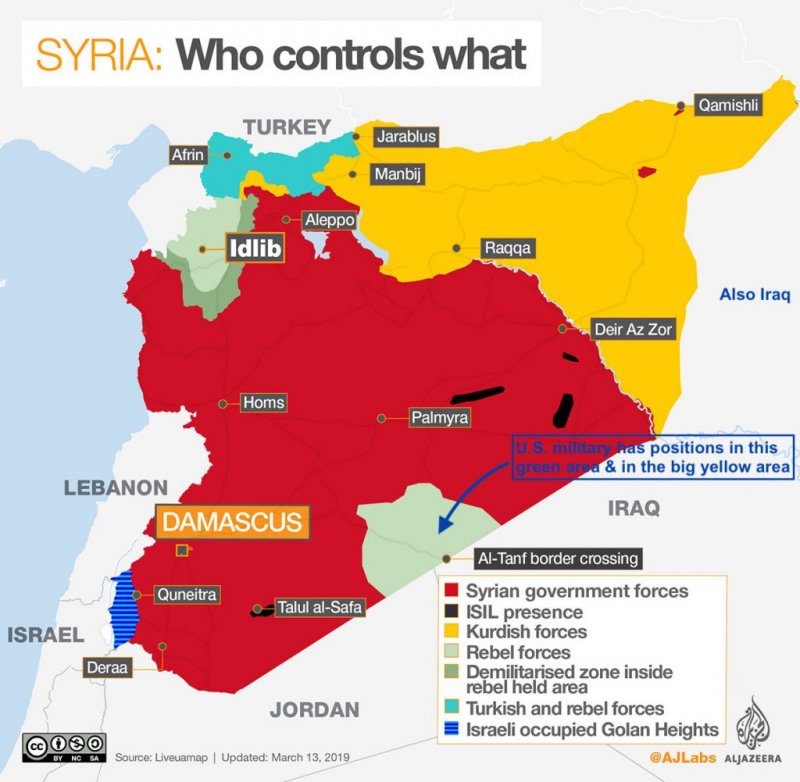
The ongoing Syrian civil war, ignited in 2011, shattered the country’s territorial and political unity, resulting in a de facto partition into three spheres of influence:
- Regime-controlled areas: Dominated by the Assad government, backed by Russia and Iran, including Damascus, Latakia, and the southern provinces.
- Northeast Syria: Controlled by Kurdish-led Syrian Democratic Forces (SDF), enjoying a semi-autonomous status with U.S. military and political support.
- Northwest Syria: Held largely by opposition groups and Türkiye-supported factions, including extremist Islamist elements primarily active in Idlib.
This patchwork reflects more than Syria’s internal strife; it is a battleground for regional and global powers, Russia, Iran, the U.S., Türkiye, and Israel, all pursuing their own interests at the expense of Syrian sovereignty and stability.
The United States and Kurdish forces
The U.S.’s military and political alliance with Kurdish groups in northeast Syria is a strategic maneuver designed to counterbalance Iranian and Russian influence, both of which bolster the Assad regime. Kurdish forces have proven militarily effective against ISIS, solidifying their value to American objectives. However, this relationship also serves as a calculated check against Türkiye’s ambitions, complicating an already tangled regional equation.
While the U.S. touts its support as a means of regional security and counterterrorism, it also risks perpetuating fragmentation by enabling a quasi-autonomous Kurdish enclave within Syria, fueling tensions with Ankara and Damascus alike.
Instability, suffering, and a fractured future
The fragmentation of Syria has had devastating humanitarian and political consequences. Millions have been displaced internally and across borders, ethnic and sectarian divides have hardened, and violent militias and foreign armies operate with near impunity. The country’s infrastructure lies in ruins, and the prospect of reunification or stable governance remains bleak.
Foreign interventions, driven largely by geopolitical self-interest, have undermined Syria’s sovereignty and national cohesion. This external meddling, whether by Israel under the Druze pretext, Iran’s proxy militias, Russia’s military campaign, or U.S.-backed Kurdish forces, has perpetuated a cycle of violence and fragmentation. The Syrian people, caught in the crossfire, bear the greatest burden.
The moral and political imperative
The situation in Syria, and Israel’s role in it, is emblematic of a wider tragedy where the language of protection and humanitarianism is co-opted to justify military dominance and geopolitical maneuvering. This cynical exploitation of minority communities like the Druze for strategic gain is not only morally reprehensible but also strategically short-sighted.
Genuine protection should not be a cover for expanding influence or controlling territory. It should prioritize the safety, dignity, and self-determination of vulnerable populations. The ongoing destruction and civilian harm contradict every claim to moral high ground Israel or any other external actor might assert.
Moreover, Syria’s fragmentation will not be resolved by continuing power struggles or external proxy wars. The international community must recognize that peace cannot be brokered through military interventions masked as protection or security concerns. True stability demands respect for Syria’s sovereignty, inclusive political dialogue that embraces all communities, including the Druze, and an end to foreign interference driven by competing agendas.
In the end, Israel’s “protecting the Druze” narrative reveals a broader pattern repeated across the Syrian conflict: the manipulation of identity and humanitarian rhetoric to veil harsh geopolitical realities. The Syrian people deserve more than to be pawns in these high-stakes power games. As external actors continue to prioritize their own strategic gains, Syria’s territorial integrity, social fabric, and future peace remain in peril.
It is imperative that the international community, regional powers, and Israel itself confront these contradictions and reconsider policies that sacrifice human lives and national sovereignty for transient tactical advantages. Without such a fundamental shift toward genuine respect for human rights and national self-determination, Syria’s tragedy will continue to unfold, marked by fragmentation, suffering, and instability, with no end in sight.
Only by rejecting hollow protection narratives and committing to honest, inclusive conflict resolution can we hope to break the cycle of violence and lay the groundwork for a sustainable peace that honors the rights and dignity of all Syrians, including the Druze. Anything less is a betrayal of the very principles these actors claim to uphold.
(If you possess specialized knowledge and wish to contribute, please reach out to us at opinions@news.az).


Similar news