Jeddah summit: Can the U.S.-led ceasefire bring peace to Ukraine?


.png)

The United States and Ukraine held high-level diplomatic talks yesterday, marking a pivotal step in their partnership amid the ongoing conflict with Russia. These discussions focused on military aid, economic cooperation, and long-term security assurances for Ukraine, reinforcing the U.S. commitment to its ally in both the immediate and strategic future.

American political commentator and research scholar of International Affairs, Peter Tase, shared his insights on the discussions with News.Az.
Mr. Tase described the talks as crucial for achieving peace in Europe. “The meeting was highly constructive. The Kingdom of Saudi Arabia played a key role by hosting the Russian Foreign Minister on February 18, 2025, and the Ukrainian-U.S. delegations on March 11, 2025,” Tase noted.
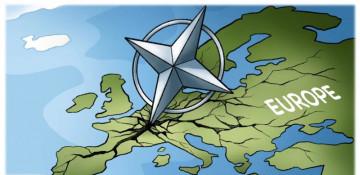
He emphasized that the Jeddah summit has reshaped the European security landscape and influenced NATO's future in Eastern Europe. “With Ukraine remaining outside NATO and the EU for now, a more comprehensive peace agreement and a complete ceasefire appear achievable,” he added.
Source: Reuters
A major outcome of the discussions was Ukraine’s agreement to a U.S.-proposed 30-day immediate ceasefire, contingent upon Russia’s acceptance and simultaneous implementation. This truce is intended as a first step toward broader peace negotiations.
Tase highlighted the continued intelligence-sharing and military support from Washington to Ukraine despite previous tensions between Ukrainian President Volodymyr Zelenskyy and the White House. “Although President Zelenskyy refused to sign an agreement granting the U.S. greater access to Ukraine’s rare earth minerals and declined to participate in a joint press conference with President Trump on February 28, 2025, he has now agreed to a U.S.-led ceasefire. This is a significant breakthrough,” he stated.
He also compared the summit’s impact to historical diplomatic milestones, arguing that these negotiations have been more effective than previous European security talks, including the Potsdam Conference of 1945.

Source: www.history.com
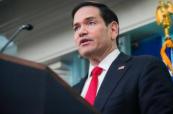
Under the leadership of U.S. Secretary of State Marco Rubio, these negotiations are viewed as instrumental in securing long-term peace and economic prosperity for Ukraine. “The only leader who can bring stability to Europe and Ukraine is President Donald J. Trump,” Tase asserted.
The U.S. has committed to resuming its intelligence-sharing with Ukraine and reinstating security assistance. Additionally, Washington and Kyiv have agreed to finalize a comprehensive agreement on developing Ukraine’s critical mineral resources. Plans for an investment fund to support Ukraine’s post-war reconstruction are also being formulated.

Source: BBC
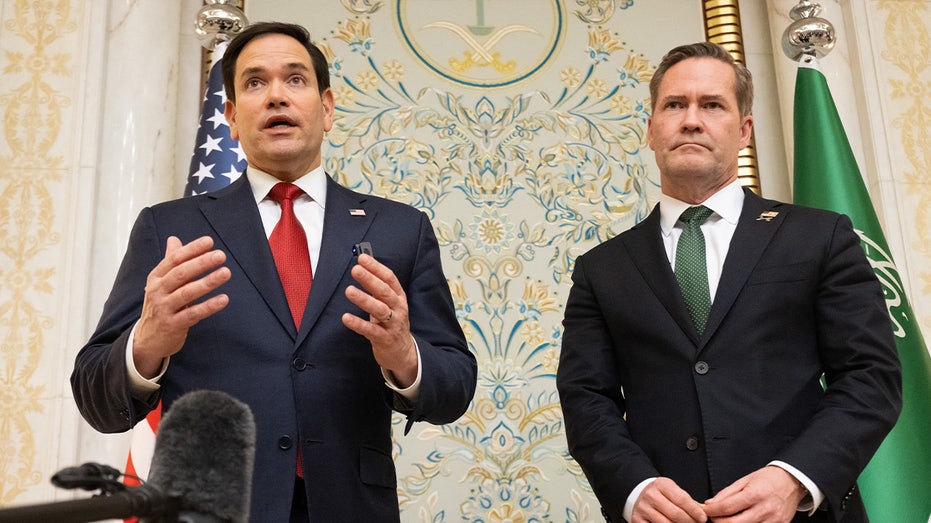
Tase praised the professionalism and coordination of the U.S. delegation, which included Special Envoy for the Middle East Steve Witkoff, Secretary of State Marco Rubio, and National Security Advisor Mike Waltz.
However, he criticized past Western policies toward Ukraine, arguing that the U.S. and EU failed to provide sufficient military, intelligence, and economic aid between 2013 and early 2025. “It was a major strategic misstep by Joe Biden and key EU nations to neglect effective deterrence measures,” he said.
Source: Deutch Welle
Tase also claimed that some of Trump’s advisors had engaged in private discussions with Zelenskyy’s political opponents, hinting at possible leadership changes in Kyiv. He further alleged corruption within the Ukrainian government, accusing Zelenskyy’s chief of staff, Andriy Yermak, and his associates of misconduct.
Tase underscored Türkiye’s critical role in the peace process but cautioned that President Recep Tayyip Erdoğan’s involvement could introduce new complexities for Trump’s diplomatic efforts. “A strong and trusted alliance between President Trump and Erdoğan is essential for a durable peace in Ukraine,” he stated.

Source: Anadolu Agency
He also highlighted the geopolitical importance of the United Arab Emirates and Poland in ensuring Eurasian security and economic stability. “Sheikh Mohamed bin Zayed Al Nahyan is a great statesman, and his country’s geopolitical influence and economic strength often surpass NATO’s security capabilities,” Tase remarked.
Additionally, he criticized NATO members for reducing their financial commitments to the alliance while continuing economic engagements with Russia over the past two decades. “Now that President Trump seeks diplomatic channels with Putin to prevent a global escalation, the media is relentlessly scrutinizing his administration. Yet, when European nations undermined NATO’s financial strength while profiting from Russian trade, it was business as usual,” he noted.

Source: Politico.eu
Tase concluded by urging President Trump to engage with UAE leadership to discuss Eurasian security strategies and potential alliances that could redefine global stability. “NATO will continue to face challenges due to the financial hesitancy of its member states,” he warned.
The diplomatic talks in Jeddah mark a crucial moment in U.S.-Ukraine relations, introducing a temporary ceasefire and reinforcing economic cooperation. However, underlying political tensions, leadership challenges, and broader geopolitical shifts will shape the long-term outcomes of these negotiations. As the global security landscape evolves, the roles of key stakeholders—including the U.S., Ukraine, Russia, Türkiye, the UAE, and Poland—will be instrumental in determining the future of European stability.


Similar news