Is NATO ready for Europe’s new security reality?


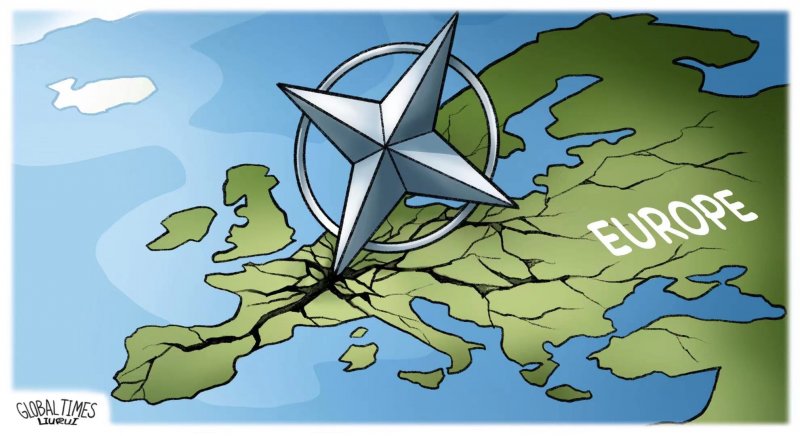
NATO’s top military officials came together in Brussels on 19 May for a meeting of the Military Committee in Chiefs of Defence Session, one of the Alliance’s most important military-level formats. The meeting comes at a critical moment for European security, as the war in Ukraine continues to shape NATO’s defence planning, force posture and long-term strategic priorities.
The Military Committee is NATO’s highest military authority and serves as the main source of military advice to the North Atlantic Council. In practical terms, this is where political guidance from the Alliance is translated into military planning, operational readiness, deterrence measures and capability requirements, News.Az reports.
The session was chaired by Admiral Giuseppe Cavo Dragone, Chair of the NATO Military Committee. According to NATO, the meeting brought together the Chiefs of Defence of all 32 Allied countries, alongside Supreme Allied Commander Europe General Alexus G. Grynkewich and Supreme Allied Commander Transformation Admiral Pierre Vandier.
RECOMMENDED STORIES
The agenda reflected the scale of the challenges facing the Alliance. NATO said the Chiefs of Defence were expected to discuss deterrence and defence, current NATO missions and activities, the Alliance’s military adaptation, innovation, capability development, support for Ukraine, and cooperation between NATO and the European Union.
The opening part of the meeting included remarks by Admiral Cavo Dragone and an act of remembrance. His role is particularly important because the Chair of the Military Committee acts as the principal military adviser to NATO’s Secretary General and the North Atlantic Council. The Committee itself plays a central role in shaping NATO’s military policy, strategy and operations.
One of the key sessions focused on strengthening NATO’s deterrence and defence posture. General Grynkewich, as Supreme Allied Commander Europe, was expected to brief the Chiefs of Defence on Allied Command Operations and the practical steps needed to reinforce NATO’s warfighting readiness. This is especially relevant for the Alliance’s eastern flank, where Russia’s war against Ukraine has forced NATO to rethink logistics, mobility, air defence, force readiness and the ability to move troops and equipment rapidly across Europe.
Another important part of the meeting involved NATO Secretary General Mark Rutte. His participation underlined the political weight of the Brussels session. The military discussions are closely linked to preparations for the next NATO summit, which is scheduled to take place in Türkiye on 7–8 July 2026.
A separate session was dedicated to innovation, adaptation and capability development. Admiral Pierre Vandier, Supreme Allied Commander Transformation, was expected to brief participants on how NATO should adapt to the changing character of modern warfare. For the Alliance, this means not only increasing defence spending, but also investing in technologies and capabilities that have become central to the battlefield: drones, cyber defence, intelligence, precision weapons, air defence, electronic warfare and resilient military infrastructure.
Ukraine remained one of the central issues on the agenda. NATO planned a meeting of the NATO–Ukraine Council at Chiefs of Defence level, with the participation of Ukraine’s Chief of Defence by video link and the Chair of the EU Military Committee. The session was expected to focus on the battlefield situation, Russia's wider strategic threat, and continued NATO and EU support for Kyiv.
The inclusion of the European Union in the discussion is also significant. NATO and the EU are increasingly coordinating their efforts in defence industry, military mobility and support for Ukraine. For Europe, this is no longer only a question of political solidarity; it is also a test of whether the continent can produce enough weapons, ammunition, air defence systems and military equipment to sustain long-term security needs.
The Brussels meeting therefore goes far beyond a routine military gathering. It shows that NATO is moving from crisis response to long-term military adaptation. The Alliance is preparing for a security environment in which Russia will remain a central threat, Ukraine will continue to require sustained support, and European countries will be expected to carry a greater share of the defence burden.
At the end of the session, NATO scheduled a joint press conference with Admiral Cavo Dragone, General Grynkewich and Admiral Vandier. These three figures represent the main pillars of NATO’s military structure: strategic military advice through the Military Committee, operational command in Europe, and long-term transformation of the Alliance.
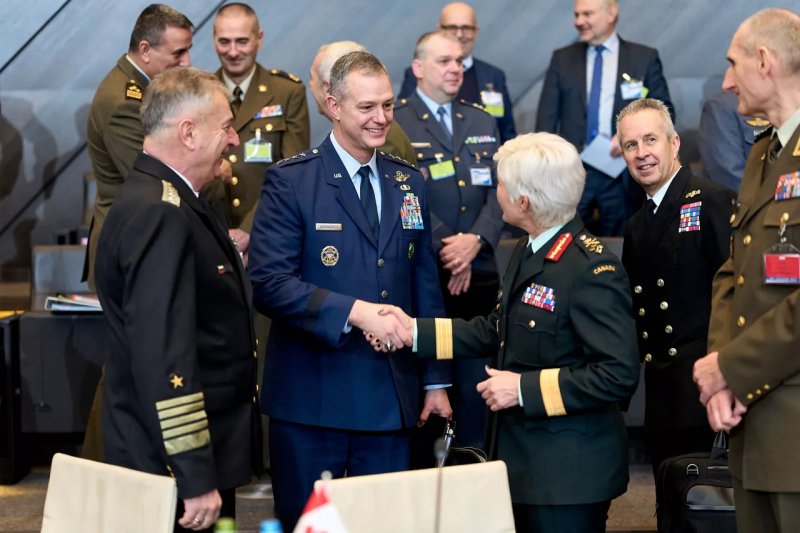
The 19 May meeting in Brussels sends a clear signal: NATO is no longer discussing European security in theoretical terms. The Alliance is now focused on practical readiness — forces, infrastructure, weapons, logistics, defence production and coordination with Ukraine and the European Union. As the war in Ukraine continues and the security situation in Europe remains unstable, the decisions shaped at military level will have direct consequences for the future of the entire Euro-Atlantic region.


Similar news