Can hydrogen save Europe from a new energy crisis?


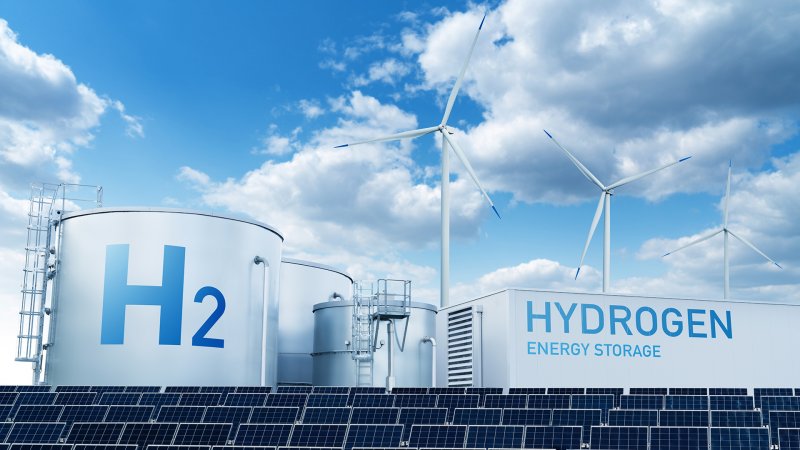
The World Hydrogen Summit & Exhibition 2026 opens in the Netherlands on 19 May, serving as one of the world’s largest platforms dedicated to hydrogen energy, infrastructure, investment and industrial decarbonisation.
Taking place in Rotterdam from 19 to 21 May, the summit brings together representatives of governments, energy companies, ports, investors, technology manufacturers and major industrial corporations.
Against the backdrop of Europe’s struggle for energy security, its efforts to reduce dependence on fossil fuels and its search for new sources of clean energy, the forum is not just an industry event. It is a platform where the future architecture of the energy market is being shaped.
The choice of location is no coincidence. Rotterdam is Europe’s largest port and one of the continent’s key energy hubs. In the future, ports such as Rotterdam may become the main gateways for hydrogen, ammonia, synthetic fuels and other next-generation energy carriers. That is why the World Hydrogen Summit in Rotterdam is not only about technology, but also about what Europe’s new energy logistics could look like in the coming decades.
RECOMMENDED STORIES
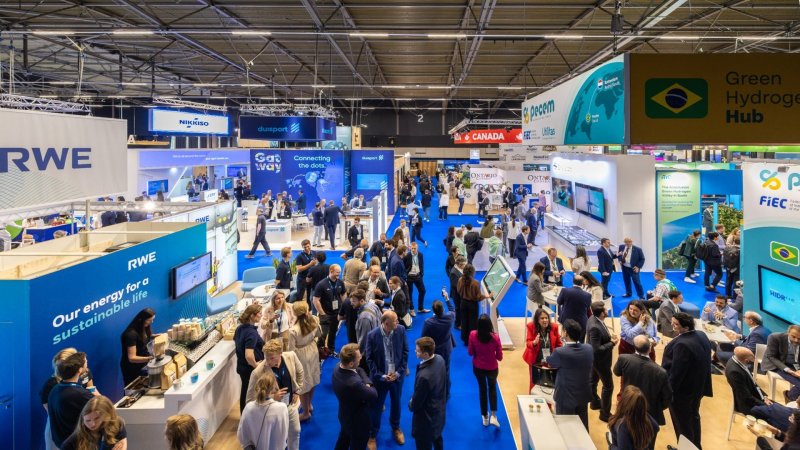
According to the organisers, the summit is being held at Rotterdam Ahoy. The conference runs for three days, from 19 to 21 May, while the exhibition is open on 20–21 May. The programme features more than 300 speakers, over 500 exhibitors, more than 4,850 companies and around 10,000 participants. Among the announced participants are representatives of the Port of Rotterdam, the Hydrogen Council, Shell, Linde, Rheinmetall, Air Products, Japan’s Ministry of Economy, Trade and Industry, the UK government and other major players in the hydrogen sector.
The main significance of this year’s summit lies in the transition from discussing hydrogen to implementing real projects. In recent years, hydrogen has often been described as the “fuel of the future”. Yet the industry has faced serious obstacles: high production costs, insufficient infrastructure, transport challenges, a lack of long-term contracts and investor caution.
Now the key question is different: how can hydrogen be transformed from a promising idea into a real industrial market?
That is why Rotterdam is focusing not only on the production of green hydrogen, but on the entire value chain — from electrolysers and renewable energy to port infrastructure, pipelines, storage, shipping, industrial demand and financing. The official programme includes the Summit Stage, H2 Tech Insights Stage and H2 Tech Innovation Stage, showing that emphasis is being placed simultaneously on policy, technology and commercial solutions.
The participation of major energy companies is particularly important. Shell, Linde and Air Products are among the key names represented at the forum — companies that have long viewed hydrogen as part of the future energy business. For them, hydrogen is not only a climate agenda; it is also an opportunity to preserve their role in global energy as the share of oil and gas gradually declines. Hydrogen could become a new industrial platform where traditional energy giants compete with technology companies, equipment manufacturers and state-backed programmes.
Another important point is the role of ports. The participation of the Port of Rotterdam as one of the key partners of the forum underlines that a hydrogen economy is impossible without logistics. Europe may produce part of its green hydrogen domestically, but significant volumes will likely have to be imported from regions with cheaper solar and wind energy — the Middle East, North Africa, Australia, Latin America and other areas. In that scenario, ports become Europe’s new energy frontier. They will have to receive, store, process and distribute hydrogen and its derivatives.
It is also notable that the forum’s partners and sponsors include not only European companies, but also international players such as the Namibia Green Hydrogen Programme, Sohar, Samsung E&A, InterContinental Energy, TotalEnergies, Siemens Energy, Repsol and the UK government. This shows that the hydrogen agenda has long moved beyond Europe. A global market is taking shape in which countries with cheap renewable resources aim to become exporters, while industrial economies seek to become importers and technology centres.
For Europe, hydrogen is important for several reasons. First, it is part of the energy security strategy that emerged after the crisis caused by the war in Ukraine and Europe’s sharp reduction in dependence on Russian energy supplies. Second, hydrogen is seen as a tool for decarbonising heavy industry — steelmaking, chemicals, refining, shipping and aviation fuels. Third, it is a way for Europe to preserve industrial competitiveness at a time when it faces pressure from the United States, China and countries with lower energy costs.
But the road to a hydrogen economy remains difficult. Green hydrogen production requires huge volumes of cheap renewable electricity. Electrolysers remain expensive, infrastructure is developing slowly, and buyers are often reluctant to sign long-term contracts at high prices. As a result, many hydrogen projects around the world have faced delays. That is why investment is one of the central issues at the Rotterdam summit. The discussion is not only about technologies, but about creating a financial model that can make hydrogen commercially viable.
The official descriptions of the event emphasise that World Hydrogen 2026 is positioned as a platform for partnerships, investment and project development aimed at shaping the future of clean energy. Rotterdam Ahoy says the forum brings together leaders from government, industry, finance and research to advance large-scale hydrogen deployment, global decarbonisation, and hydrogen and carbon capture projects into the 2030s.
The connection between hydrogen and CCUS — carbon capture, utilisation and storage — deserves special attention. This is an important signal: the industry is not betting only on ideal green hydrogen. In reality, the transition period may include different models — green hydrogen produced from renewable energy, low-carbon hydrogen, hydrogen from natural gas with CO₂ capture, ammonia, methanol and other derivatives. This makes the market more flexible, but also fuels debate among environmentalists and policymakers over how clean some of these solutions really are.
Another interesting feature of the summit is that it includes not only conferences and an exhibition, but also visits to hydrogen projects in the Port of Rotterdam. This matters because participants are being shown not just abstract presentations, but real elements of future infrastructure — the kind that could become the foundation of Europe’s hydrogen economy.
For the South Caucasus and Central Asia, this agenda is also significant. Although the region is not yet a centre of the global hydrogen market, its role could grow as green energy, transport corridors and Europe’s interest in supply diversification expand. Azerbaijan, Kazakhstan, Uzbekistan and the wider Caspian region are already actively discussing green energy, electricity exports, hydrogen prospects and new transit routes. If Europe builds out hydrogen infrastructure, the importance of corridors between Asia and Europe may increase not only in transport terms, but also in the energy dimension.
For Azerbaijan, the issue of the energy transition is particularly important. The country remains a major supplier of oil and gas, but it is also developing renewable energy projects, including solar and wind capacity. In the long term, hydrogen could become one of the areas where Azerbaijan may be able to leverage its existing energy infrastructure, geographic position and links with European markets.
For now, this is more of a strategic prospect than a fully developed industry, but forums like this show the direction in which European energy policy is moving.
World Hydrogen Summit 2026 also reflects a broader shift: energy policy is no longer limited to oil, gas and electricity. Hydrogen is becoming part of industrial policy, climate diplomacy, transport logistics, technological competition and investment strategy. Whoever builds large-scale infrastructure, standards, supply chains and consumer markets first will gain an advantage in the new energy economy.
Yet the main challenge remains the same: the hydrogen industry must prove its economic viability. Political statements and climate targets already exist. Technologies are developing. Corporate interest is clear. But without cheap production, guaranteed demand, large-scale infrastructure and clear rules, the market will not be able to grow at the pace expected by politicians and investors.
That is why the summit in Rotterdam matters. It is taking place at a moment when the hydrogen economy stands between two stages: the period of high expectations and the period of hard reality. Europe wants to see hydrogen as a tool of energy independence and decarbonisation. Companies are looking for new markets and sources of profit. Investors are waiting for bankable projects. Ports are preparing for a new role in energy logistics. Governments are trying to understand how to accelerate the transition without damaging industrial competitiveness.
World Hydrogen Summit 2026 shows that hydrogen is no longer only a technological dream. It is becoming a matter of big politics, major investment and industrial competition. But the question that will resonate most loudly in Rotterdam remains open: can hydrogen become a real foundation of the energy transition, or will it remain an expensive and complex niche available only to selected industries? The answer to that question will shape the future of the global hydrogen economy in the 2030s.


Similar news