Macron’s crisis: Fall of a government and the rise of public distrust


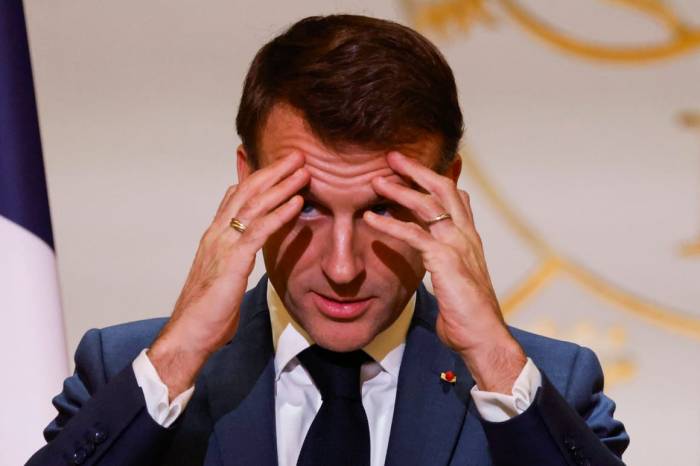
Photo: Ludovic Marin/AFP via Getty Images
The dramatic collapse of France's government following a decisive no-confidence vote signals a critical turning point in the nation’s political history. With 331 deputies supporting the motion—well above the required 289—this result reflects an overwhelming discontent with the leadership of President Emmanuel Macron and unveils a deep-seated crisis within France's political system. This rare political event, the first of its kind since 1962, sheds light on the fragility of French democracy and raises broader questions about the state of governance across Europe.
The roots of this political upheaval trace back to accusations of betrayal. Macron, in his bid to consolidate power, is said to have manipulated the left-wing New People’s Ecological and Social Union (NUPES) led by Jean-Luc Mélenchon. By leveraging their support to counter Marine Le Pen’s National Rally during elections, Macron effectively neutralized his far-right opposition. However, after securing the presidency, Macron sidelined his leftist allies by appointing a prime minister of his choosing, alienating them in the process.This perceived betrayal has come back to haunt him. In an unprecedented move, Mélenchon’s left-wing coalition joined forces with Le Pen’s far-right National Rally to pass a vote of no confidence against the government. Despite their ideological differences, these two factions demonstrated that shared grievances could overcome deep divisions when democracy itself is at stake.
Following the government’s collapse, both Le Pen and Mélenchon have called on Macron to dissolve the National Assembly and hold early presidential elections. They also demand an end to what they describe as political repression against both right- and left-wing opposition figures. These demands reflect widespread frustration among voters who increasingly view Macron’s leadership as authoritarian and disconnected from the will of the people.
Adding to the political tension is the unprecedented speed of this government’s downfall. It now holds the ignominious distinction of being the shortest-lived government in the Fifth Republic since 1958. The events expose not just cracks in Macron’s leadership but also a deeper crisis within the French political system itself, one that risks undermining public faith in democratic processes.
In the aftermath of the vote, Macron is expected to address the nation, but the outlook is far from reassuring. Speculation abounds that he may reappoint the same government, framing it as a “technical” administration that would allow him to govern without parliamentary approval. Such a move would likely deepen divisions, fueling accusations that Macron is bypassing democratic norms to retain control.
If Macron opts for this path, he risks alienating not only his critics but also moderates who have thus far supported his administration. This tactic might ensure short-term stability, but it will likely exacerbate perceptions of a presidency that prioritizes executive power over legislative consensus.
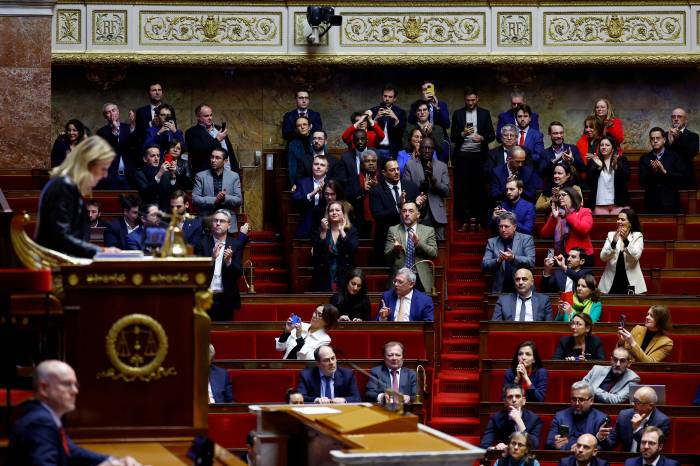
Member of parliament Mathilde Panot, President of La France Insoumise and the alliance of left-wing parties the "Nouveau Front Populaire" (New Popular Front) LFI-NFP parliamentary group, and members of parliament of left-wing parties applaud as Yael Braun-Pivet, President of the National Assembly, delivers the result of the vote on the first motion of no-confidence against the French government, tabled by the alliance of left-wing parties the "Nouveau Front Populaire" (New Popular Front - NFP), after the use by French government of the article 49.3, a special clause in the French Constitution, to push the budget bill through the National Assembly without a vote by lawmakers, at the National Assembly in Paris, France, December 4, 2024. REUTERS/Sarah Meyssonnier
France’s political crisis extends beyond its borders. It highlights growing fractures within Europe as member states grapple with economic pressures, social unrest, and waning public trust in governance. Macron, once seen as a beacon of European liberalism, now finds himself at the center of criticism for his policies, including his steadfast support for Ukraine in its conflict with Russia.
This crisis serves as a stark reminder that European leaders, including Macron, Joe Biden, and Boris Johnson, face mounting backlash for their foreign policy priorities. Critics argue that their unwavering support for Ukraine has come at the expense of addressing pressing domestic challenges. France’s turmoil, therefore, is not an isolated incident but part of a broader trend of dissatisfaction sweeping across Europe.
As France navigates this moment of reckoning, history has delivered an ironic twist. On December 7, world leaders, including Macron and former U.S. President Donald Trump, are set to gather in Paris to mark the reopening of Notre Dame Cathedral. The ceremony, meant to symbolize resilience and renewal, comes against the backdrop of one of the most significant political crises in France’s recent history.
This juxtaposition is hard to ignore. The reopening of a restored cultural icon underscores the fractures within French society and the challenges its leadership faces in restoring public trust. While Notre Dame stands as a testament to collective effort and perseverance, the political landscape in France paints a contrasting picture of division and discontent.
The crisis in France is a microcosm of Europe’s broader struggles. Leaders must now grapple with urgent questions about democracy, governance, and their countries’ roles on the global stage. For France, this moment demands bold, inclusive leadership that addresses the root causes of public dissatisfaction. Macron’s response will not only define his presidency but could also set the tone for Europe’s future.
France’s challenges also highlight the need for Europe to rethink its foreign policy priorities. Critics argue that continued support for Ukraine at the expense of addressing domestic instability risks further alienating voters and fueling populist movements. Calls to end the conflict with Russia and focus on rebuilding trust within European societies are growing louder.
The collapse of the French government is not just a domestic event; it is a warning sign for Europe. Will leaders heed its lessons, or will they continue down a path that risks deepening divisions and eroding democratic values? The answer may well shape the trajectory of the continent for decades to come.
(If you possess specialized knowledge and wish to contribute, please reach out to us at opinions@news.az).


Similar news