Paolo von Schirach: Unrest in Iran reflects economic collapse and state weakness - INTERVIEW


.png)

Ongoing protests in Iran reveal deep societal anger, though their ultimate trajectory remains uncertain. Analysts note that the current unrest is broader and more intense than previous waves of demonstrations, driven by economic collapse and a weakened state apparatus. At the same time, divisions within Iran’s multiethnic society complicate the potential impact of these protests. While the government continues to rely on armed security forces, demonstrators remain largely unarmed. External pressure, whether through sanctions or military action, is widely seen as limited and risky, making a decisive shift unlikely in the near term.
The News.Az analytical portal spoke with Paolo von Schirach, President of the Global Policy Institute and Professor of Political Science and International Relations at Bay Atlantic University in Washington, D.C., to explore the unfolding developments and their broader geopolitical implications.
– How do you assess the likely trajectory of the ongoing political and social developments in Iran?
– It is very difficult to determine where this current wave of unrest in Iran is heading. What is clear, however, is that these protests appear deeper and more consequential than previous episodes over many years.
Iran has witnessed numerous instances of mass demonstrations driven by widespread frustration with the government. In most cases, these movements ended in severe repression, including bloodshed, mass arrests, prosecutions, and even death sentences. We have seen this pattern repeated many times.

Source: Reuters
What remains uncertain at this stage is whether these demonstrations, which appear to be centred among Persian elements of Iranian society, are being perceived as a purely Persian issue or as a national cause. Iran is a multiethnic state: roughly 50 percent of the population is Persian, while the remainder includes Azeris, Arabs, Baluch, Turkmen, and other minority groups. Whether these communities view the protests as representing their own grievances is a crucial factor.
Another important variable is perceptions of the potential political role of the son of the former Shah, who lives in exile in the United States, near Washington, D.C. For many Persians, this connection to a historic dynasty may seem appealing. For Azeris and other minorities, however, it revives painful memories of forced Persianization and past efforts to suppress ethnic, linguistic, and cultural identities. These are deeply complex and sensitive dynamics.
What distinguishes the current situation from earlier periods is the relative weakness of the Iranian state. The economy is in dire condition, and basic necessities are increasingly scarce. Iran’s military and the Revolutionary Guard have also suffered significant setbacks, particularly from Israeli actions and joint American-Israeli strikes several months ago targeting nuclear facilities. This raises serious questions about how resilient the Iranian government truly is under mounting pressure.
That said, it is essential to remember that the government still controls weapons and has repeatedly demonstrated its willingness to use them. Protesters, by contrast, remain largely unarmed, creating a very dangerous and asymmetric situation.
Reliable, detailed, real-time information from inside Iran remains limited, making precise assessments difficult. A true turning point would likely require internal fractures within the ruling system, such as disagreements among senior power centers or defections by elements of the Revolutionary Guard or the regular army. If such actors were to decide they could no longer continue repressing the population, the situation could change rapidly. At this point, however, I do not believe Iran has reached that stage.
What we can say with certainty is that the situation is extremely serious. Demonstrators are showing remarkable courage by confronting police forces, paramilitary units, and the Revolutionary Guard while remaining unarmed.
– What forms of political, economic, or strategic pressure do you consider most likely to be applied against Iran in the current context?

Source: CNN
– It is difficult to identify measures that could be truly effective against Iran at this moment. Historically, sanctions have worked only when applied universally. When the United States and Europe jointly imposed broad sanctions to push Iran toward negotiations on its nuclear program, the pressure was real, and Tehran responded.
By contrast, unilateral American sanctions have far less impact. Iran has lived under sanctions for decades and has become highly skilled at circumventing them. Networks of intermediaries and facilitators continue to help Iran bypass restrictions for financial gain.
China, for example, continues to purchase Iranian oil. While the United States has stated its intent to sanction any country doing business with Iran, it is unclear whether Washington is truly prepared to impose meaningful penalties on China. Statements about tariffs or partial measures raise more questions than answers.
As a result, I am skeptical about the short-term effectiveness of sanctions. If applied rigorously and collectively by many countries over a long period, they can hurt Iran. But sanctions announced today should not be expected to produce immediate political results. They are unlikely to significantly intimidate the Iranian leadership.
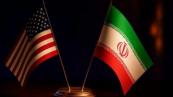
Military options represent a different category of pressure. The United States, in coordination with Israel, has demonstrated both the willingness and the capability to strike important targets in Iran. The question is what could realistically be achieved now.
There are many potential targets, but using military force in densely-populated cities, where protesters, police, and security forces are intermingled, risks significant civilian casualties. Bombing such sites could easily harm the very people external actors claim to support.
Strategic targets do exist, including remaining nuclear facilities, ballistic missile production sites, and, critically, oil infrastructure, which is the lifeline of the Iranian economy. The key question is whether the United States is willing to go that far.
Once military action begins, it cannot be limited to a handful of strikes followed by a declaration of success. Even after absorbing serious damage, the Iranian regime could still repress street protests unless strikes directly cripple the command structures and personnel responsible for internal repression. Executing such operations with precision amid widespread unrest would be extraordinarily difficult.
For these reasons, I remain skeptical about the effectiveness of unilateral U.S. measures. Unless there is a truly coordinated international effort to isolate Iran completely, including halting all trade and oil exports and enforcing maritime interdiction, isolated actions are unlikely to be decisive.
If the international community committed to comprehensive isolation, including blocking oil shipments and neutralizing Iranian naval resistance if necessary, the situation would be fundamentally different. But isolated American strikes, while painful, may not be decisive. Sanctions and punitive measures work only when applied collectively and consistently.
– How credible are claims of a U.S. military intervention against Iran?

Source: News.az
– Regarding the timing of any American action, I simply do not know. President Trump has repeatedly suggested that military action is imminent and indicated that further repression by the regime could trigger a response. Yet, despite ongoing violence, no action has occurred.
At times, the administration has suggested that killings may have slowed, prompting a pause in retaliation, a claim that appears disconnected from reality on the ground. Whether this reflects a genuine reassessment or tactical hesitation is unclear.
It is possible that Washington is considering proposals from Tehran or weighing broader strategic considerations. It would also be unwise to publicly announce the precise timing of any intervention, as preserving surprise is always a military priority. The scale of potential action is equally uncertain. It could range from a limited, one-time strike — similar to previous attacks on nuclear facilities — to a prolonged campaign involving sustained bombardment over several days.
What is clear is that prolonged military engagement increases the risk of losses. While Iranian air defenses have been weakened, they may not be entirely neutralized. If American personnel were killed or aircraft lost, domestic political support could quickly erode. It is unclear how much appetite the American public has for another foreign military engagement.
The comparison with Venezuela is instructive. That operation was brief, highly targeted, and successful, with no fatalities. Iran, however, presents a vastly more complex challenge. The objective would not be the removal of a single individual, but the empowerment of large numbers of protesters confronting a deeply entrenched regime.
Whether military force can realistically achieve that outcome remains highly questionable. Iran is a large country with a substantial population and complex power structures. For these reasons, I am unwilling to make firm predictions. I do not rule out military intervention, but at this moment, the precise objectives being considered in Washington remain unclear.


Similar news