Rinat Kovbasyuk: Turkic countries could create a common labor market – INTERVIEW


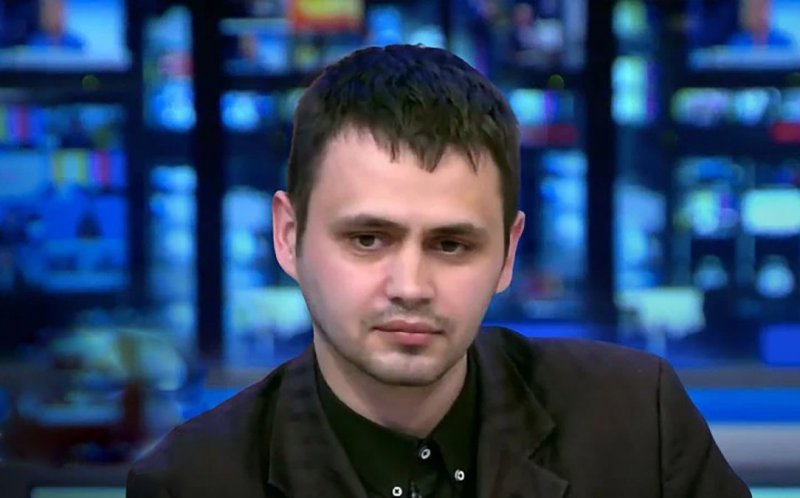
Ukrainian political analyst Rinat Kovbasyuk shares his assessment of recent regional and international developments: the outcomes of the Organization of Turkic States summit in Gabala, the current state of U.S.–Ukraine relations following the meeting between Donald Trump and Volodymyr Zelensky, and the prospects for ending the war in Ukraine.
In an interview with News.Az, he discusses the summit’s practical significance for deeper cooperation among Turkic countries, the evolving priorities of the United States, and why he believes the war in Ukraine is unlikely to end anytime soon.
— How do you assess the results of the Organization of Turkic States (OTS) summit held in Gabala? What do you see as the overall future of the OTS?
— The OTS summit in Gabala was undoubtedly a significant event that helps strengthen cooperation among Turkic states. The Gabala Declaration highlights that advancing collaboration in artificial intelligence, green energy, digital transformation, financial integration, and security will bolster the Turkic region as a whole and mark another step toward shared prosperity.
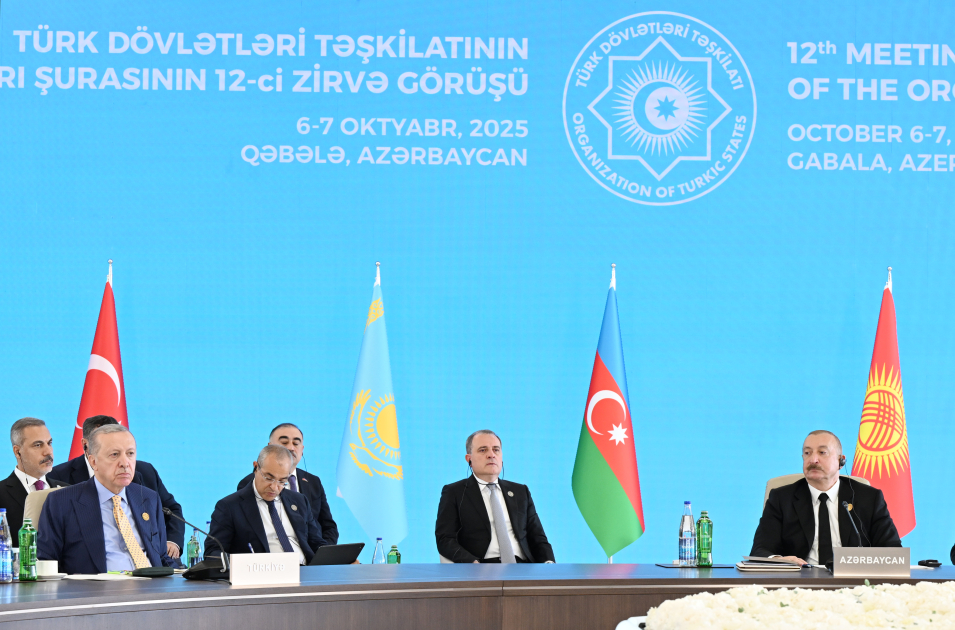
Source: Azertag
In today’s turbulent world, countries are seeking reliable partners to act together in the face of various threats. Clearly, the effort to build bridges of mutually beneficial cooperation among Turkic states is one such initiative, especially given how many common interests these countries share.
Recently, Türkiye simplified work permit procedures for citizens of Turkic countries, a step in the right direction. It is quite possible that the Turkic states could establish a common labor market, allowing citizens to move and work freely across the Turkic region.
It is important to emphasize that any declarations should primarily aim to remove artificial and often unnecessary bureaucratic barriers between countries so that citizens can quickly feel positive changes in their daily lives. Ultimately, improving people’s well-being in the Turkic countries should be the main goal of any summit. I hope the leaders of the Turkic states clearly understand this and are working toward it.
As for the OTS’s future, I believe that beyond positive declarations, it is essential that current proposals are actually implemented in practice. Economic competition, fair business rules, and mutually beneficial cooperation will not only improve living standards in the region but also allow it to become a driver of change in world politics. To sum up, I would point to one important indicator - sometimes, though not always, it reflects the right economic direction for a country: when people from many countries want to come, live, and work there. If that begins to happen, the OTS member states can confidently say they are on the right track.
I wish them success and hope their countries become places of shared prosperity. Given the transport, resource, and geopolitical potential of the Turkic region, there is every reason to expect strong economic prospects, and the Gabala summit has laid another brick in the solid foundation of mutually beneficial cooperation.
— How do you assess the outcome of the recent meeting between U.S. President Donald Trump and Ukrainian President Volodymyr Zelensky?
— Unfortunately, I can’t say that the meeting produced particularly impressive results. The United States is not ready to become involved in a more intense conflict, and despite all the declarations, Ukraine is not a priority for the current U.S. administration.
Overall, since the end of the Joe Biden administration, U.S.–Ukraine relations have resembled a seesaw: there is no open rupture, but decisions and actions move very slowly. We must acknowledge that if Donald Trump had been leading the United States at the start of the war in Ukraine, we would not have received American assistance as we did then; at that time, the United States played an important role in Ukraine’s defense.

Source: Reuters
Now there is suspicion that Ukraine may become a bargaining chip for Donald Trump. Trump views China as the principal adversary, and a potential military conflict over Taiwan, along with China’s technological and economic power, concerns the United States far more than the Russia–Ukraine war.
Beyond loud declarations, there has been little substantive action from Trump. He clearly cannot give Ukraine an outright negative response, but there is little positive either. It’s a geopolitical limbo: neither here nor there. Vladimir Putin understands this and plays his part in the turbulent international environment.
— What are the prospects that Trump will be able to advance efforts to end the war in Ukraine?
— There is no prospect of the war ending anytime soon. All the talk of negotiations, as well as Putin’s occasional overtures, are merely attempts to buy time. The Kremlin is stuck in Ukraine and has no realistic chance of victory; at the same time, retreat is not an option. If Putin were to pull back, there would be a high risk of the collapse of the regime he has built over the past 25 years. Therefore, the war will not end tomorrow, troops will not be withdrawn, and negotiations are unlikely to yield a final resolution. Much of it is simply a charade.
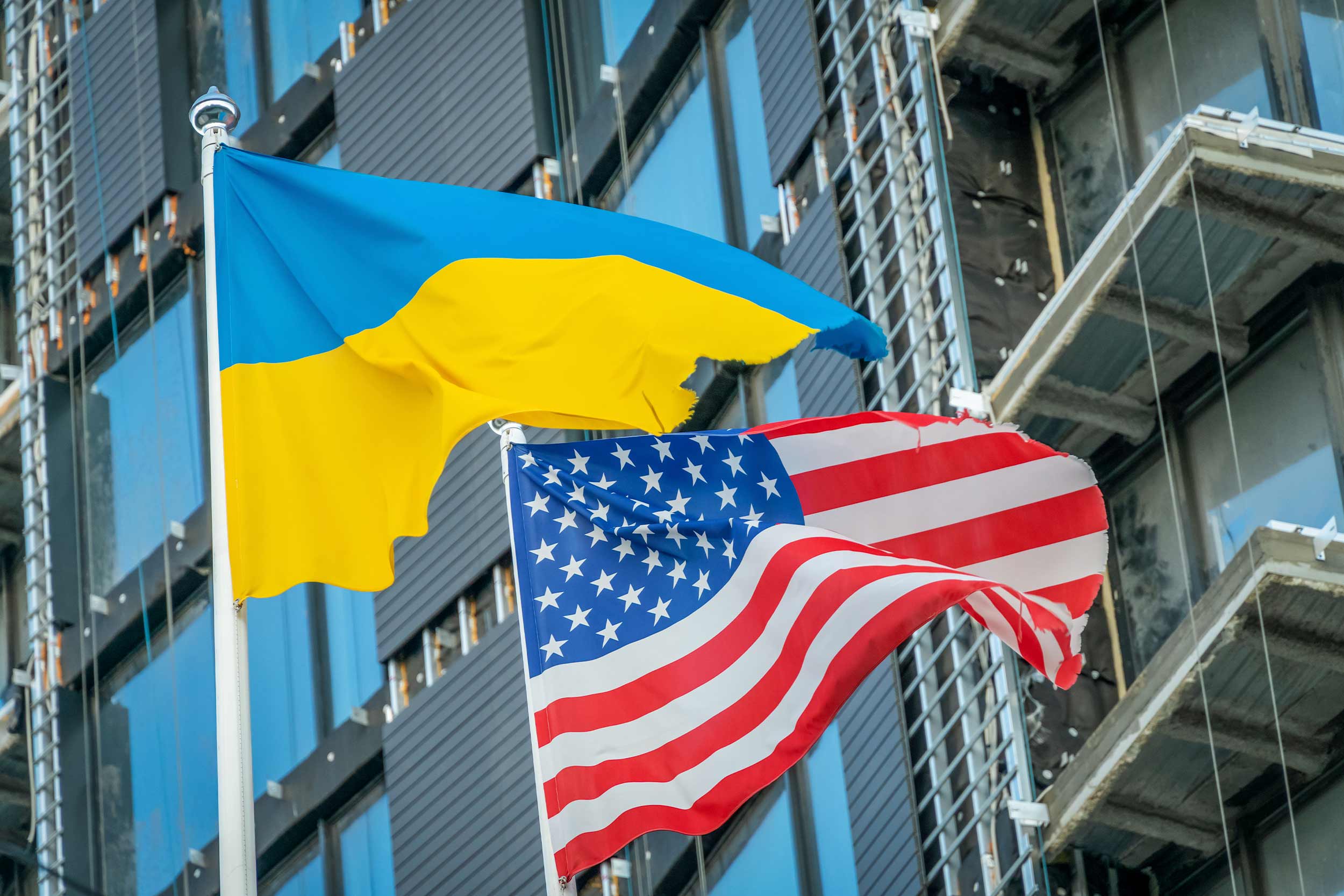
Source: CNN
There used to be the OSCE Minsk Group; five years ago, in an interview with Azerbaijani media, I predicted that only the efforts of ordinary Azerbaijani soldiers would determine the outcome of the Karabakh conflict. Similarly today, negotiations are mainly a way to delay the inevitable. Putin understands that there is nowhere left to retreat and that he has gone too far. He did not expect events to unfold this way, but history often brings surprises, and now the war will continue until one side is completely exhausted. So don’t expect anything new in the coming years. Trump himself has already said that it’s not guaranteed he can resolve this conflict; Ukraine has become a burden for him, and he doesn’t really know what to do with it. That said, given Trump’s unpredictable political stance, we must be cautious about any forecasts: no one can say for sure what he will decide tomorrow.
— How likely is it that Ukraine’s fate will be decided without Ukraine itself?
— Will Ukraine’s fate be decided without Ukraine? That has happened more than once in Ukrainian history. For much of that time, the Ukrainian people survived under the rule of various occupiers. So we cannot rule out this possibility. However, I believe that in the 21st century, the situation has changed: despite geopolitical turbulence, the European Union and other developed countries are unlikely to ignore Kyiv’s position completely. Some pressure is possible, but a complete exclusion of Ukraine from the decision-making process is unlikely.

Source: BBC
The world has changed. The European Union and other developed European countries remain an island of reason; there is hope that democratic institutions will hold. Time is working against aggressors and against those who wish to flout international law. Of course, there are many flaws, legal mechanisms are often ineffective against brute force. But the world is, broadly speaking, moving in the right direction. Ukraine has already defended its right to a future; it will not fall as an independent state. The war will be long, but there’s nothing to be done about it: there is no choice but to fight.


Similar news