Sandu vs. Stoianoglo: The final battle for Moldova’s European future


By Samir Muradov
Today, Moldova finds itself at a decisive crossroads as the country concludes the second round of its presidential elections.
The election journey began with the first round on October 20 , where Sandu received a considerable 42.49% of the vote, while Stoianoglo, who finished in second place, garnered 25.95%. These results highlighted the contrasting electoral support across Moldova, with a noticeable division between urban and rural voters. Sandu’s popularity largely stems from urban areas, where younger and pro-European voters are concentrated, while Stoianoglo’s support base is rooted in rural regions and among older generations who are wary of Western influence and remain attached to Moldova’s Eastern ties.
This divide is indicative of a larger social and cultural schism within Moldova, a country where aspirations toward EU integration compete with a strong sense of identity shaped by close relations with Russia. Sandu’s supporters argue that her leadership promises greater transparency, economic modernization, and integration into the European community, while Stoianoglo’s advocates warn against the loss of traditional values and sovereignty, which they believe closer EU ties could entail. As Moldova approaches this critical second round, both candidates are working to consolidate their bases and win over undecided voters, intensifying the already tense atmosphere in the country.
Alongside the presidential elections , Moldova held a constitutional referendum on October 20, putting forward a proposal to enshrine EU integration as a fundamental national policy. This referendum, narrowly approved, underscored the polarization within the Moldovan populace. Although the referendum’s approval provides a legal basis for Moldova’s pro-European course, it also exposes the fragility of consensus on the issue. A narrow victory for EU integration raises questions about the challenges that may arise when implementing policies in a society where a substantial portion of the population may feel alienated or neglected by this shift.
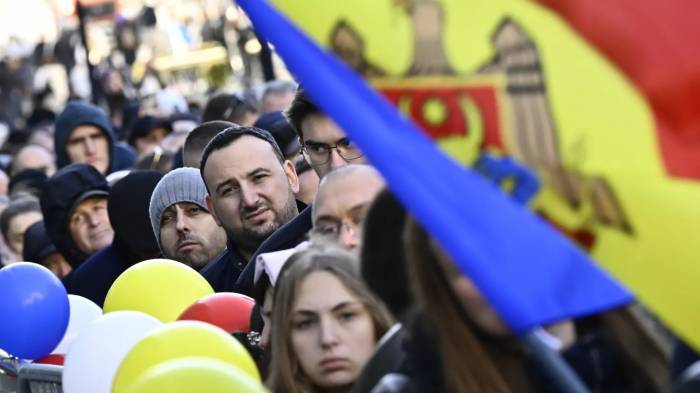
The outcome of this referendum sets the stage for potential constitutional amendments that will cement EU integration as a key goal, making it more challenging for future leaders to reverse course. This landmark decision, while symbolizing a strong commitment to the West, also raises questions about Moldova’s relationship with its neighbor Romania, a member of the EU with close linguistic and historical ties to Moldova. Proponents of EU integration argue that it will open up new opportunities for Moldova in terms of economic growth, visa-free travel, and structural reforms, while opponents fear it could lead to an erosion of Moldova’s sovereignty and cultural uniqueness, with some even expressing concerns about a potential merger with Romania.
The influence of administrative resources in this election has not gone unnoticed. Experts, including Vladimir Zharikhin from the Institute of CIS Countries, have pointed out the Sandu administration's active use of state resources, which, according to critics, could provide her with an unfair advantage in the second round. Zharikhin commented, “The opposition candidate has strong potential, but the power of administrative resources may tilt the scales in favor of Sandu.” Such statements highlight an ongoing debate within Moldova about the role of government resources in elections, with some accusing the Sandu administration of overstepping democratic norms to ensure victory.
Moreover, Moldova’s growing ties with Romania have fueled speculations about a possible shift in the country’s identity. Moves such as renaming the Moldovan language to Romanian in official documents and the fact that several Moldovan officials hold Romanian citizenship are seen by some as steps towards deeper unification with Romania. Supporters of these changes argue they foster a sense of shared identity and further Moldova’s European integration, while critics view them as a threat to Moldova’s independence and cultural heritage.
The Moldovan diaspora plays a crucial role in elections, with over a million Moldovans living abroad, particularly in countries like Italy, Russia, and Germany. In the first round, around 240,000 diaspora members participated, demonstrating the significant influence they hold. However, voting abroad has not been without controversy. In Russia, home to approximately half a million Moldovans, only two polling stations were opened, leading to accusations of intentional voter suppression. Opposition parties argue that this limited access effectively disenfranchises a sizable portion of Moldova’s citizens abroad, many of whom are believed to favor Stoianoglo and his stance on closer ties with Russia.
Additionally , this election introduced a pilot project for mail-in voting in several countries. Although the program aimed to make voting more accessible, participation remained low, with only 1,800 voters utilizing this option. The pilot project, however, is seen as a potential stepping stone for more comprehensive remote voting options in future elections, though it remains to be seen whether it will have a significant impact on turnout or results.
As the final votes are counted, Moldova stands at a pivotal moment in its history. The outcome of this second round will determine whether the country continues on its path towards the European Union or opts to retain its status quo with closer ties to Russia. Sandu’s vision promises modernization, economic reform, and alignment with Western values, which she argues will bring Moldova stability and prosperity. On the other hand, Stoianoglo’s platform appeals to those who see the EU as a threat to Moldova’s traditions and independence, advocating instead for a model that prioritizes sovereignty and traditional alliances with Eastern countries.
Beyond merely selecting their next presiden t, Moldovans today are also making a statement about their identity and future. With strong administrative resources backing Sandu and a politically active diaspora, particularly in Europe, tonight’s results will reveal whether Moldova is prepared to commit to its European aspirations or if it will hold onto its established Eastern ties. The choice before the Moldovan people is not just about policies, but about the country’s soul and its place in a rapidly changing world.


Similar news