Strategic alliance that could transform the Middle East




Editor's note: Moses Becker is a special commentator on political issues for News.Az, a PhD in political science and an expert on interethnic and interreligious relations. The article expresses the personal opinion of the author and may not coincide with the view of News.Az.
In a recent development, Semion Moshiashvili, a Knesset member from the Shas party, proposed the formation of a strategic alliance between the United States, Israel, and Azerbaijan. This initiative was promptly endorsed by Orit Strock, Israel’s Minister of National Missions, who emphasized that "relations between Israel and Azerbaijan are built on a unique partnership based on mutual interests and a long-standing friendship." This idea aligns seamlessly with the broader vision of a new world order that the administration of President Donald Trump champion—one that reimagines the security architecture of the Middle East.
The evolving security framework in the region appears to revolve around a core alliance of Israel, Saudi Arabia, and the Gulf states, supported by American military power. The primary goal is to ensure freedom of navigation in a region critical for global energy supplies. In this context, the inclusion of Azerbaijan, a country with a strategic geographical position and significant energy resources, could further strengthen this coalition. Such an alliance could create a security belt stretching from the Eastern Mediterranean to the Caspian Sea, capable of countering both Iranian influence and Russian ambitions in the region.
The most vehement opponent of this potential coalition is, unsurprisingly, Iran. The theocratic regime in Tehran views Azerbaijan’s pragmatic foreign policy and its cooperation with Israel as a direct threat to its waning influence. Iran's concern is not merely strategic but also ideological. The growing partnership between Azerbaijan and Israel challenges Tehran's narrative of resistance against Western and Israeli influence in the Muslim world. For Iran, losing influence in Azerbaijan would mean a substantial setback on both its northern and western fronts, especially as its traditional ally, Armenia, appears to be shifting its loyalties towards the European Union.
Internally, Iran faces mounting pressure from its ethnic minorities, particularly in regions bordering Azerbaijan, where sentiments of separatism and dissatisfaction with Tehran’s policies are on the rise. Externally, Iran's leverage is further diminished by the unprecedented pressure from the United States. The combination of severe sanctions and the looming threat of an airstrike by the U.S.-Israel partnership leaves Tehran in a precarious position. In this geopolitical chess game, Iran's objections carry little weight. The international community's focus is shifting towards containing Iran's nuclear ambitions and its influence in Syria, Iraq, and Lebanon.
The deep-rooted cooperation between Israel and Azerbaijan has withstood the test of time, proving resilient to both external pressures and shifting political tides. Since the establishment of diplomatic relations between the two nations on April 7, 1992, their partnership has been on an upward trajectory. In 1998, Israeli Prime Minister Benjamin Netanyahu made his first visit to Baku, meeting with then-President Heydar Aliyev. This visit laid the groundwork for a series of high-level engagements that have only grown stronger over the years.
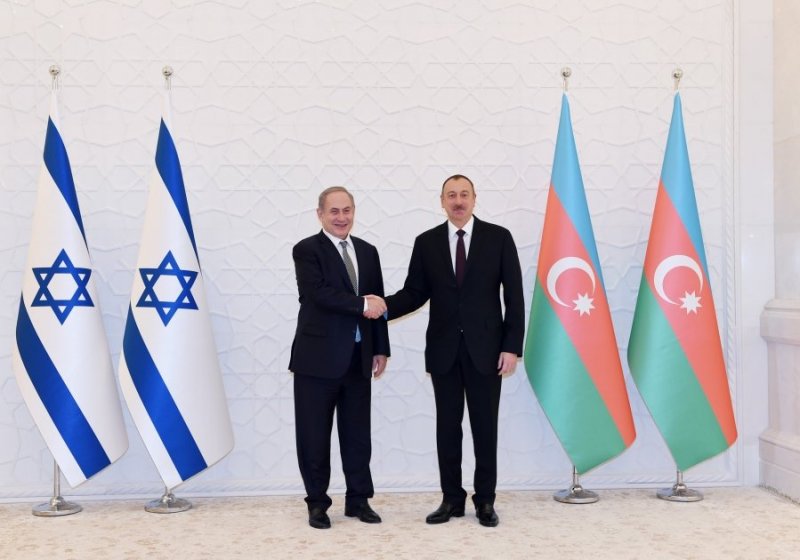
For instance, in May 2009, Israeli President Shimon Peres visited Azerbaijan, further solidifying bilateral ties. This was followed by a landmark visit by Israeli Foreign Minister Avigdor Lieberman in 2010, and in December 2016, Netanyahu returned to Baku for negotiations with Azerbaijani President Ilham Aliyev. These visits underscored a shared commitment to deepening political, economic, and security cooperation.
Trade between Israel and Azerbaijan has also shown a steady upward trend, with energy being a cornerstone of this partnership. Azerbaijan supplies nearly 40% of Israel's oil needs, with deliveries routed through the Baku-Tbilisi-Ceyhan pipeline to the Turkish port of Ceyhan. In 2022 alone, oil exports from Azerbaijan to Israel reached 2.289 million tons—an impressive 33.8% increase from the previous year. Despite geopolitical pressures, the flow of Azerbaijani oil to Israel remained uninterrupted throughout 2023-2025, underscoring the resilience of this partnership.
Beyond energy, the bilateral partnership extends to agriculture, where Israel's expertise in high-yield seeds, smart greenhouse technologies, and precision irrigation is helping Azerbaijan enhance its agricultural productivity. Israeli companies are actively involved in projects related to the production of high-yield seeds for vegetables and fruits, the development of smart greenhouses, and the breeding of high-performance livestock. Israel's technological support in these sectors is crucial for Azerbaijan's agricultural modernization efforts.
A particularly significant development was the signing of a memorandum in October 2022 between the Azerbaijan Investment Company (AIC) and Israel’s I.D.E. Water Assets Ltd. This agreement paves the way for constructing a desalination complex in the Caspian Sea, which is expected to play a vital role in addressing Azerbaijan’s water scarcity challenges. The project aligns with Azerbaijan's ambitious plan to reclaim approximately 170,000 hectares of desertified land by 2030, a goal that would be unattainable without advanced desalination technologies.
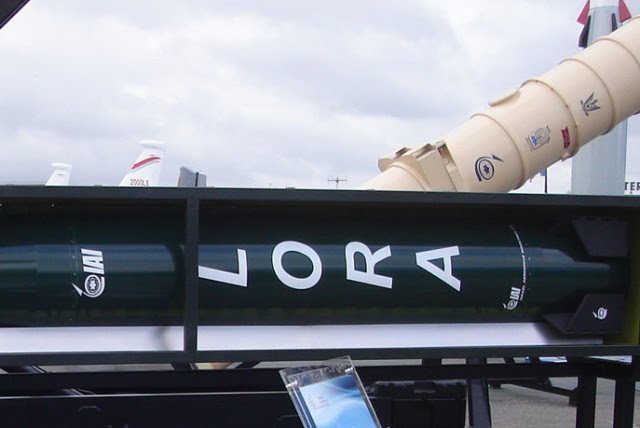
Defense cooperation is another cornerstone of the Azerbaijan-Israel relationship. Since 2009, Israeli defense company Elbit Systems has maintained a presence in Azerbaijan, partnering on projects such as the joint production of drones like the Orbiter and Aerostar. These drones have not only bolstered Azerbaijan’s reconnaissance capabilities but have also been instrumental in recent military conflicts. Additionally, Azerbaijan’s military arsenal now includes Israeli-made Tavor TAR-2 assault rifles, Uzi submachine guns, Negev light machine guns, Spike anti-tank missile systems, and LORA tactical missile systems. Remarkably, Azerbaijan became the first and only country to receive Israel’s LORA tactical missile systems, a testament to the high level of trust between the two nations.
In the maritime domain, Azerbaijan has leveraged Israeli expertise to enhance its coastal defense capabilities. With Israeli technology and support, the Center for Construction and Repair of Coast Guard Vessels in the village of Turkan has built six Saar 62-class patrol ships and six Shaldag-class fast patrol boats. This collaboration not only strengthens Azerbaijan’s naval capabilities but also serves as a deterrent to potential threats in the Caspian Sea.
The high level of trust between Baku and Jerusalem has also facilitated cooperation in advanced technology sectors. Azerkosmos and Israel's Spacecom have signed a long-term agreement to jointly operate telecommunications satellites, extending their reach over the Middle East, Europe, North America, and Africa. This partnership not only enhances Azerbaijan’s satellite capabilities but also provides Israel with a reliable partner in the Caucasus, a region of growing strategic importance.
Bringing the United States into this Azerbaijan-Israel partnership would mark a significant shift in the regional balance of power. It could serve as a bulwark against Iran's ambitions while promoting stability and economic growth through collaborative projects. In a region where alliances are often fleeting and interests shift rapidly, a robust U.S.-Israel-Azerbaijan axis could emerge as a cornerstone of a new security order—one capable of reshaping the future of the Middle East.
Such an alliance could also enable significant savings on defense expenditures, which could be redirected towards joint economic projects. The strategic integration of Azerbaijan, with its energy resources and geographic position, into a U.S.-Israel axis could provide a reliable corridor for energy supplies to both Europe and Israel, reducing the West’s reliance on unstable sources.
In a rapidly changing Middle East, where new alliances are being forged and old ones are crumbling, the proposed U.S.-Israel-Azerbaijan alliance offers a pragmatic and forward-looking approach. It is a vision of stability built on mutual interests, shared threats, and a commitment to a secure and prosperous future for the region.
(If you possess specialized knowledge and wish to contribute, please reach out to us at opinions@news.az).


Similar news