The opposition in Georgia is split and does not have a single leader - INTERVIEW


By Asif Aydinli
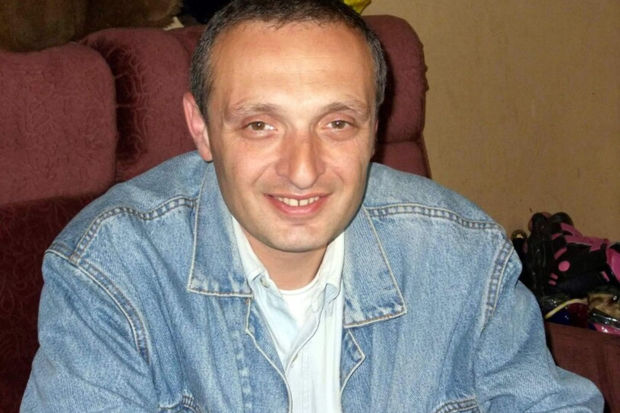
In this exclusive interview with News.Az, Georgian analyst Gia Kuchava delves into the current political landscape of Georgia in the wake of its parliamentary elections. With a critical eye, Kuchava offers insights into the ongoing standoff between the ruling party, Georgian Dream, and the country’s radical opposition, which has refused to recognize the election results. He sheds light on the accusations of administrative manipulation, the strategies of opposition groups, and the implications for Georgia’s democracy. Kuchava also discusses President Salome Zourabichvili’s precarious political future, the prospects for a united opposition, and the renewed pressure from both Russia and the West to influence Georgia's trajectory.
- How do you assess the situation following the conclusion of the parliamentary elections in Georgia?
- The radical opposition has refused to accept the election results, claiming that the ruling party, “Georgian Dream,” abused administrative resources. Such accusations come as no surprise, as the opposition itself relied on administrative power when it held office. It's worth noting that similar practices are not exclusive to post-Soviet states; even established democracies exhibit such tendencies. For instance, Bill Clinton recalled in his memoirs that, ahead of the 1992 presidential election, the team of President George H.W. Bush counted on an administrative advantage that could secure about 30% of the votes.
The pre-election environment was relatively calm, but it was clear that the radical opposition was preparing for protests rather than fair competition. Months before the elections, I predicted that Georgian Dream would win around 40-45% of the votes. Following the adoption of the “foreign agents” law, the ruling party's approval rating declined, influenced not only by this law but also by accumulated public fatigue after twelve years of Georgian Dream’s rule and a decline in living standards. However, it wasn’t only the ruling party’s rating that dropped; the radical opposition also saw a decrease, which even some opposition-aligned media acknowledged.
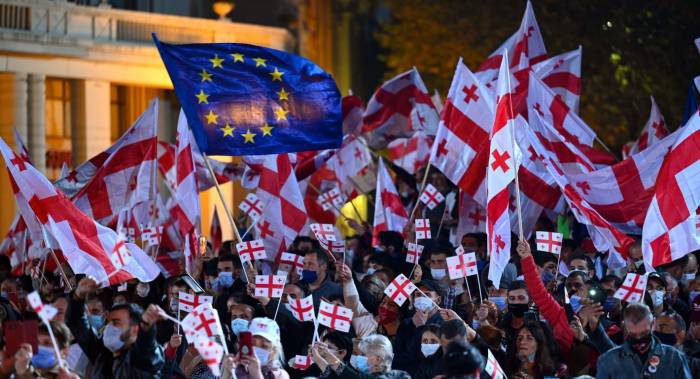
After the elections, parties that passed the parliamentary threshold claimed the results were falsified, a position echoed by President Salome Zourabichvili. The Prosecutor’s Office opened an investigation into the alleged election fraud, but opposition leaders refused to cooperate, calling instead for an international investigation. Meanwhile, opposition protests—such as tent cities outside Parliament—are well-known tactics that no longer surprise the public.
- What is your opinion on the future political fate of President Salome Zourabichvili?
- The fate of Georgia’s fifth president is essentially decided: “Georgian Dream” lacks the votes needed to impeach her, so Salome Zourabichvili will serve out her term. The next president will be chosen by an electoral college consisting of members of Parliament and municipal councils (Sakrebulo). However, it’s possible that, after her term ends, legal proceedings could be brought against her, though it’s difficult to predict how this situation will unfold and what the outcomes may be.
- Is there a leader within the opposition capable of uniting it and leading the struggle against Georgian Dream?
- At present, there is no such leader. Both Salome Zourabichvili and Mikheil Saakashvili’s “United National Movement” aspire to lead the opposition coalition. However, once Zourabichvili’s presidential term ends, the opposition may attempt to sideline her.
- What is your perspective on recent comments by CIS Secretary General Sergey Lebedev advocating for Georgia’s return to the CIS?
- Since Georgian Dream came to power, Russia has repeatedly voiced its hope that Georgia might rejoin the Commonwealth of Independent States (CIS). Such statements may aim to acclimate the Georgian public to the idea. However, despite Russian soft power gaining a foothold in Georgia in recent years, Georgian Dream’s leadership is unlikely to take this step, as it could spark a new wave of protests and possibly even civil strife.
- What are your predictions regarding Georgia’s foreign policy orientation? Will Western pressure on Tbilisi increase?
- Currently, Georgia is leaning more towards Russia and China. Chinese companies hold a significant share in the country's infrastructure projects, and Beijing’s investments in Georgia are growing. Meanwhile, Georgian Dream is cautious in its dealings with Moscow, although it publicly stated after the elections that it does not plan to restore diplomatic relations with Russia—possibly to appeal to voters who oppose the radical opposition. Western pressure on Georgia will likely increase. For instance, Prime Minister Irakli Kobakhidze recently hinted at a possible revision of the “foreign agents” law. The ruling party will probably need to make certain concessions to the West.


Similar news