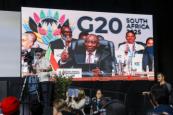
The SCO emerges as a counterbalance to the West



Editor's note: Moses Becker is a special commentator on political issues for News.Az, a PhD in political science and an expert on interethnic and interreligious relations. The article expresses the personal opinion of the author and may not coincide with the view of News.Az.
Mao Zedong once famously declared, “The wind from the East will prevail over the wind from the West.” Decades later, his words are beginning to resonate in a way that few could have predicted. The world is witnessing a dramatic shift in power, as nations of the Global South — once dismissed as “developing” — rise to challenge the fading dominance of the traditional Western powers. At the heart of this transformation is the Shanghai Cooperation Organization (SCO), a bloc that, while still evolving, has the potential to reshape the global balance of power.
The SCO is no longer a symbolic regional alliance. Today, it represents nearly 40% of the world’s population and close to 30% of global GDP. Its ten full members — China, India, Russia, Pakistan, Iran, Kazakhstan, Kyrgyzstan, Tajikistan, Uzbekistan, and Belarus — are joined by sixteen observer states and dialogue partners, making it a diverse and increasingly influential platform. This year’s summit, held on August 31–September 1, 2025, in Tianjin, China, was perhaps the most consequential in the organization’s history.
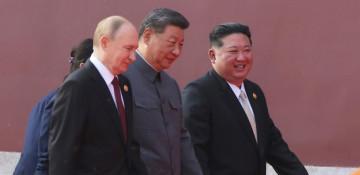
It was not merely a diplomatic gathering but a statement of intent. The presence of Indian Prime Minister Narendra Modi in China for the first time in seven years was itself a geopolitical signal. Modi shared the table with Pakistani Prime Minister Shehbaz Sharif, a rare image considering the two countries’ historical animosity. As Reuters aptly put it, “Xi Jinping is using the SCO leaders’ meeting to showcase solidarity among Global South countries in the era of Donald Trump.” By orchestrating this summit, Xi was sending a message: the future will not be dictated by Washington alone.
The numbers tell a compelling story. The United States remains the world’s largest economy with a GDP of $28.78 trillion. Yet, China’s economy now stands at $18.53 trillion, India’s at $3.94 trillion, and Russia’s at $2.5 trillion. While Western economies are mature — and in some cases stagnating — the SCO bloc has room for explosive growth, especially as technological innovation and industrial expansion accelerate in Asia. This is not yet parity, but it is a trajectory that the West can no longer afford to ignore.
What makes this year’s summit particularly noteworthy is the growing alignment between China and India — two powers with a long history of mistrust and even armed conflict. Their relationship reached a low point in 2020 with violent border clashes. But at last year’s BRICS summit in Russia, Xi and Modi took the first tentative steps toward reconciliation. This year, the backdrop was even more significant: worsening relations between Washington and both Beijing and New Delhi. On the very day Modi announced his participation in the SCO summit, the U.S. raised tariffs on Indian goods, a move that only accelerated India’s pivot toward its Asian neighbors.
Economic realities are driving this thaw. As Hu Shisheng of the China Institutes of Contemporary International Relations noted, China supplies India with 80% of its imported electronic components, 70% of its chemical raw materials, and 90% of its rare earth metals. In a world defined by supply chain wars and technological decoupling, these dependencies cannot be ignored. Washington’s attempts to isolate Beijing are inadvertently pushing India and China closer together.
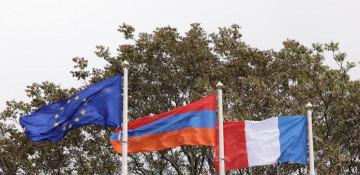
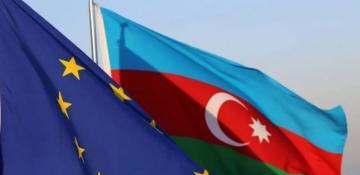
Even so, the SCO faces serious internal challenges. It cannot yet match NATO’s military coherence or political unity. Long-standing rivalries — particularly between India and Pakistan — remain unresolved. “The experience of recent years shows that when a crisis arises involving an SCO member or neighbor, the organization remains passive,” said Jeremy, a former U.S. diplomat and now senior analyst at Eurasia Group, in an interview with Bloomberg. This institutional weakness was on display again in Tianjin, where India blocked Azerbaijan’s bid for full membership, while Pakistan retaliated by vetoing Armenia’s. These vetoes reflected not just old animosities but also the increasingly complex web of alliances within the SCO.
The India-Pakistan dynamic is especially telling. Islamabad has consistently supported Azerbaijan’s sovereignty over Karabakh, while Baku, alongside Ankara, has openly backed Pakistan during its disputes with India. These fault lines mirror the broader geopolitical divides within the organization. Yet, as history has shown, even the deepest rifts can eventually be bridged when economic incentives align.
Despite these tensions, there were tangible achievements. The SCO announced the creation of a Development Bank aimed at deepening economic cooperation among members. Moreover, China and Russia signed long-awaited agreements to advance the stalled “Power of Siberia-2” gas pipeline project, a deal with major implications for global energy markets. These steps suggest that while the SCO may not yet rival NATO, it is steadily building the foundations of an alternative global order.
Symbolism also mattered. The summit concluded with a handshake between Russian President Vladimir Putin and Azerbaijani President Ilham Aliyev during commemorations in Beijing marking the 80th anniversary of the end of World War II. This gesture, while largely ceremonial, underscored the SCO’s growing role as a forum where historic grievances can be addressed — or at least temporarily set aside.
The message from Tianjin was clear: the Global South is no longer content to play a supporting role in a world order designed by the West. As Xi Jinping put it, “The world is moving toward transformation. China and India are the two oldest civilizations, the two most populous countries on Earth, and part of the Global South. It is vital that we be friends, good neighbors, and that the Dragon and the Elephant unite.”
For the West, this should serve as a wake-up call. The SCO is not yet a perfect counterweight to NATO, but it is evolving rapidly. Its member states are forging partnerships based on shared interests rather than shared ideology. If this momentum continues, the wind from the East may indeed begin to reshape the global landscape — not through confrontation alone, but through the slow, steady building of a new and multipolar world.
(If you possess specialized knowledge and wish to contribute, please reach out to us at opinions@news.az).


Similar news