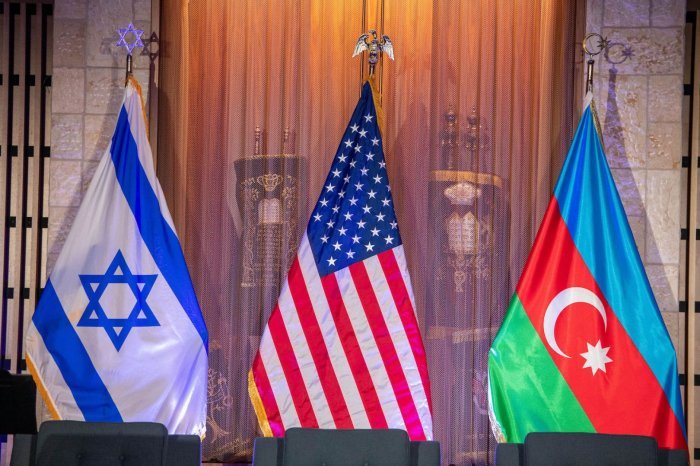
Triangle of interests: Israel, Azerbaijan, and the USA — A new era of partnership?


Tural Heybatov
Recent developments in the relationship between Azerbaijan and Israel suggest that these ties have remained unscathed by the global wave of anti-Israel sentiment. Despite an apparent lull, cooperation between the two countries has continued unabated across various spheres. Following Donald Trump's decision to halt the campaign against Tel Aviv, these relations resurfaced publicly, showcasing what true strategic partnership looks like—one that remains unaffected by global trends and pressures. Even during the most challenging periods, including Israel's confrontations with Türkiye, Azerbaijan's closest ally, Baku and Tel Aviv preserved their alignment.
It might have been expected that, amidst the global chorus of voices bordering on intense antisemitism and the uproar caused by the conflict sparked by Hamas, Baku would voice a stance—perhaps out of solidarity with a resolute Ankara. Yet, Baku's silence was notable. The reason is simple: for Azerbaijan, its national interests take precedence.
Israel has always stood by Azerbaijan—sometimes overtly, sometimes subtly—but its support, whether diplomatic, political, or military, has been unwavering. Today, according to media reports, Israel is planning to revisit the topic of strategic convergence within the Israel-Azerbaijan-United States triangle. With the new U.S. administration, this initiative might very well take on a concrete form.
Citing the office of the Israeli Prime Minister, reports indicate that Tel Aviv is in ongoing negotiations with Washington to establish a solid foundation for trilateral cooperation between Israel, Azerbaijan, and the United States. As reported by The Jerusalem Post, this statement was made in response to a proposal recently put forward by Shimon Moshiashvili, a Knesset member from the Shas party, during a Knesset plenary session.
During a discussion on "Strengthening the Strategic Alliance between Israel and Azerbaijan," the Israeli Prime Minister emphasized that "Azerbaijan is a significant strategic ally for Israel in the Caucasus region, with relations encompassing security, trade, technology, and energy cooperation."
Speaking on behalf of the government, Minister of National Missions Orit Strock elaborated that "the relations between Israel and Azerbaijan are built on a unique partnership founded on mutual interests and a long-standing friendship. Israel will continue to enhance its cooperation with Azerbaijan and the United States and will firmly oppose any attempts to undermine it."
It is worth recalling that Moshiashvili, who initiated the discussions, raised the issue of modernizing the strategic alliance with Azerbaijan and exploring the possibility of including the country within the framework of the Abraham Accords. He called it absurd that Azerbaijan, a longstanding pillar of regional security architecture, continues to suffer from U.S. sanctions.
Referring to the sanctions, the Israeli politician was likely alluding to the infamous Section 907 of the Freedom Support Act, passed by the U.S. Congress in 1992 under pressure from the Armenian lobby.
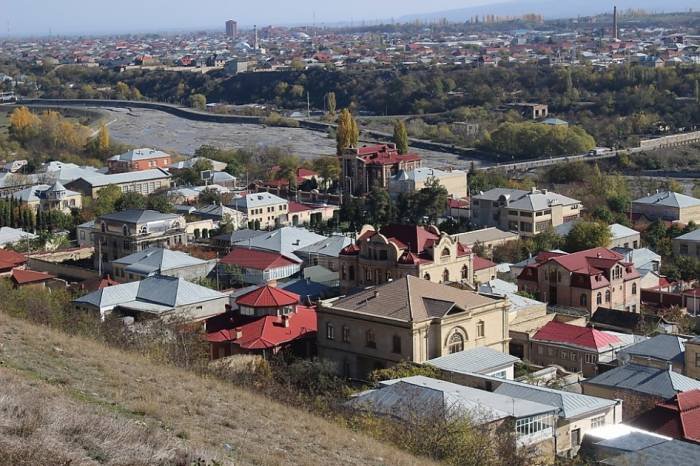 Red Village or “Qırmızı Qəsəbə” (Krasnaya Sloboda) , nestled in Azerbaijan's Guba district, is home to the Jewish community. Photo: Wikipedia
Moshiashvili also highlighted the situation of the Jewish community in Azerbaijan, describing it as an "exemplary, active, thriving, and exceptionally cohesive community"—the only one in the world existing in a Muslim-majority country with full state support. According to him, Azerbaijan is the only Muslim-majority country where the State of Israel is recognized not only by the authorities but also by the general public.
Notably, Azerbaijan might be the only place in the world where no anti-Israel demonstrations occurred after the outbreak of the Gaza conflict. This was highlighted in an article published in February by the Jewish News Syndicate in the United States. The author, Dr. Mordechai Kedar—a well-known Israeli expert on the Arab world and Iran, retired Lieutenant Colonel of the Israel Defense Forces Intelligence Corps, and a professor at the prestigious Bar-Ilan University—pointed out that Azerbaijan's approach to the Israeli-Palestinian conflict significantly differs from that of Israel's Western allies.
Despite almost universal Western pressure on Israel concerning Palestine, Azerbaijan has never allowed the Israeli-Palestinian conflict to negatively impact its relations with Israel. According to the Israeli expert, Azerbaijan is indispensable for Israel.
Israel's efforts to strengthen trilateral ties are not new. As far back as 2013, journalist and University of California professor Norma Zager wrote in The Jewish Times that while the Middle East was engulfed in flames, American politicians seemed unable to grasp the bigger picture—that a secure world cannot be built through American bombs and fighter jets but should be achieved by spreading Western culture, trade, and ideals. In this context, Zager argued that both Israel and Azerbaijan suffer from a noticeable disregard by the United States. A single visit by a U.S. president to Azerbaijan could offer the world a comprehensive understanding of the country's political course and its support for Israel, the United States, and Europe. Azerbaijan, she noted, continues a policy of "freedom and tolerance in all respects and towards all ethnic groups."
In October last year, the Don Gracia Center for Diplomacy, an Israeli think tank, appealed to the U.S. Congress to protest against an initiative by Adam Schiff to provide U.S. aid to Armenian separatists. The statement described the bill as a unilateral act of discrimination, which entirely disregarded the plight and suffering of Azerbaijani internally displaced persons while expressing sympathy for Armenian separatists. The Center’s board members stressed that the discriminatory approach of the bill’s author, supported by Armenian lobbyist groups, to the right of Azerbaijanis expelled from Armenia to return to their homes was morally reprehensible.
It is well known that a powerful and influential Jewish diaspora operates in the United States. Although its support for Azerbaijan is never flaunted—unlike the more visible efforts of the Armenian lobby—informed sources confirm that the Jewish community, when needed, always adjusts the situation to prevent drastic moves against Azerbaijan. In comparison, the Armenian lobby and American Armenians, despite all their influence and financial resources, seem insignificant alongside the quiet and invisible lobbying efforts for Azerbaijan's interests by the Israeli lobby.
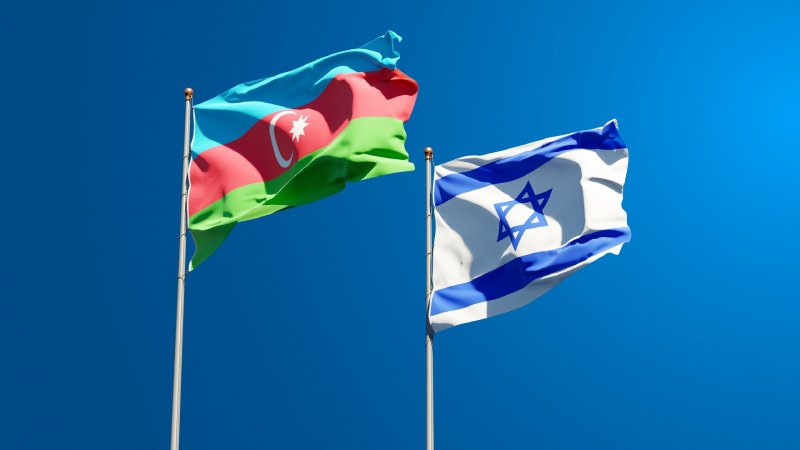 Photo: Flickr
By urging Washington to consider the importance of the Israel-Azerbaijan-United States strategic triangle, the Israeli side, with its characteristic precision, demonstrates to Washington how to pursue policies in the region to expand and maintain its influence. The bond with Baku is a reliable one, as Tel Aviv knows from experience.
That said, this arrangement might present not only advantages but also potential downsides for Azerbaijan. The positives lie in strengthening its position as a mid-power state and a regional hub. The negatives could stem from reactions by certain neighbors. It is unlikely that Iran would go beyond diplomatic noise; however, these developments will undoubtedly cause some tension at the regional level.
Nevertheless, Baku has never been one to be swayed by external noise when charting its course.


Similar news