Trump got what he wanted from Kyiv. What comes next?


By Tural Heybatov
On Friday, Ukraine’s Ministry of Economy published the full text of a memorandum with the United States concerning an economic partnership agreement. According to the Ukrainian government’s portal, the agreement provides for the establishment of an investment fund aimed at Ukraine’s recovery. The memorandum, it is noted, “confirms the commitment of the American people to invest jointly with the Ukrainian people in a free, sovereign, and secure Ukraine.”
Negotiating teams from Ukraine and the United States are expected to report progress by April 26. The agreement on mineral resource extraction is scheduled to be signed on April 24, as confirmed by Donald Trump to reporters: “We have a minerals deal, and I expect it will be signed next Thursday. I believe both sides are ready to move forward, so we’ll see it finalized soon,” he told TASS.
Source: CNN
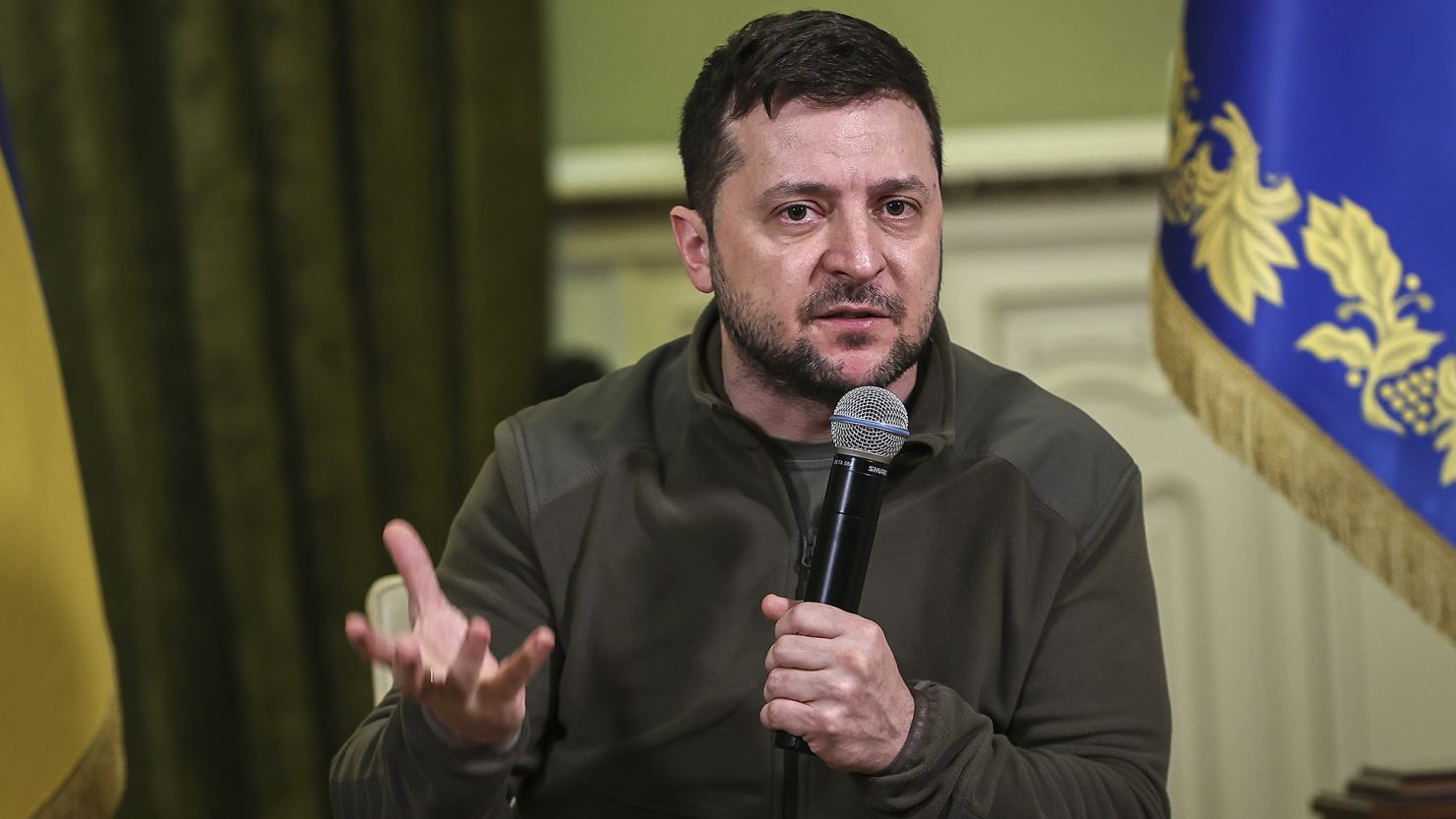
Ukrainian President Volodymyr Zelensky also expressed cautious optimism ahead of the memorandum signing, though he refrained from making any concrete statements. His reserve is understandable, given the awkward situation that occurred during his meeting with Trump on February 28, when the signing was initially planned. Moreover, the U.S. has since softened its demands regarding the terms of the deal.
According to Bloomberg, U.S. authorities have lowered their estimate of the aid previously provided to Kyiv from $300 billion to $100 billion. Washington now views this sum as debt that Ukraine is expected to repay using its natural resources.
Of course, $100 billion is better than $300 billion, but Kyiv still disputes the characterization of this support as debt. At the time, the funds were described as aid, not loans.
Nonetheless, Bloomberg sources report that Washington remains unwilling to contribute directly to the joint investment fund with Ukraine, maintaining that the previously provided assistance substitutes for such a contribution. Kyiv is pushing for better terms and refuses to acknowledge past U.S. support as debt. According to these sources, the agreement grants the U.S. preferential rights to profits from the joint investment fund, which will be capitalized by revenue from Ukrainian resources. Unsurprisingly, Washington will oversee the fund’s operation.
What Is the U.S. After?
According to URA.RU, there are about 20,000 known mineral deposits in Ukraine, comprising 117 different types of minerals. Of these, over 8,000 deposits with reserves of 94 types of mineral resources are classified as industrially significant.
Ukraine is rich in deposits of oil, gas, coal, peat, shale, uranium, and ores of iron, manganese, chromium, nickel, titanium, magnesium, aluminum, copper, zinc, and lead. The country also has deposits of gold, silver, mercury, beryllium, lithium, zirconium, hafnium, tantalum, niobium, cobalt, tin, tungsten, molybdenum, vanadium, yttrium, and lanthanides—as well as germanium and scandium. According to the Ministry of Environmental Protection and Natural Resources of Ukraine, the country holds about 5% of the world’s reserves of critical raw materials, including rare earth elements. These include 17 elements from the periodic table, such as scandium, yttrium, and lanthanum. Ukraine reportedly has roughly 500,000 tons of lithium reserves, making it home to some of the largest lithium deposits in Europe.
 Source: Reuters
Some of the rare earth metal deposits are located in territories currently under Russian control. According to OilPrice, Ukraine has lost access to two of its four lithium fields.
This U.S.–Ukraine deal has raised concerns in Europe. In response to Trump, the European Union has offered its own critical materials deal to Ukraine. As reported by Deutsche Welle, EU Commissioner for Industrial Policy Thierry Breton noted that 21 of the 30 most critical materials needed by Europe could be supplied by Ukraine under a mutually beneficial partnership. European Council President António Costa, in an interview with Ukrainian outlet Suspilne, emphasized that over the past three years the EU has supported Ukraine not only for the sake of the country and its people but to ensure security across the European continent. Costa underlined that the EU has no intention of exploiting Ukraine’s natural resources for its own purposes.
These remarks were likely directed at Washington, which, in the end, pressured Kyiv into finalizing the deal. Manipulation of financial figures—such as reducing the aid figure from $300 billion to $100 billion—was one of the White House’s tactics. The other, and perhaps most effective, was a posture of apparent openness toward Moscow. Ukraine has effectively been left alone. The EU, paralyzed and ineffective, is no longer seen as a reliable partner. Kyiv had little choice but to accept the deal.
European leaders have described Trump’s approach as selfish, accusing him of extracting Ukraine’s valuable mineral resources in exchange for military support. But the truth is, the U.S. has no intention of providing Ukraine with military aid—something Donald Trump made clear just days ago.
According to Bild, the U.S. president rejected a Ukrainian proposal to purchase up to $50 billion worth of American weaponry. Kyiv’s offer reportedly included long-term contracts for defense systems such as the Patriot, intended to bolster protection for Ukrainian cities against air attacks.
Ukrainian authorities have repeatedly appealed to the United States for missile systems, Trump complained to reporters at the White House this week. He once again took the opportunity to belittle Zelensky. “Look, when you start a war, you should know you can win it, right? You don’t start a war against someone 20 times your size and then hope people give you missiles,” he was quoted as saying by TASS.
The new U.S. administration wants to present itself as a peacemaker and avoid complicating relations with arms shipments to Kyiv. There's also a pragmatic logic to this stance: Trump understands that Ukraine is unlikely to win the war, and any arms it receives would only further provoke Russia—at a time when Washington is entering a new “honeymoon phase” with Moscow.

Source: Al Jazeera
Kyiv finds itself in an increasingly difficult position. Ukrainian cities continue to be devastated by Russian missile strikes, children are still dying under the bombs—and the president of the most powerful nation in the world is cozying up to the aggressor while turning a deaf ear to the suffering of the Ukrainian people. In a recent interview with CBS News’ 60 Minutes, President Zelensky directly addressed Trump, saying: “Before making any decisions or holding negotiations, come and see the people—civilians, soldiers, hospitals, churches, children.” Zelensky believes that in doing so, Trump would “understand who he’s dealing with” and “what Putin has done.”
It is worth recalling that during a February 28 exchange in the White House, Vice President J.D. Vance accused Kyiv of orchestrating “propaganda tours” to gain support.
Now, Trump has gotten what he wanted. Unless unforeseen circumstances intervene, the agreement on Ukrainian rare earth elements will be signed next week. What happens after that remains unclear. The unpredictability of the U.S. president makes it difficult to forecast how events will unfold.


Similar news