Trump's new tariff policy and its potential impact on Azerbaijan’s economy


.png)
U.S. President Donald Trump has signed a landmark Executive Order introducing reciprocal tariffs on imports from countries around the world. This move reflects the rising global trend of economic nationalism, where governments are prioritizing the protection of domestic industries and reducing reliance on foreign markets.
Under the new Executive Order, all imported goods will now be subject to tariffs equivalent to those levied on American exports in their respective countries. This marks a shift toward a more aggressive policy of trade reciprocity and reinforces the Trump administration’s longstanding “America First” agenda.
According to Trump, the tariffs are designed to encourage U.S. consumers to buy more American-made products, strengthen the national economy, and increase federal revenues. He also claimed that the United States had long been exploited by “fraudsters” and “looted” by foreign interests. Trump emphasized that his goal is to reduce the trade deficit—the gap between what the U.S. imports and what it exports.
 Photo: Adobe Stock
For example, in 2024, the trade deficit between the United States and the European Union reached $213 billion, which Trump labeled “barbarism.”
Azerbaijan is among the countries directly affected by the new tariff regime. Despite the fact that the U.S. currently runs a trade surplus with Azerbaijan, and there is no significant imbalance in bilateral trade, a 10% base import tariff has been applied to goods imported from Azerbaijan.
Notably, the tariffs on Azerbaijani exports are relatively lower than those imposed on some of its competitors in the U.S. market. For instance, Chinese products are now subject to a 54% tariff, EU goods face a 20% tariff, and Kazakh exports are taxed at 27%, while Azerbaijani products face a comparatively modest 10% tariff.
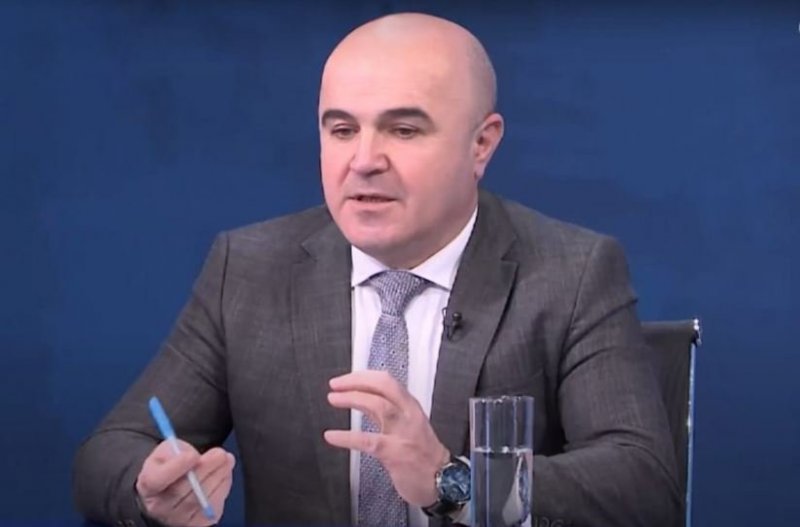
Azerbaijani economist Eldeniz Amirov
The Azerbaijan-based analytical portal News.Az discussed the potential impact of these new tariffs with economist Eldeniz Amirov.
Mr. Amirov noted that Trump's tariff policy is likely to have negative consequences for many countries, including the United States itself:
“The U.S. wields immense financial power and economic resilience. Its role in the global financial system is so influential that even the flutter of a butterfly's wings in America can create strong winds elsewhere. But this is no butterfly effect—this is a deliberate policy shift. As such, it will have serious repercussions not only for other countries but for the U.S. as well. I believe that this tariff policy is unsustainable in the long run. Sooner or later, changes are inevitable. Some countries may receive exemptions, while the tariffs imposed on others may be revised or softened.”
Regarding Azerbaijan, Amirov explained that the impact of the tariffs would be mostly indirect:
“The United States makes up only a small fraction of Azerbaijan’s export market. In 2024, Azerbaijan exported goods worth $26.54 billion, of which only $162 million went to the U.S.—just 0.6% of the total. This means that for every $100 worth of exports, only 60 cents go to the U.S. A 10% tariff translates into 6 cents, and of that, only 4 to 5 cents would actually be reflected in the final product price. So the total loss in Azerbaijani exports due to this tariff would likely not exceed $30,000—a negligible amount. Moreover, this ‘loss’ will most likely just be passed on to consumers as slightly higher prices.”
He emphasized that the more significant impact would come through imports:
“Because the new U.S. tariff policy will raise global prices and trigger inflation in many countries, Azerbaijan—which depends heavily on imported goods—may be particularly affected.”
Amirov also detailed Azerbaijan’s key exports to the U.S. in 2024:
“Aluminum was the top export, totaling $83 million. This was followed by a category of unspecified goods worth $48 million. Other exports included arms and ammunition parts ($8 million), iron and steel ($4.5 million), precious stones and metal coins ($2.5 million), and fruits and vegetables ($766,000).”
He further noted that trade between Azerbaijan and the U.S. is highly volatile:
“According to Trading Economics, Azerbaijan exported $162 million worth of goods to the U.S. in 2024—ten times more than in 2023. However, this does not indicate a consistent upward trend. The U.S. has always held an unstable share in Azerbaijan’s trade portfolio. In 2008, exports to the U.S. reached $6 billion. By 2009, this figure fell to $1.7 billion. In 2022, it was just $90 million, dropping to $16 million in 2023, before rebounding to $162 million in 2024. Clearly, trade turnover with the U.S. is highly inconsistent.”


Similar news