VIDEO: Russia's response to the Ukrainian offensive in the Kursk region will be harsh


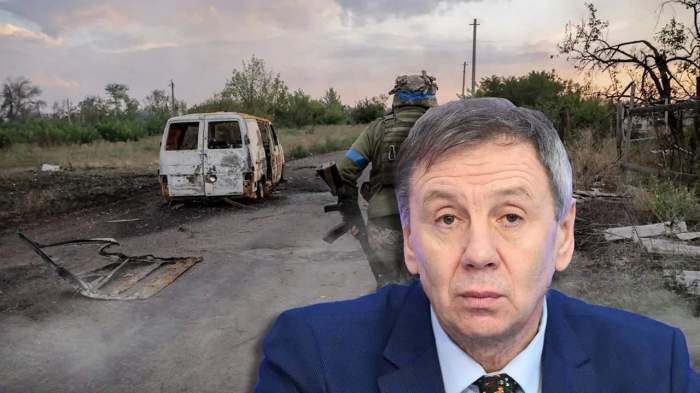

In a recent video interview with News.Az, prominent Russian political analyst Sergey Markov shed light on the recent Ukrainian Armed Forces (UAF) operation in Russia’s Kursk region. Markov explained that the UAF’s operation in Kursk mirrored a similar offensive by the Russian army in Ukraine's Kharkiv region several months prior, where a swift advance was achieved by targeting areas with minimal defensive structures.
Markov highlighted that this Ukrainian operation, though initially surprising to many due to its speed and success, follows a logical pattern. He predicts that the Russian military will eventually block and push back the Ukrainian forces in the Kursk region within the coming weeks. However, Ukrainian President Volodymyr Zelensky has reportedly tasked the UAF with securing a foothold in the region, with the ultimate aim of altering the dynamics of any future peace negotiations.
According to Markov, the United States and the United Kingdom had a direct role in approving and supporting this operation through their satellite and electronic intelligence capabilities. However, Western media has critically assessed the operation, suggesting it could be a strategic misstep that diverts Ukrainian forces from more critical areas, particularly in Donbas.
Markov pointed out that Zelensky’s broader strategy may involve capturing Russian territory to gain leverage in peace talks. This tactic, Markov warned, could extend to other regions bordering Ukraine, such as Belgorod or Bryansk. He also noted that the operation may aim to provoke fear and unrest among the Russian population, although he believes this could backfire, potentially strengthening Russian resolve.
The analyst also speculated that Russia might respond by seeking control over Ukraine's Sumy region, which has historically been pro-Russian and Russian-speaking. He suggested that Russian military control over Sumy could lead to a stabilization similar to that seen in the Zaporizhzhia and Kherson regions.
Markov concluded by stating that the attack on the Kursk region marks a significant escalation, as it involves foreign troops entering recognized Russian territory for the first time, likely leading to a hardening of Russian positions and further intensifying the conflict.
Markov highlighted that this Ukrainian operation, though initially surprising to many due to its speed and success, follows a logical pattern. He predicts that the Russian military will eventually block and push back the Ukrainian forces in the Kursk region within the coming weeks. However, Ukrainian President Volodymyr Zelensky has reportedly tasked the UAF with securing a foothold in the region, with the ultimate aim of altering the dynamics of any future peace negotiations.
According to Markov, the United States and the United Kingdom had a direct role in approving and supporting this operation through their satellite and electronic intelligence capabilities. However, Western media has critically assessed the operation, suggesting it could be a strategic misstep that diverts Ukrainian forces from more critical areas, particularly in Donbas.
Markov pointed out that Zelensky’s broader strategy may involve capturing Russian territory to gain leverage in peace talks. This tactic, Markov warned, could extend to other regions bordering Ukraine, such as Belgorod or Bryansk. He also noted that the operation may aim to provoke fear and unrest among the Russian population, although he believes this could backfire, potentially strengthening Russian resolve.
The analyst also speculated that Russia might respond by seeking control over Ukraine's Sumy region, which has historically been pro-Russian and Russian-speaking. He suggested that Russian military control over Sumy could lead to a stabilization similar to that seen in the Zaporizhzhia and Kherson regions.
Markov concluded by stating that the attack on the Kursk region marks a significant escalation, as it involves foreign troops entering recognized Russian territory for the first time, likely leading to a hardening of Russian positions and further intensifying the conflict.


Similar news