We are witnessing a de facto dual power structure, says Georgian expert


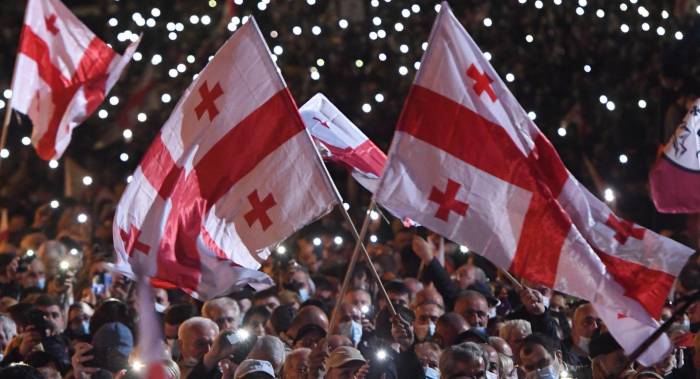
Photo: Apsny.ge
Georgia remains gripped by widespread protests following disputed presidential elections.
Tensions escalated yesterday as police arrested demonstrators in Tbilisi and Batumi. The political epicenter of the movement lies on Rustaveli Avenue, where thousands have gathered outside the Georgian Parliament.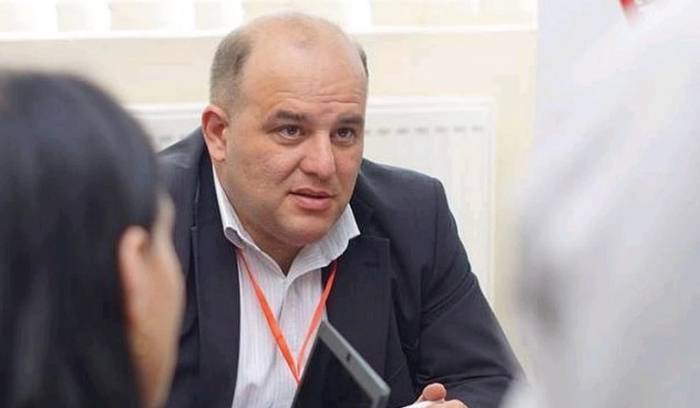
To gain insight into the unfolding crisis, News.az spoke with Georgian political scientist Vakhtang Maisaia. He described the situation as highly volatile, with the outcome still uncertain.
“Tensions are rising rapidly,” Maisaia said. “We are witnessing a de facto dual power structure emerge as mass protests continue into their 48th day. These demonstrations target an illegitimate regime that has increasingly resorted to aggressive tactics. The judiciary is virtually non-functional, controlled entirely by the informal leader and the ruling party. What we are seeing amounts to a constitutional coup and, effectively, a de facto coup d'état.”
According to Maisaia, this power struggle could signal a broader geopolitical realignment, potentially steering Georgia toward closer ties with Russia.
“This is more than a geopolitical pivot—it represents a fundamental shift in Georgia’s political system. The country is veering away from democratic liberalism toward authoritarian rule, with clear attempts to ‘Belarusize’ the nation. However, the Georgian people are resisting fiercely to preserve their sovereignty.”
Maisaia emphasized that the Georgian people are not fighting alone.
“The international community, including the United States, the European Union, China, and other allies, has expressed support for the Georgian people's struggle. Diplomatic pressure on the regime is increasing.”
He also noted that sanctions are likely to intensify, particularly with the recent inauguration of President Trump in the United States.
“New sanctions are expected to target key figures, including government officials and business leaders linked to the ruling regime. This will increase pressure on the government, which heavily relies on security forces similar to Russia’s Rosgvardia or Belarusian units.”
The protests are growing in both scale and intensity. Maisaia highlighted the surge in participation, stating that the number of demonstrators has risen dramatically.
“Whereas past protests may have drawn 40,000 people, recent demonstrations have seen upwards of 200,000 to 250,000 participants. The momentum continues to build.”
Despite this, the regime has struggled to implement harsh repressive measures. “Political repression is underway but has been largely ineffective due to the regime’s limited capacity to enforce it.”
Georgia now stands at a critical juncture. Maisaia explained that diplomatic efforts continue to recognize the legitimacy of President Salome Zurabishvili, while opposition parties negotiate with the regime. However, the situation remains precarious.
“The chances of resolution are evenly split—50-50,” Maisaia cautioned. “Yet, the regime’s support is clearly waning. In the near future, we may witness a significant victory for pro-Western parties and a resurgence of democratic forces in Georgia.”


Similar news