What do the snap elections in Azerbaijan mean for the country's future?


By Faiq Mahmudov
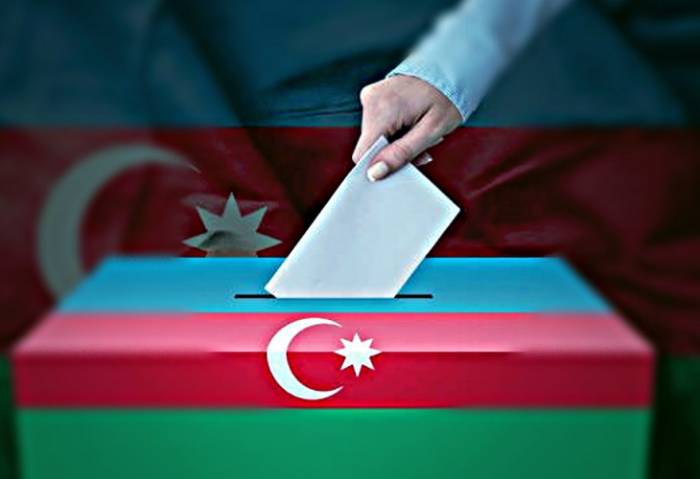
Azerbaijan’s President Ilham Aliyev has called snap parliamentary elections for September 1, signaling a significant moment in the nation’s democratic journey. For the first time in history, these elections will be held across the entire sovereign territory of Azerbaijan, including regions liberated from Armenian occupation in 2020. This marks a notable step in integrating these areas into Azerbaijan's political framework. A total of 125 deputies will be elected to the Milli Majlis, with the electoral process set to be closely monitored by observers from over 40 countries and up to 30 international organizations, ensuring transparency and adherence to international standards.
Ahead of this pivotal event, News.Az consulted with political experts to gather insights and predictions about the upcoming parliamentary elections, scheduled for September 1, 2024. These discussions aim to provide a deeper understanding of the potential political shifts and the broader implications for Azerbaijan's future.
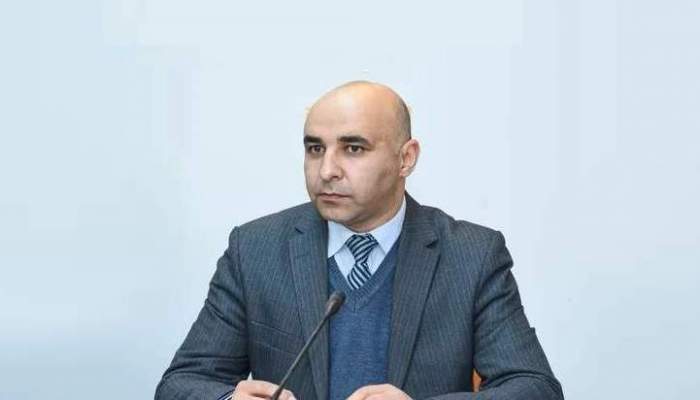
Chairman of the Citizen Society for Election Observation Coalition, expert Zaur Ibrahimli, told News.Az that there is significant interest in the parliamentary elections currently being held in Azerbaijan:
“The most notable aspect of this parliamentary election is that, for the first time in Azerbaijan's history, it is being conducted across the entire country within its unified borders. Formerly displaced persons will participate in parliamentary elections in their native regions for the first time in the past 30 years. This is a remarkable and historic event for every nation, every country, and every society. The fact that the elections are taking place in territories liberated from occupation also signifies that the rightful owners of this land have returned, and Azerbaijanis are committed to settling permanently in their ancestral lands.”
He further explained that the Citizen Society for Election Observation Coalition will, for the first time in Azerbaijan's parliamentary election history, conduct election monitoring in territories liberated from occupation:
“Civil society organizations will observe the elections in the Jabrayil, Fuzuli, Lachin districts, and Shusha city. The most encouraging aspect is that these observers will be leaders, representatives, and volunteers from non-governmental organizations who have returned to settle permanently in these regions. This indicates that civil society is organizing and becoming active in these liberated areas. Additionally, it is important to note that this parliamentary election marks the first since Azerbaijan's victory in the 44-day Patriotic War. The composition of the new parliament, formed after the complete restoration of Azerbaijan's territorial integrity, will reflect this reality. Representatives from the liberated territories will include deputies elected by compatriots who have already returned to live permanently in these areas. In this sense, I believe the new parliament will have a historical mission. There is still much work ahead, and I am confident that the seventh convocation of the parliament will play a more active role in advancing national interests related to the ongoing reform process.”
Mr. Ibrahimli acknowledged that the Azerbaijani government has invited an OSCE observation mission, which has been very active:
“As a co-founder of the Citizen Society for Election Observation Coalition, I have met with a representative of this observation mission. We had an in-depth discussion about the election process. Additionally, representatives from the CIS Parliamentary Assembly, the Organization of Turkic States, and many foreign countries will be observing the elections. Observers from TURKPA will also participate. In total, the number of local observers will exceed 90,000, which will likely set a record in Azerbaijan's election history. Azerbaijani NGOs will monitor the elections through two coalitions, with over 5,000 observers from various organizations.
This level of oversight is encouraging as it ensures significant public monitoring of the elections and supports the organization of fair, democratic processes. Moreover, three local organizations, in collaboration with foreign partners, will conduct exit polls to further ensure adherence to international standards. The elections have also attracted considerable attention from foreign media, with all information being accessible. The internet in Azerbaijan is unrestricted, allowing people, regardless of their political views, to express their opinions openly. There is a very open environment for discussion, including critical viewpoints. Reputable international publications frequently feature articles on the elections and related developments in Azerbaijan, demonstrating a clear interest. Although some opinions are subjective, the level of attention is unmistakable.”
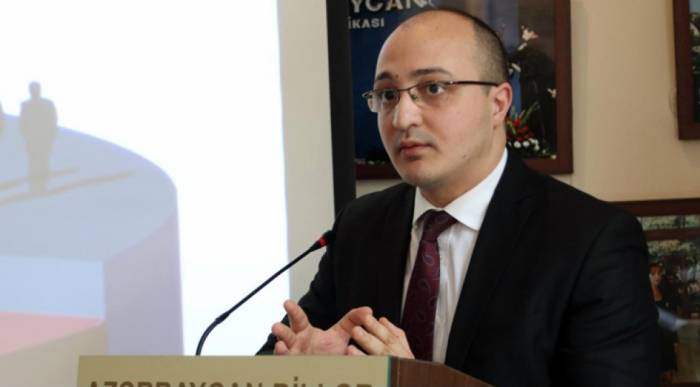
The Chairman of the Baku Club of Political Scientists, Zaur Mammadov, in an interview with News.az , stated that these elections cannot genuinely be considered early parliamentary elections since they were initially scheduled for November:
“This adjustment was necessary because the country is set to host several major events around that time, particularly the prestigious COP29 conference, which is expected to attract over 100,000 visitors. Given this situation, the decision to hold the parliamentary elections slightly earlier was made to ensure proper preparations for COP29 and the smooth management of the event.”
He highlighted that, for the first time in the history of independent Azerbaijan, elections will be conducted in all districts, towns, and villages, including those recently liberated from occupation:
“This means that, after 30 years, we will witness parliamentary elections in places like Aghdam, Khankendi, Khojaly, Zangilan, Gubadli, and Shusha. Just as in the presidential elections held in February, voters in every constituency and polling station will have the opportunity to vote for their chosen candidates. Indeed, Azerbaijan is entering a new era, and one of the most intriguing aspects of this era is adapting to a rapidly changing world. The country has emerged as a victorious state, and since 2020, international and regional perceptions of Azerbaijan have shifted, positioning it as a global actor. Naturally, being a global actor brings a different set of internal and external challenges. In this new era, the parliament and other state institutions must respond to these challenges and adopt a more universal approach.”
Mr. Mammadov also emphasized that the parliamentary elections are occurring within a significant global context:
“With the U.S. presidential elections scheduled for November and recent elections in Russia and Iran, Azerbaijan's upcoming presidential and parliamentary elections in 2024 are set to pave the way for a smoother transition into 2025. The year 2025 will be crucial for addressing important regional and foreign policy challenges on the global stage.”


Similar news