Why did Turkmenistan suspend gas supplies to Russia?


By Asif Aydinli
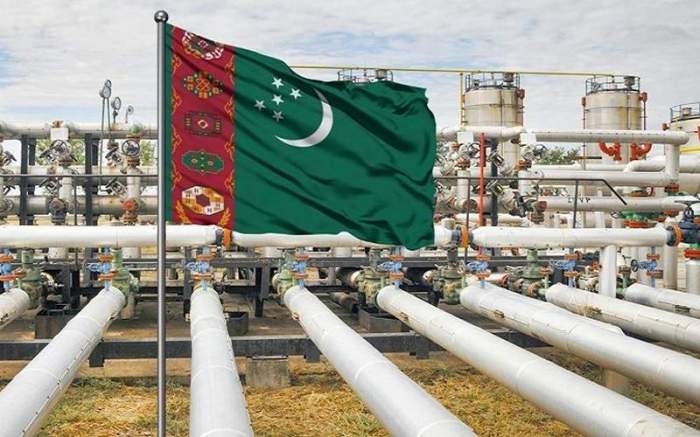
In mid-2024, natural gas deliveries from Turkmenistan to Russia were halted by mutual agreement. The announcement was made by Deputy Chairman of "Turkmengas" M. Archaev during an international conference in Ashgabat. The suspension of supplies, however, did not come as a surprise, as the volumes of gas exported to Russia had become relatively insignificant. Why, then, did Turkmenistan take this step, and how does it reflect the current situation in the region?
In total, Turkmenistan could have delivered around 2.5 billion cubic meters of gas to Russia in the first half of 2024—a figure comparable to what Gazprom consumed during periods of stable relations. However, according to M. Archaev, supplies have been temporarily suspended pending the conclusion of negotiations. The prospects for their resumption remain unclear, especially against the backdrop of Turkmenistan's active efforts to diversify its gas exports to other countries.The history of relations between Turkmenistan and Gazprom has seen both periods of flourishing cooperation and cooling ties. In 2009, an explosion on the Central Asia-Center gas pipeline and price disagreements in 2015 led to prolonged pauses in deliveries. In 2019, the two sides signed a five-year contract, but its volumes remained symbolic compared to previous years. And now, once again, supplies have been suspended.
At one time, Europe had high hopes for Turkmen gas . The Trans-Caspian Gas Pipeline project was considered an alternative to Russian supplies, especially after the onset of the military conflict in Ukraine, when the EU was desperately seeking ways to diversify its energy sources. However, Turkmenistan appears to have chosen to focus on cooperation with its neighbors—Russia and Iran.
This decision illustrates a complex strategy: Turkmenistan, facing challenging economic conditions, needs to increase its natural gas exports, yet its priorities remain within Central Asia. Since 2019, there has been a strengthening of ties with Russia and Iran, and despite temporary pauses in exports, the parties continue to find common ground.
Uzbekistan plays a significant role in maintaining these ties. In 2022, the country faced a shortage of energy resources due to an unusually cold winter. Turkmen gas, supplied via Gazprom, helped stabilize the situation, and in 2023, Uzbekistan signed a two-year contract with the Russian gas giant. Deliveries began in October 2023, allowing the country to avoid an energy crisis for the upcoming season.
Thus, while Turkmenistan opts for long-term projects in the south (Iran) and the east (TAPI) , Russia continues to play a key role in maintaining regional stability. The cessation of supplies to Russia does not threaten the relationship between the parties—it rather signals a temporary pause needed to assess economic prospects.
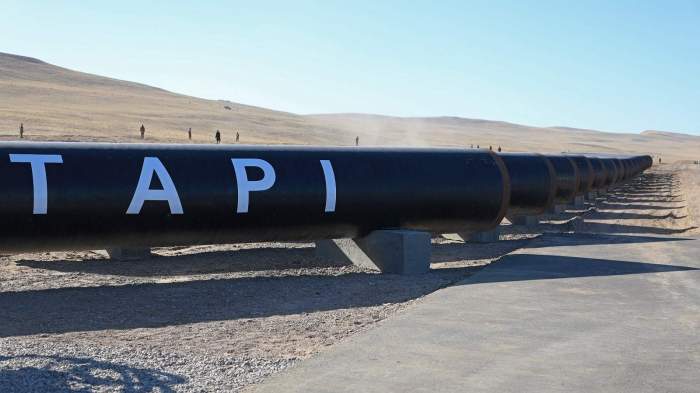
Apart from traditional routes, Turkmenistan continues to develop the TAPI pipeline (Turkmenistan-Afghanistan-Pakistan-India). The project has been under development for several decades, but as of September 2024, work had resumed on the Afghan section, and Kazakhstan expressed its interest in joining the initiative. The appeal of this project is clear: it opens new markets and reduces dependence on Russia and China.
However, the success of TAPI still hinges on political stability in Afghanistan, which remains unpredictable. Despite this, Turkmenistan continues to invest in the project, hoping for long-term dividends.
Given such a complex and multi-layered situation, it is not surprising that Turkmenistan and Russia have decided to "slow down" temporarily. In the face of economic and geopolitical shifts, both parties recognize the need for flexibility. This might be a step back to allow for a leap forward in the future.
Currently, Turkmenistan is focused on developing projects that will enable it to diversify routes and clients. Yet despite its ambitions, dependence on traditional export directions remains high. Even the temporary suspension of supplies to Russia is not a break but rather a reminder that any energy strategy is always intertwined with politics.


Similar news