Workers unite in Portugal’s largest strike as wage tensions boil over


.png)
Editor's note: Faig Mahmudov is a journalist based in Azerbaijan. The views expressed in this article are his own and do not necessarily reflect those of News.Az.
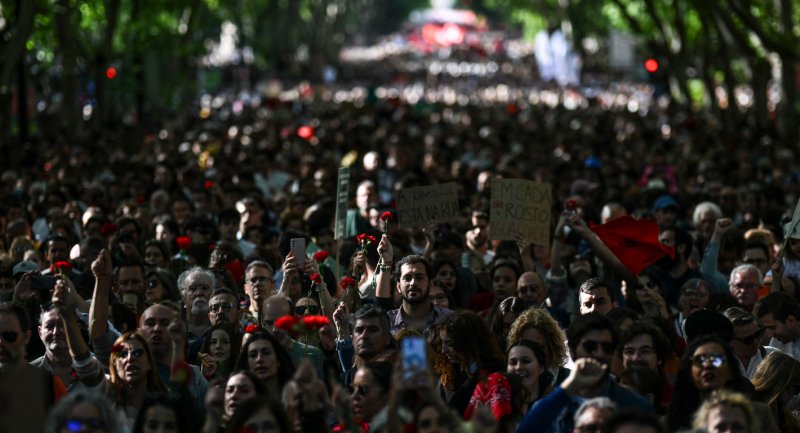
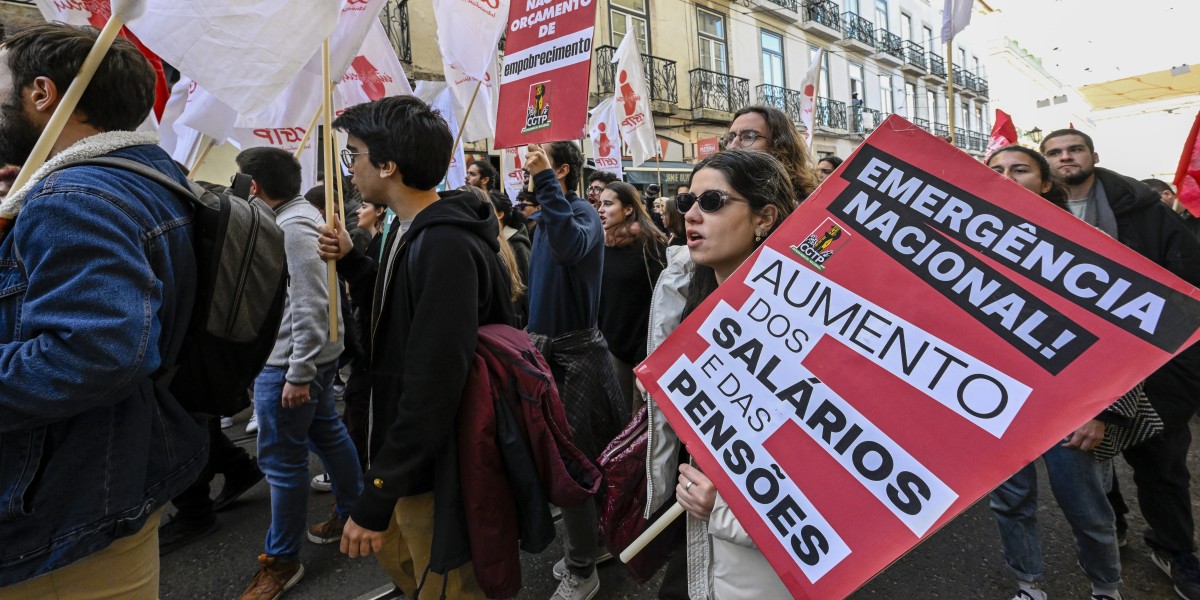
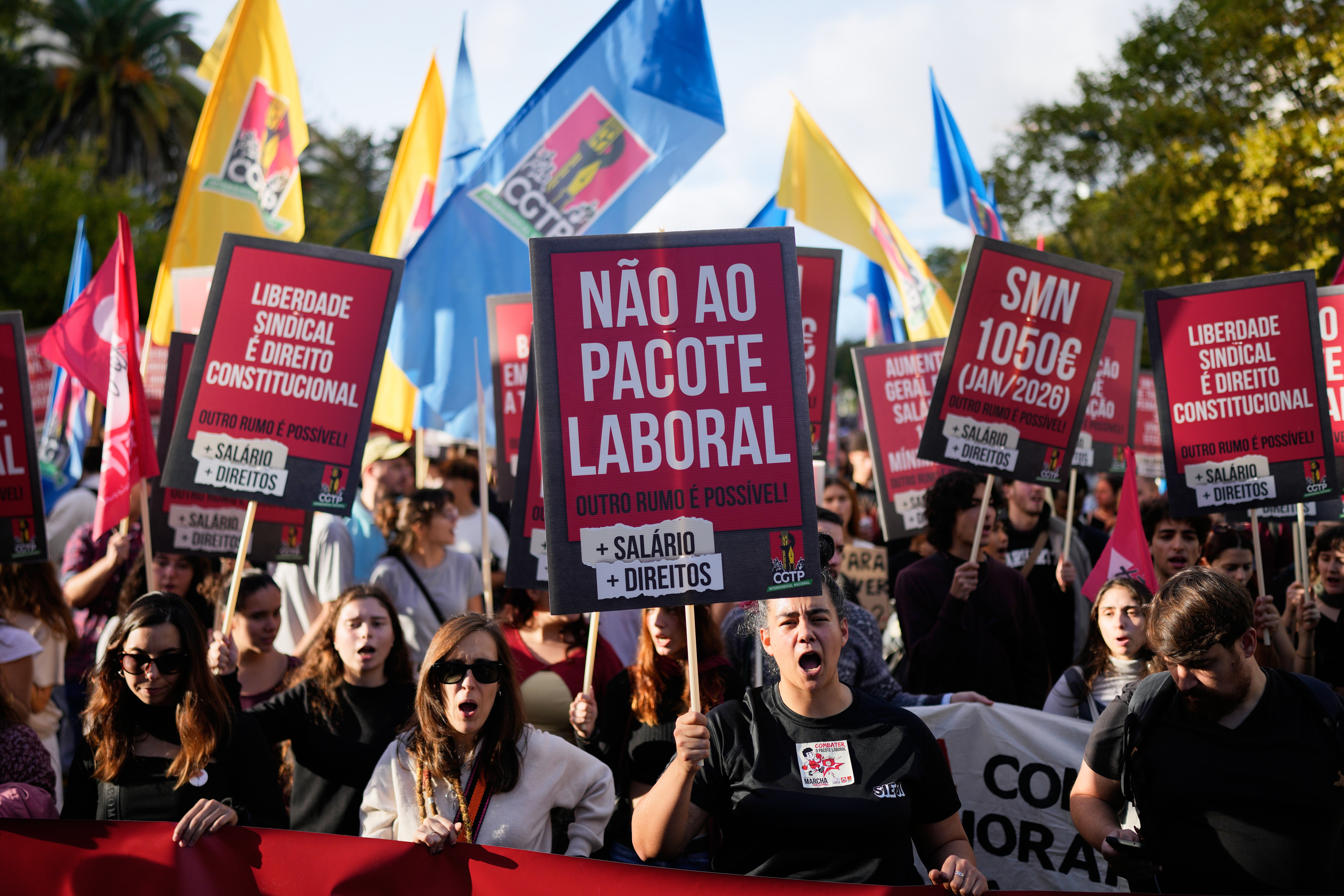
Portugal is experiencing one of its most disruptive nationwide strikes in recent years, as workers across key public sectors staged coordinated walkouts, halting transportation services, closing schools, delaying medical procedures, and challenging the government amid heightened economic uncertainty.
Organized by several national trade unions and supported by thousands of public and private sector employees, the strike highlights persistent grievances over stagnant pay, rising living costs, staffing shortages, and broader dissatisfaction with fiscal policy.
The action reflects months of social pressure building across the country, particularly among teachers, medical personnel, transport workers, civil servants, and municipal employees. While Portugal has seen sector-specific protests in recent years, the current strike stands out for its scale and cross-sector coordination, posing a major test for the government’s economic and social agenda.
Workers demand wage increases amid inflation and affordability pressures
Source: Reuters
At the core of the strike is the demand for wage increases that keep pace with inflation. While Portugal’s inflation rate has moderated compared to peak levels in 2022–2023, workers argue that salaries have not recovered to offset the cumulative loss of purchasing power. Public sector employees say that nominal wage adjustments introduced by the government are insufficient to bridge the gap between incomes and rising costs of basic goods, utilities, and housing.
Housing affordability has emerged as a particularly sensitive issue in urban areas such as Lisbon and Porto, where rapid increases in rental and property prices have strained households. Many striking workers cite examples of modest apartments becoming prohibitively expensive relative to average wages, leaving families in precarious financial situations. Union officials warn that without meaningful wage growth, professionals may leave the country, switch sectors, or abandon public service roles altogether.
Staffing shortages intensify public sector pressures
Source: Reuters
Beyond pay, unions emphasize that chronic staffing shortages in healthcare, education, and public administration have reached critical levels. Nurses and doctors report hospitals operating under extreme pressure, with some departments facing dangerously low staff-to-patient ratios. Teachers note overcrowded classrooms and temporary contracts that discourage young educators from entering the profession.
These shortages stretch public services to unsustainable levels, workers said. Portugal’s aging population further amplifies these pressures, particularly in healthcare, which continues to struggle with patient volume and limited resources. Unions warn that without improved conditions and investment, public services will deteriorate, affecting long-term national competitiveness.
Transportation networks paralyzed amid strike action

Source: Reuters
The strike’s most visible impact has been felt across transportation networks. Suburban rail lines, metro services, and national bus routes experienced significant delays and cancellations, particularly in Lisbon’s metropolitan area during peak hours. Commuters faced long queues and overcrowded replacement services.
Air travel was also disrupted, as airport ground crews and some air traffic personnel joined the strike. Several domestic and international flights were delayed or rescheduled. Port operations slowed, affecting docking and cargo processing, demonstrating the broad participation and economic cost of even temporary disruption.
Schools and hospitals operate at reduced capacity

Source: Reuters
Education was another heavily affected sector. Thousands of teachers and administrative staff walked out, forcing schools nationwide to suspend classes or operate with minimal activity. Parents were advised to prepare for full-day closures or shortened schedules.
Hospitals and clinics reported delays in non-urgent appointments and elective procedures. Emergency departments remained open, but unions warned that staffing shortages created unsafe conditions for both personnel and patients. Several hospitals temporarily reduced services due to insufficient staff.
Government under pressure to respond to demands
Source: Reuters
The government has acknowledged the strike but insists fiscal plans must remain balanced to protect Portugal’s economic recovery. Officials argue that significant wage increases across all public sectors could strain the national budget, jeopardize debt-reduction commitments, and conflict with EU fiscal guidelines.
Political pressure is mounting, with opposition parties criticizing the government’s economic management and arguing that post-pandemic recovery gains have not been equitably distributed. Some note that Portugal’s dependence on tourism and services creates structural vulnerabilities, increasing the likelihood of wage-driven social tensions.
Unions counter that public sector workers have borne the brunt of austerity measures for years and deserve fair compensation. They argue that stagnant real wages are incompatible with rising living costs and warn that additional strikes are likely unless the government presents credible solutions.
Economic impact felt across business sectors
Source: Reuters
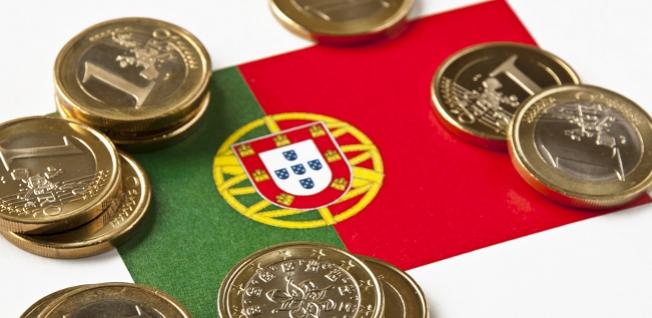
The strike has immediate economic implications, particularly for small and medium-sized enterprises. Many businesses report reduced productivity due to employee absences, transport delays, and supply chain interruptions. Retail foot traffic declined, while industries reliant on logistics and timely deliveries, including manufacturing and construction, were forced to slow or pause operations.
Economists note that while short-term disruptions may not dramatically alter growth projections, repeated or prolonged strikes could undermine investor confidence, slow job creation, and compound labor-market challenges. Prolonged industrial action may also prompt companies to reconsider hiring or relocate operations.
Public opinion divided, but empathy for workers rising
Source: Reuters
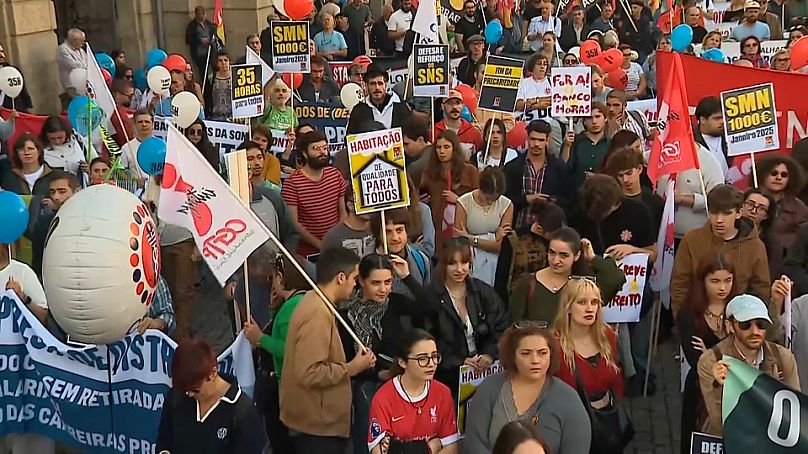
Public reaction to the strike is mixed. Some citizens express frustration at service disruptions, particularly in transportation and healthcare, while a growing number empathizes with workers facing wage stagnation and high living costs.
The debate has shifted from whether the strike is justified to how long the government can delay comprehensive wage and budget reforms. For many households, the strike underscores broader concerns about economic stability and social mobility.
Unions signal further action if demands unmet

Source: Reuters
Union leaders have indicated the strike marks the beginning of a sustained campaign. They are calling for formal negotiations on wage increases, workforce expansion, and improved working conditions. If the government fails to deliver credible solutions, further strikes and sector-specific protests are likely in the coming weeks.
Some unions have already prepared for multi-day strikes, and transportation unions warn that intermittent disruptions may continue through winter unless agreements are reached.
A pivotal moment for Portugal’s economy and politics

Source: Reuters
The nationwide strike places Portugal at a crossroads. The government must balance fiscal responsibility with legitimate worker grievances while ensuring essential public services remain operational. Failure to reach an agreement risks prolonged social unrest, diminished public trust, and growing political polarization.
Conversely, successful negotiations could enhance social stability, strengthen institutional credibility, and support long-term economic objectives. How Portugal resolves this standoff will shape the country’s labor relations, public sector resilience, and political narrative for years to come.
(If you possess specialized knowledge and wish to contribute, please reach out to us at opinions@news.az).


Similar news