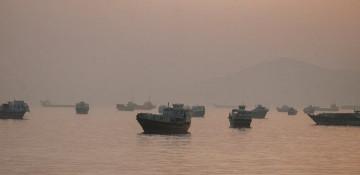
Several shipping operators have suspended transit through the narrow passage due to rising insurance premiums and mounting security risks, News.Az reports, citing Anadolu Agency.
On Monday, China described the strait as “an important international trade route” and called for an immediate cessation of military operations.
Responding to a question from an Anadolu Agency correspondent, Chinese Foreign Ministry spokeswoman Mao Ning stressed that stability in the strait and surrounding waters is crucial for global trade and urged steps to prevent further escalation.
Iranian media reported on Saturday that the Strait of Hormuz had been “effectively” closed following US-Israel attacks, although no formal blockade has been declared.
According to Kyodo News, more than 40 Japan-linked vessels, including oil tankers, are currently stranded in the Persian Gulf. At least three ships have halted attempts to pass through the strait.
Japan imports approximately 95% of its crude oil from the Middle East, with most shipments transiting the narrow waterway. Japanese Foreign Minister Toshimitsu Motegi on Monday asked Iranian Ambassador to Tokyo Peiman Seadat to help ensure the safety of the Strait of Hormuz.
In a statement, Japan’s Foreign Ministry said Tokyo would “continue to make all necessary diplomatic efforts to bring about an early settlement of the situation.”
Malaysia has advised its vessels to avoid the strait until further notice, according to Bernama. The Marine Department of Malaysia has urged operators to closely monitor international security advisories and maintain heightened readiness.
Pakistan is also considering contingency measures. Officials told the local daily The News International that Islamabad may seek inclusion on Saudi Arabia’s preferred crude supply list for shipments routed via the Red Sea if disruptions persist beyond 10 to 12 days.
Two crude tankers operated by the state-run Pakistan National Shipping Corporation remain stranded near the strait. A third vessel that began loading as hostilities intensified is not expected to depart soon.
The Strait of Hormuz accounts for roughly one-fifth of global oil trade and significant liquefied natural gas exports from Qatar and United Arab Emirates. Approximately 20% of the world’s daily oil consumption — around 20 million barrels — passes through the corridor.
Shipping data indicate that transit volumes on March 1 were down 86% compared with the 2026 average. Meanwhile, United Kingdom Maritime Trade Operations reported multiple maritime incidents described as attacks on Sunday.
Although Saudi Arabia and the United Arab Emirates operate pipelines that bypass the strait, their combined capacity represents only a small portion of the crude oil typically transported through the key maritime route.