Azerbaijan–Armenia peace declaration: A milestone in regional stability and global integration


In recent years, one of the main priorities of the foreign policy course of the Republic of Azerbaijan has been the promotion of regional stability, the deepening of international cooperation, and closer integration into the global community.
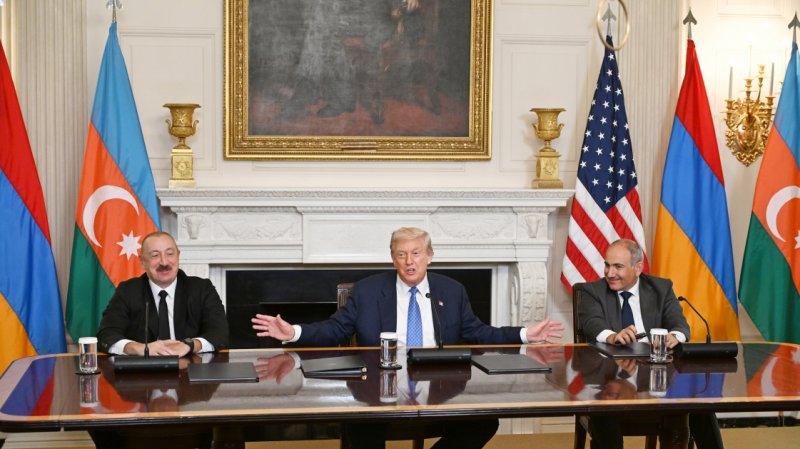
This multidimensional strategy has aimed not only to protect national sovereignty but also to position Azerbaijan as a central player in the evolving geopolitical architecture of Eurasia. The peace declaration signed in Washington on August 8, 2025, between Azerbaijan and Armenia represents a defining moment in this course. It is not simply a document that confirms the end of a long-standing conflict; it is also a gateway to new opportunities for Azerbaijan in global politics, economic partnerships, and international security.
The signing of the peace agreement marked a significant diplomatic achievement. It placed Azerbaijan at the center of a broader platform of cooperation with regional countries, major powers, and international organizations, strengthening the country’s international prestige and influence. For decades, the unresolved conflict with Armenia had been a shadow over the South Caucasus, obstructing development and leaving the region vulnerable to manipulation by outside actors. By bringing this chapter to a close through negotiations mediated by the United States, Azerbaijan demonstrated not only its ability to achieve military victory on the battlefield but also to secure recognition of that victory through diplomacy at the highest global level.
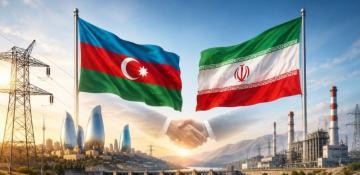
One of the most critical elements of the agreement is the mutual recognition of sovereignty and territorial integrity by Azerbaijan and Armenia. This decision provided a legal and political framework for overcoming long-standing tensions. For Azerbaijan, it was the final confirmation of its territorial integrity at the international level, leaving no room for territorial disputes or ambiguous claims. The significance of this recognition extends beyond bilateral relations, creating space for expanded cooperation with other key regional states such as Georgia, Türkiye, Iran, and the countries of Central Asia. This breakthrough is not only about peace with Armenia, but about building a regional order based on respect for sovereignty and shared prosperity.
The reestablishment of diplomatic relations, the opening of embassies and consulates, and the normalization of communication channels between the two neighbors turn Azerbaijan into a principal guarantor of political stability in the South Caucasus. This process also symbolically closed the era of the OSCE Minsk Group, which for years had served as a formal framework for mediation but was widely criticized for its ineffectiveness and political bias. The cessation of its activities confirms that the peace process has reached a final resolution in the international arena and marks the beginning of a new stage of practical cooperation.
The fact that the peace declaration was signed in Washington under U.S. mediation highlights the success of Azerbaijan’s balanced and multi-vector foreign policy. The agreement has elevated Azerbaijan–U.S. relations to a new strategic level, with Washington now actively engaging as both mediator and guarantor of the peace. This achievement is symbolically reinforced by the repeal of Section 907 of the U.S. Freedom Support Act, which for decades had placed restrictions on direct American support for Azerbaijan. Its removal opens the door to direct financial, technical, and technological cooperation between Baku and Washington. Moreover, the peace deal strengthens Azerbaijan’s standing within international organizations such as the United Nations, the European Union, the Organization of Islamic Cooperation, and the Organization of Turkic States, giving the country greater weight in shaping international dialogue.
The economic dimension of the peace declaration is no less significant. Azerbaijan has long sought to strengthen its role as a transit hub linking Asia and Europe through energy pipelines, railway networks, and trade corridors. With the new environment of stability, Baku is accelerating these efforts. One of the flagship initiatives to emerge from the peace framework is the “Trump Route for International Peace and Prosperity” (TRIPP), a transport project designed to connect Azerbaijan with Türkiye through Nakhchivan while simultaneously establishing a strategic transit corridor that links Central Asia, the Caucasus, and Europe.
For Azerbaijan, the project is an economic lifeline, but its significance extends much further. For the people of Nakhchivan, who lived under economic blockade for decades, it represents liberation and new opportunity — reduced logistics costs, expanded trade, job creation, and integration into global supply chains. For Central Asia, TRIPP offers easier access to European markets, while for Europe, it creates a more reliable and secure overland trade corridor free from geopolitical bottlenecks. It is therefore both a national achievement and a regional game changer, positioning Azerbaijan as an indispensable transit hub in the heart of Eurasia.
The peace declaration has also energized foreign investment and energy cooperation. The memorandum of understanding signed between SOCAR and ExxonMobil shortly after the agreement reflects growing interest from U.S. companies in Azerbaijan’s energy sector. The removal of barriers such as Section 907 will pave the way for increased American and Western involvement not only in energy but also in transportation, agriculture, and advanced technology sectors. These developments promise to diversify Azerbaijan’s economy, attract foreign capital, and secure new partnerships in industries crucial for long-term growth.
In terms of regional security, the peace declaration is transformative. It ensures that Azerbaijan and Armenia renounce the use of force and establishes mechanisms for border delimitation, which directly contribute to stability. Equally important is the commitment to remove foreign military forces from the region, signaling a decisive shift toward a sovereign security model free from external manipulation. By consolidating a security environment based on sovereignty, Azerbaijan creates the conditions for stronger bilateral and multilateral cooperation, including more active participation in NATO partnership programs, UN peacekeeping operations, and regional security initiatives.
The TRIPP corridor also serves a symbolic function beyond economics: it is a strategic land link that unites the Turkic world. Through this route, Azerbaijan will further strengthen economic, cultural, and political integration within the Organization of Turkic States, bolstering the collective identity and connectivity of Turkic nations. By creating direct overland access between Central Asia and Europe, Azerbaijan consolidates its position as a linchpin of the 21st-century Eurasian trade system.
The success of the peace declaration is inseparable from the diplomatic leadership of President Ilham Aliyev. Under his pragmatic approach, Azerbaijan achieved victory both on the battlefield and at the negotiating table. His ability to find compromise without sacrificing national interests, coupled with a steadfast commitment to sovereignty, made this historic agreement possible. For Azerbaijan, it reinforced its image as a reliable partner in the international system and demonstrated its capacity to act not only as a regional power but also as a constructive global actor.
The signing of the peace declaration does not eliminate all challenges. The wounds of war, the mistrust built over decades, and the complexities of economic integration will take time to heal. Yet the foundations have been laid for a new regional order defined not by confrontation but by cooperation. For Azerbaijan, the benefits are clear: consolidated sovereignty, strengthened international status, expanded economic opportunities, and recognition as the initiator of peace. For Armenia, the agreement presents both the challenge of adjusting to new realities and the opportunity to participate in regional development projects that could revive its struggling economy. For the broader region, the peace declaration offers a vision of a future where trade, connectivity, and shared prosperity replace isolation and division.
Ultimately, the peace declaration of August 8, 2025, stands as a milestone in international diplomacy and a triumph of Azerbaijan’s foreign policy. It has transformed the South Caucasus from a zone of instability into an emerging hub of cooperation, connectivity, and economic growth. More importantly, it has created a model of how nations can move beyond entrenched conflict to build a shared future based on stability, respect, and mutual progress. As Azerbaijan advances further into the twenty-first century, this achievement will serve as the cornerstone of its strategic role — not only as a guarantor of regional stability but also as a key partner in global political, economic, and security affairs.
By Rovshan Sayyaroglu
The material was prepared with the financial support of the Media Development Agency of the Republic of Azerbaijan.


Similar news