Beirut attack raises fears Lebanon is sliding toward another war


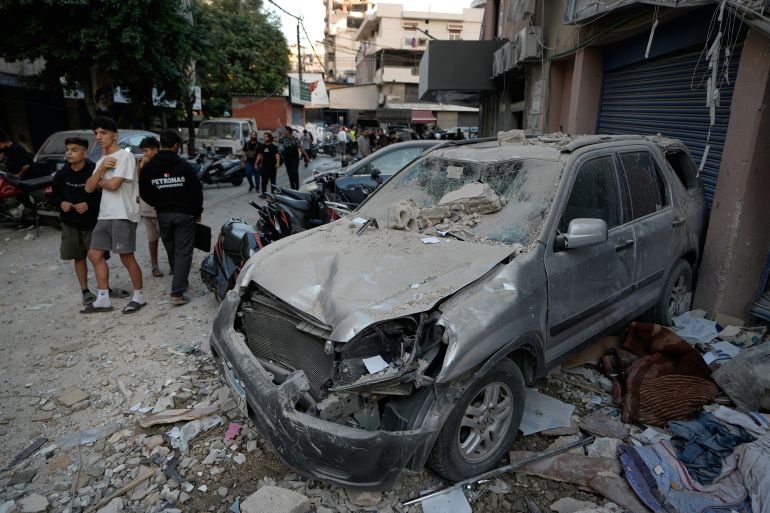
Beirut is once again gripped by fear after Israel’s latest strike on the capital’s southern suburbs, an attack that killed a senior Hezbollah member and shattered the fragile calm that followed last year’s ceasefire. For many Lebanese, especially those in Beirut’s Palestinian refugee camps and the country’s war-scarred south, the question is no longer whether Israel will escalate—but when.
In Burj al-Barajneh, a camp that was violently shaken by Israeli bombs a year ago, locals stood on balconies on Sunday discussing the strike that hit just a kilometre away. The ceasefire between Hezbollah and Israel, announced last November after a year of fighting, brought only partial relief. Israeli attacks have continued across southern and eastern Lebanon, and the latest strike has revived the dread of a wider conflict, News.Az reports, citing Al Jazeera.
Lebanon is still struggling with the devastation of last year’s war. Entire southern villages were reduced to rubble, more than 4,000 people were killed, and over 1.2 million were displaced. The World Bank estimates the country needs about $11bn to recover. Many families have yet to return home, and those who have are rebuilding with fear in their hearts.
Hezbollah remains weakened by last year’s fighting. The Lebanese government, under U.S. and Israeli pressure, approved a plan to disarm the group, though Hezbollah rejects it, citing Israel’s failure to fully withdraw from occupied points in the south and its continued attacks. Israeli officials claim Hezbollah is regrouping and accuse the Lebanese Army of moving too slowly.
After Sunday’s strike, senior Hezbollah figure Mahmoud Qomati said a red line had been crossed. But analysts warn the group has little capacity to wage another war. Lebanese analyst Michael Young said any retaliation would be “suicide,” adding that Israel may be exaggerating Hezbollah’s capabilities to justify its own operations.
Across Beirut, fear is rising. Residents speak of sleepless children, uncertainty, and trauma that never fully faded. In Basta, a neighbourhood repeatedly hit last year, Syrian resident Khaled Muhanaya said people worry daily about another wave of destruction.
In Burj al-Barajneh, some residents try to stay defiant. Ali, a young barber who was working during Sunday’s strike, said people are “used to this,” though the recent Israeli attack on Ein el-Hilweh refugee camp—which killed 13 people, including 11 children—has many fearing that more camps may be targeted.
The south remains the most affected region. Many areas are inaccessible, emptied out, or under constant drone and warplane surveillance. Villages such as al-Habbariyeh, already hit hard in 2024, are now hosting displaced families who still cannot return home due to Israeli presence near the border.
Those who rebuilt their homes fear losing everything again. Many say they will not flee this time, having spent their remaining savings on repairs. But fear lingers in every conversation. Locals speak of nights filled with anxiety, expecting air raids or ground incursions at any moment.
Talk of another war is everywhere in Lebanon. After last year’s suffering, many say a new conflict would be even more devastating—for a country already exhausted, displaced, and still trying to rebuild amid the constant threat of renewed violence.


Similar news