Breakthrough in eco-aviation: Chinese researchers release bamboo drone software for free


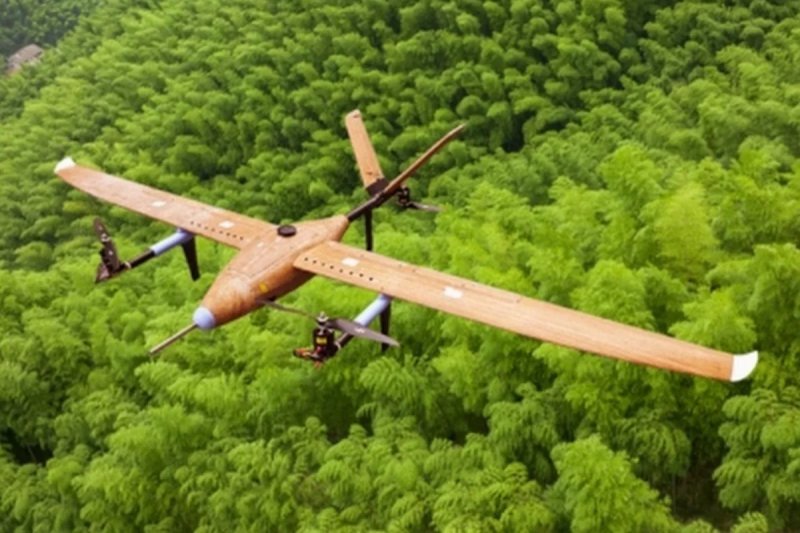
A team of researchers in China has unveiled what they describe as the world’s first open-source flight control system designed specifically for bamboo-frame drones, offering a potential breakthrough in the push for low-cost, eco-friendly unmanned aerial vehicles (UAVs),
RECOMMENDED STORIES
Unlike conventional airframes made of composite materials, bamboo structures introduce low-frequency vibrations – typically in the 8–20 hertz range – that standard flight controllers struggle to handle.
According to the team’s paper, published on February 28 in Heilongjiang Science, existing commercial flight controllers are either closed-source and inflexible, or open-source but poorly adapted to local development needs, limiting the industrialisation of bamboo-based UAVs.
More significantly, they redesigned the control algorithms to match bamboo’s structural properties.
By tuning an extended Kalman filter and leveraging bamboo’s natural vibration-damping characteristics, the system reduces control latency from 15 to 20 milliseconds to as low as 8 to 10 milliseconds – improving responsiveness while maintaining stability.
“By open-sourcing both the flight control software and the structural parameter configurations, we allow users to adapt the system to different bamboo airframe designs without rewriting core control algorithms,” wrote Tian Wei, a senior engineer involved in the project.
“This hardware-software co-design approach significantly lowers the barrier for secondary development and could accelerate the adoption of eco-friendly UAVs in both industry and education.” The software adopts a modular publish-subscribe framework, enabling parallel data processing and easier system expansion. It is also fully compatible with the mainstream electronic ecosystem and Mavlink communication protocol, ensuring interoperability with existing drone platforms.
Crucially, the system is open-source not only at the software level but also in its hardware-software integration. Users can modify structural parameter configuration files to adapt the controller to different bamboo airframe designs without rewriting core algorithms, significantly lowering the barrier to entry.
Tian’s team said: “The system fills a critical gap between sustainable airframe materials and autonomous flight control, with applications in environmental monitoring, forestry inspection and science education.“Future upgrades will focus on higher integration, improved environmental adaptability and long-term reliability under varying temperature and humidity conditions.”


Similar news