Central Asia adapts to new security realities after Afghanistan


Security has always been a defining concern for Central Asia, but the regional threat landscape has evolved markedly in recent years, News.Az reports.
Developments in Afghanistan, shifts in great power engagement, transnational risks, and domestic vulnerabilities have combined to create a more complex and interconnected security environment. As a result, security concerns and post Afghanistan dynamics have become one of the most discussed and enduring themes across Central Asia.
Rather than focusing on a single threat, regional governments now approach security as a multidimensional challenge that includes border control, extremism prevention, economic resilience, information security, and social stability. This broader understanding reflects lessons learned over decades of engagement with both internal and external risks.
Afghanistan as a structural security factor
Afghanistan occupies a central place in Central Asian security calculations. Geographic proximity, historical ties, and shared ethnic and economic linkages ensure that developments south of the region’s borders reverberate northward. Changes in governance and security conditions in Afghanistan directly affect perceptions of risk in neighboring states.
For Central Asian governments, Afghanistan is neither viewed solely as a threat nor as an opportunity. Instead, it is treated as a structural factor that requires sustained monitoring, engagement, and preparedness. Stability in Afghanistan is widely seen as essential for long term regional security, while instability raises concerns over spillover effects.
These concerns are not new, but they have gained renewed urgency as regional actors reassess assumptions about border management and external security guarantees.
Border security and state capacity
Strengthening border security has become a top priority for Central Asian states. Long and often difficult to monitor borders with Afghanistan require significant investment in infrastructure, personnel, and technology. Governments have expanded surveillance systems, modernized checkpoints, and increased training for border forces.
Tajikistan and Turkmenistan, which share direct borders with Afghanistan, have been particularly active in reinforcing defensive capacity. These efforts aim to prevent illegal crossings, smuggling, and potential militant infiltration.
Border security is increasingly framed not only as a military task but also as an administrative and technological challenge. Effective control requires coordination among customs, migration authorities, and local administrations.
Extremism prevention and social resilience
Concerns over extremism remain central to regional security discourse. Governments emphasize that radicalization often emerges from social and economic vulnerabilities rather than external infiltration alone. As a result, prevention strategies now integrate security measures with education employment and community engagement.
Central Asian states invest in deradicalization programs, monitoring of online spaces, and public awareness campaigns. Religious institutions and civil society organizations are increasingly involved in promoting inclusive narratives and social cohesion.
This shift reflects a more sophisticated understanding of security. Preventing extremism is treated as a long term societal task rather than a purely law enforcement issue. Social resilience is viewed as a core pillar of national security.
Drug trafficking and organized crime
Afghanistan remains a major source of narcotics destined for international markets, and Central Asia lies along key transit routes. Drug trafficking fuels organized crime, corruption, and social harm, making it a persistent security concern.
Regional governments cooperate on counter narcotics operations intelligence sharing and border monitoring. Strengthening judicial systems and financial oversight is also part of the response, aimed at disrupting criminal networks.
The link between organized crime and other security threats reinforces the need for comprehensive approaches. Addressing trafficking requires coordination across borders and institutions.
Migration and demographic pressures
Security dynamics are also shaped by migration patterns. Economic migration labor mobility and refugee flows intersect with border management and social policy. While migration provides economic benefits it can also create governance challenges if poorly managed.
Central Asian governments focus on improving migration regulation documentation and labor agreements. Ensuring the rights and integration of migrants contributes to stability and reduces exploitation risks.
In the post Afghanistan context, contingency planning for potential displacement scenarios has gained importance. Preparedness rather than alarmism defines official approaches.
Regional security cooperation
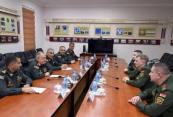
Recognizing the transnational nature of threats Central Asian states increasingly prioritize regional cooperation. Regular consultations joint exercises and information exchange mechanisms support collective security.
Regional formats complement broader frameworks such as the Shanghai Cooperation Organisation and the Collective Security Treaty Organization. However there is growing emphasis on region led initiatives that reflect local priorities and sensitivities.
Security cooperation builds trust and reduces the risk of miscalculation. It also enhances the regions ability to engage external partners from a position of coordination rather than fragmentation.
Balancing external security partnerships
External actors remain influential in Central Asian security affairs. Russia, China, the United States, and others provide training equipment and political support. Managing these partnerships requires careful balancing to preserve sovereignty and strategic autonomy.
Central Asian governments apply multivector principles to security cooperation just as they do in foreign policy. No single partner dominates all aspects of security engagement. This diversification reduces dependency and increases flexibility.
External assistance is increasingly evaluated in terms of long term capacity building rather than short term deterrence. Sustainable security institutions are the primary objective.
Non traditional security threats
Beyond conventional risks Central Asia faces non traditional security challenges such as cyber threats information manipulation and critical infrastructure vulnerability. Digitalization of government and economic systems introduces new attack surfaces that require protection.
Governments invest in cybersecurity strategies legal frameworks and specialized units. Cooperation with international partners supports skills development and threat assessment. Protecting digital infrastructure is now recognized as essential to national security.
Environmental stress water scarcity and climate impacts also intersect with security by affecting livelihoods and social stability. These links reinforce the need for integrated policy approaches.
Domestic governance and legitimacy
Security is closely tied to governance quality and public trust. Effective institutions transparent decision making and respect for legal norms strengthen societal resilience. Conversely governance weaknesses can exacerbate insecurity.
Central Asian leaders increasingly link security policy with reform agendas. Improving service delivery fighting corruption and expanding economic opportunity are framed as security investments. This narrative reflects lessons from past instability.
Public communication plays a role as well. Governments emphasize preparedness and confidence rather than fear. Maintaining social cohesion is a strategic priority.
Afghanistan as a potential partner
While security risks dominate discussion Afghanistan is also viewed as a potential partner in trade energy and connectivity. Engagement rather than isolation is increasingly considered necessary for long term stability.
Central Asian states support humanitarian assistance dialogue and limited economic interaction within pragmatic boundaries. These efforts aim to reduce instability drivers and foster mutual dependence.
This balanced approach avoids extremes of disengagement or overcommitment. It reflects regional realism and strategic patience.
Long term security outlook
The security landscape of Central Asia will remain shaped by post Afghanistan dynamics for the foreseeable future. However the region is not defined solely by vulnerability. Enhanced capacity cooperation and strategic maturity have strengthened resilience.
Security policy is evolving from reactive measures toward preventive and integrated strategies. This evolution reflects broader state building progress and regional confidence.
Central Asia’s ability to manage security challenges while pursuing development and openness will determine its role in Eurasia. Stability is increasingly seen as a product of governance cooperation and inclusion rather than force alone.
A cornerstone of regional stability
Security concerns and post Afghanistan dynamics represent a cornerstone of Central Asian strategic thinking. They influence foreign policy economic planning and social development. The prominence of this theme reflects its enduring relevance.
By approaching security holistically and cooperatively Central Asian states aim to transform risk into resilience. This approach positions the region not as a passive buffer but as an active contributor to broader stability.
By Faig Mahmudov


Similar news