China holds off on US trade talks, prioritizes strengthening its economy
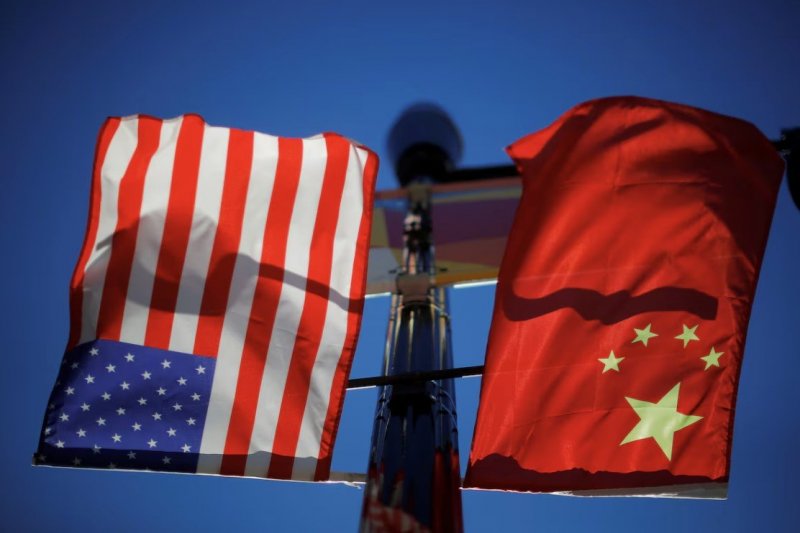
On April 25, China’s top leaders revealed plans to mitigate the impact of high US tariffs as the country prepares for the consequences of strained trade between the world’s two largest economies.
The absence of a stimulus bazooka in the plans reflected China’s quiet confidence in its economic recovery, and a cautious recognition that conditions could yet worsen, warranting the preservation of policy firepower, analysts told The Straits Times, News.Az reports.
China has shown that it is in no rush to hold trade talks with the United States or resort to drastic economy-revitalising measures just yet. Instead, it is focusing on what it has said for months it wants to do – stabilise and strengthen the fundamentals of its economy.
The Communist Party of China’s Politburo, a top policy-making body chaired by President Xi Jinping, noted at its monthly meeting on April 25 that China must “stay focused on getting our own house in order”, Xinhua news agency reported.
China will “use the certainty of high-quality development to counter the uncertainties of a fast-changing external environment”, according to the Xinhua readout.
US President Donald Trump shook up international trade in April with his announcement of “Liberation Day” tariffs on most countries in the world, hitting China the hardest at 145 per cent.
Such a steep tariff rate has effectively created a de facto trade embargo against China, which is struggling to pivot its economy from exports to consumption.
Production lines in many Chinese factories have ground to a halt, as traders put orders on hold in the hope that the tariffs may be eased after potential trade talks.
According to a readout of the Politburo meeting, the leaders have characterised the tariff war with the US as an international trade douzheng – a shift from more neutral words such as moca or friction.
The term douzheng, often translated as “struggle” or “fight”, is rooted in the party’s revolutionary lexicon and carries a political and ideological weight that stresses prolonged and no-holds-barred confrontation with enemies.
To prevail in this struggle, Chinese leaders renewed pledges at the meeting to keep China’s economy open and stabilise jobs, businesses, markets and expectations.
They called for a front-loading of the fiscal plan announced in March during the National People’s Congress or parliamentary sessions.
But they did not announce new stimulus measures beyond new lending facilities to support technological innovation, consumption and trade.
“In other words, policymakers are still in a wait-and-see mode,” said Mr Larry Hu, Chief China Economist at Macquarie Group.
Chinese analysts say the lack of stimulus measures suggests Beijing believes the economy has not yet deteriorated to the point where drastic action, which could come with negative side effects, is necessary.
“The Q1 data is actually pretty good, most indicators outperformed expectations,” said Ms Guo Shan, a partner at Chinese consulting firm Hutong Research.
Property sales are the only key economic indicator still in decline, although the pace of the fall has slowed. Ms Guo is hopeful that with local governments now flush with cash – thanks to a bond issuance window opened in late 2024 – they can fund property projects such as inner-city slum redevelopment, giving a boost to the struggling sector.
Given the leaders’ assessment that the economy is undergoing slow but steady recovery, China appears to be in less of a hurry than the US to go into trade talks.
Mr Trump insisted on April 24 that trade talks between the US and China are under way, despite China’s repeated denial of any such talks.
News.Az