Civil war and ballots: what Myanmar’s election really means


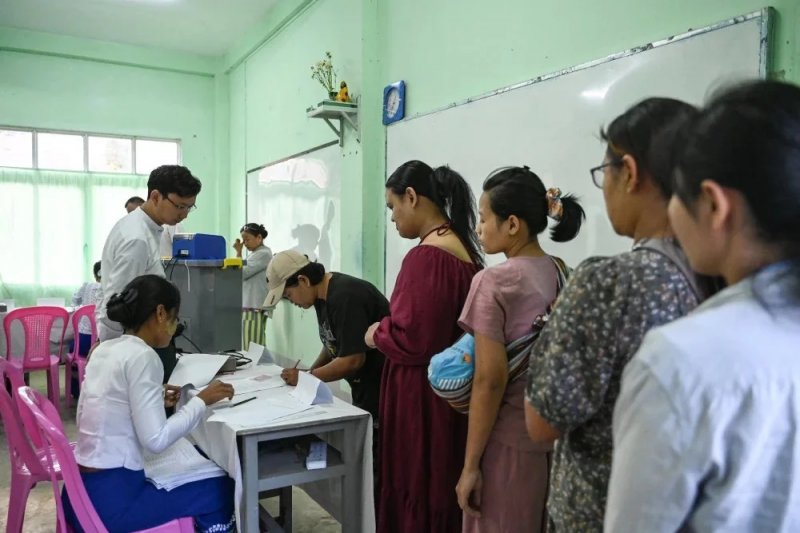
Myanmar has entered a moment that the ruling military junta describes as the beginning of a new political chapter. Ballot boxes are being placed, posters hung, and carefully curated images broadcast into the world — all meant to convince the international community that the generals in Naypyidaw are steering the nation toward democracy. But to accept this narrative is to ignore reality. What is unfolding in Myanmar is not a genuine election. It is a carefully engineered spectacle taking place under the shadow of war.
The context matters. Since the February 2021 coup, the country has been engulfed in one of the most violent chapters of its modern history. The Tatmadaw — Myanmar’s powerful military — seized power from the elected leadership and imprisoned the country’s most popular political figure, Aung San Suu Kyi. Protests that began peacefully were met with live ammunition, mass arrests, and torture. Resistance evolved into armed struggle. Today, Myanmar is not a functioning state holding elections — it is a battlefield fragmented between military zones, resistance-controlled areas, and territories governed by ethnic armed organisations. The junta does not control the whole country. It barely controls enough to pretend that it governs.
And yet, elections are being held.
The ruling generals frame this vote as a step toward national reconciliation. But there is nothing unifying about a process that systematically excludes the main democratic forces in the country. The National League for Democracy — Suu Kyi’s party and winner of previous elections by landslide — has been dissolved, its members jailed, exiled, or underground. Campaigning is restricted, protests are criminalised, and independent media operate under existential threat. What kind of election is possible when leading political figures are behind bars and millions of citizens cannot safely walk outside without risking airstrikes? Voting under these conditions is not a civic right — it is a performance.
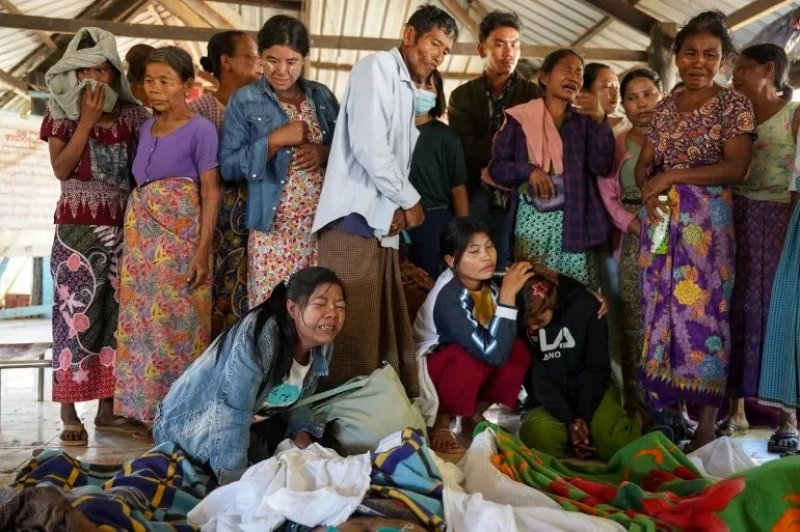
Mourners grieve as bodies are laid out at a cemetery before their burial following a Myanmar military air strike on a hospital that killed more than 30 people, in Mrauk U in northern Rakhine state, on December 11, 2025 [AFP]
The military knows this. But elections serve a different purpose. They are a tool for legitimisation.
Viewed through that lens, the decision makes political sense for the junta. They want to tell the world that Myanmar is stabilising, that the war is under control, that order is slowly returning. A government that holds elections is easier to recognise than one that relies openly on guns. It is an attempt to escape diplomatic isolation, weaken sanctions, and force regional powers — especially ASEAN members — to engage with the regime as a political authority rather than a military usurper. It is realpolitik disguised as democracy.
Inside the country, however, the war shows no sign of slowing. Ethnic resistance armies, strengthened by anti-coup civilian fighters, have made territorial gains in recent years. Entire military outposts have fallen. Towns have changed hands. The junta has responded with the only language it knows — airstrikes, artillery, and collective punishment. Villages are burned; civilians are displaced; food insecurity has become widespread as conflict zones expand. Holding elections in such conditions reveals not democratic confidence, but desperation. A state that governs through violence hopes to govern through ballots — or at least to create the impression of doing so.
But impressions do not feed the displaced. A mother fleeing to the jungle with her children because jets are bombing her village will not find comfort in ballot boxes. A student arrested for criticising the regime does not believe he is witnessing a democratic transition. The people know what the world must acknowledge: this is a war. The polls cannot erase that.
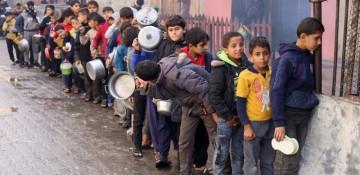
The humanitarian picture is just as bleak. More than two million people have been forced from their homes since the coup. Entire communities survive in forests without access to clean water or medicine. Humanitarian workers are blocked or targeted. The UN has warned that food scarcity could reach catastrophic levels. In this context, the notion of a national election is surreal — like decorating a house while it burns.
International reactions vary, but most democracies recognise the obvious — elections conducted by a regime that rules by force, excludes its opponents, and bombs its own population cannot be considered credible. Yet geopolitical complexity tempers the response. Myanmar is not isolated like North Korea nor strategically simple like post-coup Niger. It sits at the crossroads of South and Southeast Asia, bordering China, India, and Thailand. Beijing seeks stability and access. New Delhi weighs democracy against regional influence. ASEAN tries to balance pressure with engagement. Each stakeholder sees Myanmar not just as a moral question, but as a strategic one.
And so the junta hopes the world will eventually tire of moral outrage and accept the government it produces. But legitimacy is not earned by fatigue — nor by ballots cast under military oversight. True legitimacy comes from the consent of the governed, and in Myanmar, that consent is absent. The resistance — political and armed — remains strong. Young people who grew up believing in democracy are refusing to return to fear. Ethnic minorities who fought for autonomy for decades are unwilling to surrender gains. The civil war may not be close to resolution, but neither is the junta close to victory.
Where does this leave Myanmar? Tragically, at an impasse. Elections will not end the war. They will not free Suu Kyi. They will not bring displaced families home. Instead, they risk deepening divisions, prolonging conflict, and cementing military rule behind a democratic façade. The international community should treat these elections not as progress but as a warning: authoritarian regimes have learned to speak the language of democracy while undermining its very essence.
Myanmar does not need staged elections. It needs genuine negotiations, humanitarian access, and political inclusion — conditions where people vote not out of fear or resignation, but belief. A real democratic future for Myanmar will only be possible when the guns fall silent and the people — all people — are free to choose their leaders without coercion.
Until that day, every ballot cast will remain a symbol not of hope, but of what has been stolen.


Similar news