Complete guide to Caspian Sea environmental crisis


The ecological crisis unfolding in the Caspian Sea has become one of the most pressing environmental challenges in Eurasia, affecting Azerbaijan, Kazakhstan, Turkmenistan, Russia, and Iran.
This unique body of water—the world’s largest enclosed basin—has for centuries been a source of biodiversity, economic prosperity, and strategic opportunity. Today, however, accelerating climate change, unsustainable resource management, industrial pollution, and declining water levels are pushing the Caspian toward a dangerous threshold, beyond which the damage could become irreversible. Understanding the crisis requires a holistic view that spans hydrology, climate science, biology, energy policy, and geopolitics.
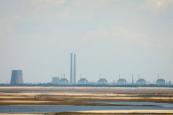
The most alarming trend is the rapid decline in water levels. Over the past several decades, the Caspian Sea has steadily retreated, and scientists warn that it could fall by 9 to 18 meters by the end of the century if current patterns continue. The causes are interconnected: reduced inflow from the Volga River, higher temperatures across the region, increased evaporation, and a disrupted water balance. Because the Volga contributes about 80% of the Caspian’s freshwater, any climatic shift in its basin immediately affects the sea. Extended droughts in Russia, record-breaking summer heatwaves, and declining precipitation are accelerating this downward spiral. Kazakhstan is already witnessing severe shallowing in the northeastern Caspian, where former coastal zones are turning into salt flats, destroying spawning grounds and upending local economies that depend on fishing and maritime transport.
Rising temperatures and changing water chemistry have intensified ecological stress. The Caspian has warmed by nearly 2°C in recent decades, a dramatic shift for a closed marine system. This has had devastating consequences for endemic species. The Caspian seal—one of the region’s most iconic mammals—has suffered a catastrophic decline of more than 90% over the past century. Mass die-offs now occur almost annually, driven by pollution, viral outbreaks, and the deteriorating quality of the water that seals depend on for survival. The collapse of such a keystone species is more than symbolic; it signals a broader destabilization of the sea’s ecological pyramid.
A similar fate threatens the Caspian’s legendary sturgeon populations, which once supported a global caviar industry. Historically, the region supplied up to 90% of the world’s black caviar. Today, overfishing, poaching, habitat destruction, hydropower dams, and falling water levels have pushed sturgeon to the brink of extinction. International organizations classify them among the most endangered fish groups on the planet. While fishing bans exist, they remain insufficient without unified law enforcement, reliable monitoring, and a coordinated regional strategy.
Industrial pollution continues to compound the crisis. The Caspian is at the heart of a major oil and gas extraction zone, with offshore and coastal infrastructure stretching across multiple countries. Aging pipelines, routine leaks, and periodic spills have degraded water quality and coastal ecosystems. Beyond hydrocarbons, the sea receives agricultural runoff, heavy metals, and untreated industrial waste carried by rivers from inland territories. These pollutants accumulate in seabed sediments, creating long-term toxicity that suppresses marine life and disrupts food chains.
The ecological decline carries serious socio-economic consequences. Falling water levels threaten ports, coastal infrastructure, and transport corridors. Key hubs—including Baku, Aktau, Turkmenbashi, Atyrau, and Astrakhan—are already facing operational challenges as shorelines recede. Maritime navigation becomes more difficult, dredging costs soar, and entire logistics chains are forced to adapt. For countries prioritizing the development of the Middle Corridor as a strategic East–West route, the Caspian’s transformation represents a direct economic risk.
Against this backdrop, regional governments increasingly acknowledge the urgency of coordinated action. Yet political declarations have not transformed into a consistent, binding environmental framework. Existing intergovernmental structures lack strong enforcement mechanisms, real-time monitoring capabilities, and cross-border ecological accountability. Environmental experts argue for a comprehensive governance model similar to successful frameworks in the Baltic or Mediterranean regions—an institutional system that integrates scientific data, surveillance, and joint decision-making.
Promising areas for cooperation include unified climate research programs, shared water-level monitoring networks, cross-border operations against illegal fishing, and the modernization of environmental legislation. Rebuilding ecosystems will require long-term investments, from sturgeon repopulation initiatives to the protection of seal habitats and coastal biodiversity. The region can also benefit from international scientific partnerships, climate finance, and technology transfer supporting sustainable water management and advanced pollution control.
The Caspian Sea crisis is not merely an environmental issue; it is a multidimensional challenge that touches on national security, economic stability, energy policy, food systems, and the geopolitical landscape. If current trends continue, the Caspian could face a fate similar to that of the Aral Sea—one of humanity’s greatest ecological disasters. Unlike the Aral, however, the Caspian still has time to avoid catastrophe, but the window for action is rapidly closing.
The future of the Caspian depends on a fundamental shift in policy priorities. States must treat environmental protection not as an auxiliary concern but as a core strategic imperative. Investments in scientific research, sustainable fisheries management, climate adaptation technologies, and environmentally responsible energy extraction are essential. Saving the Caspian Sea means safeguarding the livelihoods, cultural heritage, and economic futures of millions of people for whom this body of water is not just a geographical feature, but an integral part of identity, history, and prosperity.


Similar news