Elon Musk's SpaceX moves toward record-breaking Wall Street IPO


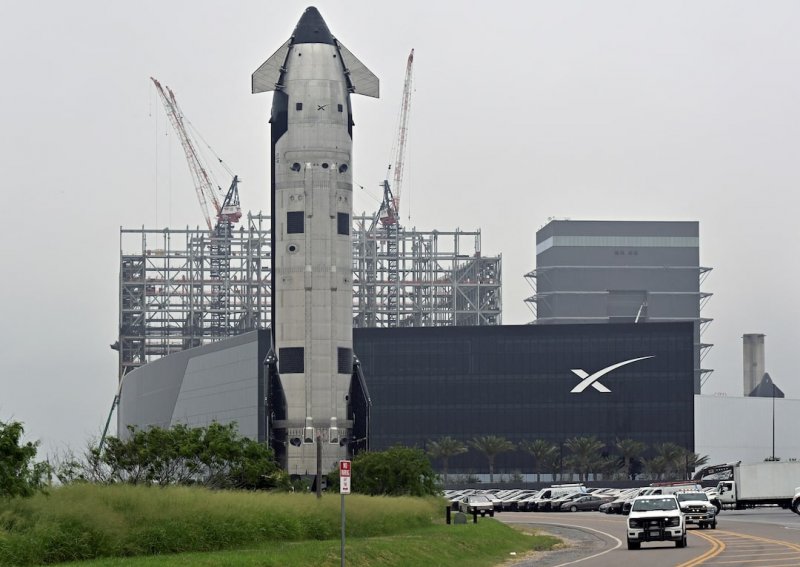
SpaceX led by Elon Musk has moved closer to a Wall Street listing on Wednesday after filing plans for what could become the largest initial public offering (IPO) in history, with the company seeking to raise up to $75 billion on public markets, News.Az reports, citing AFP.
If completed successfully, the IPO of the rocket and satellite company would far exceed any previous listing on record and further strengthen Musk’s position as one of the most influential entrepreneurs of his generation.
The filing states that Musk would continue to serve as CEO, Chief Technology Officer (CTO), and Chairman of the Board after the IPO.
RECOMMENDED STORIES
US media reports indicate that SpaceX is targeting a fundraising total of $75 billion and a potential valuation of up to $1.75 trillion once trading begins, which could occur as early as next month.
The company’s S-1 prospectus — a regulatory document required by the US Securities and Exchange Commission (SEC) before a public listing, containing detailed financial data, risk disclosures, and business strategy — marked the first time SpaceX has released comprehensive financial information in its 24-year history.
According to the filing, SpaceX generated $18.7 billion in revenue in 2025 but recorded an operating loss of $2.6 billion, as it invested heavily in next-generation rocket systems and artificial intelligence development.
The Starlink satellite internet division remains the company’s primary revenue driver, generating $11.4 billion in 2025, representing nearly 50 percent year-over-year growth.
The filing also revealed that SpaceX’s AI-related segment — which includes xAI and the social media platform X — generated $3.2 billion in revenue in 2025 but posted an operating loss of $6.4 billion, as the company aggressively expanded AI infrastructure and training capacity.
Capital expenditure in the AI segment reached $12.7 billion in 2025, and $7.7 billion in just the first quarter of 2026, highlighting the scale of investment required to compete in the artificial intelligence race against major rivals including Google, Meta, and Amazon.
SpaceX further disclosed a major commercial agreement to lease unused capacity in its COLOSSUS and COLOSSUS II data centers to rival AI company Anthropic. The deal is valued at $1.25 billion per month and runs through May 2029.
The filing arrives shortly after Musk faced a significant legal setback in his ongoing dispute with OpenAI, another competitor also preparing for a potential public listing.
With Anthropic also reportedly preparing for an IPO, analysts suggest that 2026 could become one of the most important years in Wall Street history.
The prospectus confirms a dual-class share structure that would leave Musk in firm control of SpaceX following the listing, avoiding governance disputes similar to those he has faced at Tesla, where shareholders have repeatedly challenged his compensation package and board independence.
Under the structure, Musk would control approximately 85 percent of voting power while holding around 42 percent of total equity.
The filing also acknowledges that this arrangement poses risks for outside investors, stating that Musk “will have the power to control the outcome of matters requiring shareholder approval, including election of all our directors.”
SpaceX additionally outlined a long-term vision to develop data centers in space, arguing that solar energy collected in orbit could represent “the only truly scalable solution” to the growing energy demands of artificial intelligence computing.
The company plans to begin deploying AI computing satellites as early as 2028, with ambitions to eventually reach 100 gigawatts of orbital compute capacity annually. Achieving this would require thousands of rocket launches per year and the transport of roughly one million metric tons of payload into orbit.
SpaceX described itself as uniquely capable of executing the plan, calling the challenge “incredibly difficult” and stating that no other company is currently positioned to complete it at commercial scale.
In a striking estimate, SpaceX said its total addressable market — defined as the maximum potential revenue opportunity for its products and services — stands at $28.5 trillion across its businesses, excluding China and Russia.
Reports also suggest the company is preparing for a June listing on the Nasdaq stock exchange under the ticker symbol “SPCX,” with trading expected to begin shortly afterward.
Wedbush analyst Dan Ives said in a note that the next step after the IPO could be a merger with Tesla, potentially forming an AI-driven “holy grail” company.
By Nijat Babayev


Similar news