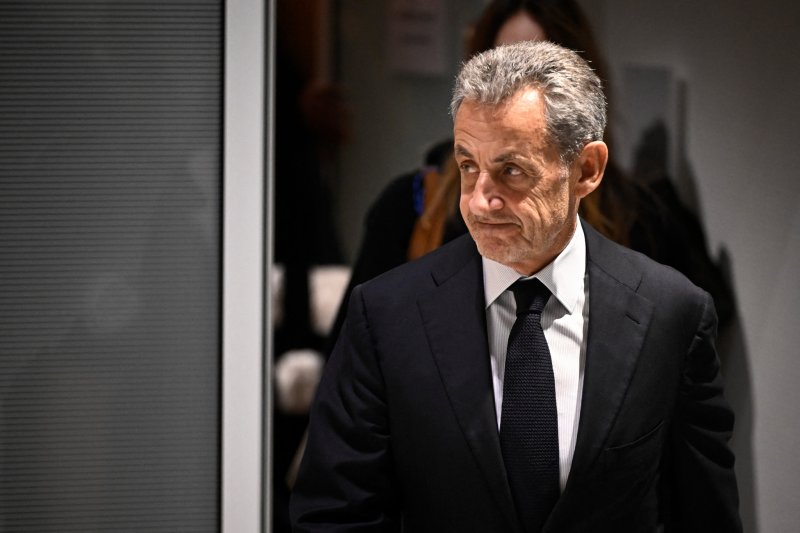
Sarkozy, who was sentenced to five years in prison in September for attempting to acquire campaign funds from Muammar Gaddafi’s Libya, has been incarcerated since October 21.
He became the first former head of an EU state to be jailed.
His lawyers are seeking his release, and the Paris Appeals Court will review the request at 8:30 GMT, with Sarkozy appearing via video call. The court is expected to make a decision later in the day.
While Sarkozy’s conviction is still under appeal, French law presumes his innocence until proven guilty, meaning the court will assess the need for his continued detention based on concerns such as evidence preservation or risk of fleeing. If granted release, Sarkozy could be placed under judicial control, potentially with house arrest and an electronic ankle bracelet.
The former president, who is married to singer and model Carla Bruni, has spent more than two weeks in solitary confinement.
But two bodyguards are occupying a neighbouring cell to ensure his safety.
Prison wardens have said the move is an insult to their profession, but Interior Minister Laurent Nunez has said it is necessary in view of his "status" and "the threats against him".
Sarkozy late last month also received a visit from Justice Minister Gerald Darmanin, despite warnings from France's top prosecutor Remy Heitz that it risked "undermining the independence of magistrates" before the appeals trial.
Sarkozy is the first French leader to be incarcerated since Philippe Petain, the Nazi collaborationist head of state, who was jailed after World War II.
His social media account last week posted a video of piles of letters, postcards and packages it said had been sent to him, some including a collage, a chocolate bar or a book.
"No letter will go unanswered," his account announced. "The end of the story has not yet been written."
On the day he entered jail, a large crowd sang the national anthem outside his home and urged him to "come back quick".