French Revolution: The origins of state terror in history - VIDEO


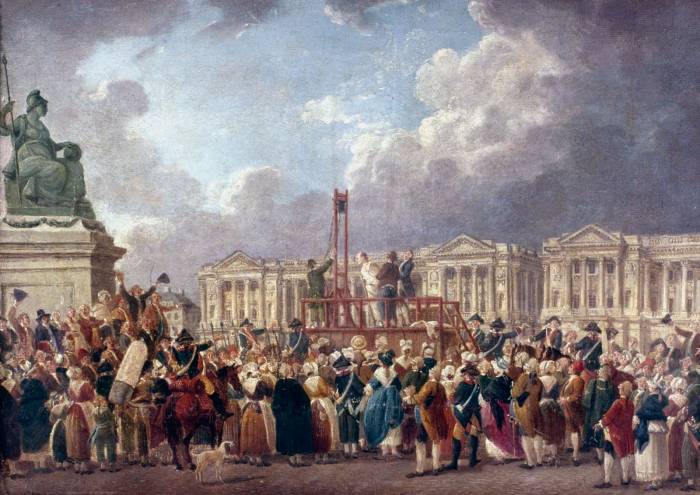

An execution by guillotine during the Reign of Terror, depicted in Une Exécution capitale, place de la Révolution, oil on paper mounted on canvas by Pierre-Antoine Demachy, c. 1793; in the Carnavalet Museum, Paris. Source: Britannica
In today’s world, the terms extremism and terrorism have become part of our everyday vocabulary, shaping global politics, societal fears, and the fabric of modern life. The challenges posed by these phenomena are complex, demanding an understanding that goes beyond surface-level definitions. To explore these pressing issues, News.Az had the privilege of interviewing Roger David Griffin, one of the foremost scholars in the fields of modern history and political theory.
Professor Griffin, a distinguished academic at Oxford Brookes University, is globally recognized for his pioneering work on the socio-historical dynamics of fascism and radical ideologies. His book The Nature of Fascism has become a cornerstone for understanding the ideological foundations of extremist movements, and his lifelong research sheds light on the roots of political and religious fanaticism.- The terms “terrorism” and “extremism” have become common in global discourse, especially after events like 9/11. As an expert, how do you define these terms?
- Both terms are problematic and difficult to define. Extremism is always relative to a center, which varies depending on the political and cultural context. In a liberal democracy, advocating for authoritarianism might be labeled extreme. But in an autocratic state like North Korea, calling for human rights could be deemed extreme.
Terrorism, on the other hand, is a tactic—using violence to disrupt the status quo. Historically, even events like the French Revolution could be seen as terroristic. Unfortunately, these terms are often weaponized to demonize those fighting for justice or human rights, while state terror—used by regimes like North Korea or modern China—goes overlooked despite its devastating impact.
- You mentioned the French Revolution. Could we argue that it marked a transition from individual to state-level terrorism?
- Yes, the French Revolution is a striking example. During the Reign of Terror, the state, under Robespierre, used the guillotine to enforce virtue and suppress dissent. This was a clear case of state terrorism disguised as a moral imperative. It shows how the language of terror can be twisted to justify violence.
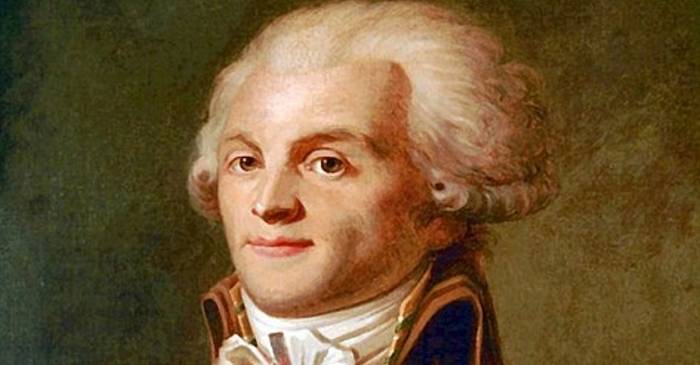
Maximilien Robespierre. Source: World History Encyclopedia
- How have modern technologies and social media influenced extremism and terrorism?
- Technologies have transformed communication and violence. In the 19th century, extremists relied on pamphlets and basic explosives. Today, with encrypted platforms like Telegram and access to advanced weapons, both state and non-state actors have unprecedented power. Social media also amplifies extremist propaganda, making recruitment and coordination easier than ever.
- What role do political, economic, and social factors play in the radicalization of youth?
- Radicalization often stems from a crisis of identity and belonging. For example, young Muslims in post-Christian societies may feel alienated and turn to global struggles for a sense of purpose. Similarly, right-wing radicalization is fueled by resentment and a perceived loss of cultural or economic security. In both cases, the underlying issues are societal disconnection and a lack of meaning.
- Is terrorism always tied to religion, or does religion play a secondary role?
- Religion is not inherently tied to terrorism. In religious societies, extremism may take on a religious form, but this is more about context than faith. For instance, Islamism is not genuine Islam, just as the Spanish Inquisition was not true Christianity. In secular societies, radicalization often manifests in ethnic or cultural terms rather than religious ones.
- What should governments do to combat terrorism, and how important is international cooperation?
- Liberal democracies must balance security with human rights, investing in education and social cohesion to address the root causes of extremism. Autocratic regimes often rely on oppression, which exacerbates the problem. International cooperation is vital for intelligence sharing and addressing global inequalities, which create fertile ground for radicalization.
- Can you give an example of a country successfully addressing extremism and terrorism?
- Northern Ireland is a notable success. Decades of violence involving the IRA were resolved through negotiation, culminating in the Good Friday Agreement. This was achieved through political will, grassroots activism, and international support. It shows that even deeply entrenched conflicts can be resolved with dialogue and empathy.
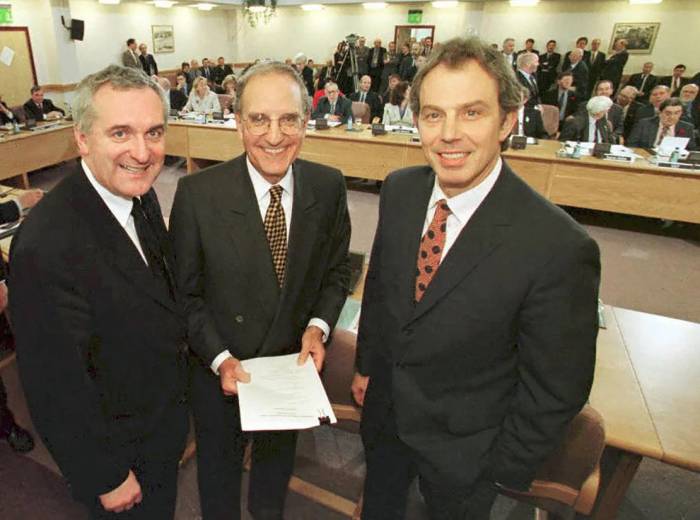
Then British Prime Minister Tony Blair, right, US Senator George Mitchell, center, and Irish Prime Minister Bertie Ahern, left, smile on April 10, 1998, after they signed a historic peace accord for Northern Ireland. Photo: Dan Chung/AFP/Getty Images
- Finally, what measures can the international community take to address extremism and terrorism globally?
- Ideally, nations would unite under principles like those in the Universal Declaration of Human Rights. Unfortunately, geopolitical divisions make this difficult. There is some international collaboration on intelligence and counterterrorism, but more focus is needed on addressing poverty, inequality, and other root causes of extremism. Without tackling these systemic issues, lasting solutions will remain elusive.


Similar news