Georgia denies BBC report alleging use of chemical agent against protesters


Georgia’s Ministry of Internal Affairs has rejected allegations that police used a prohibited chemical agent against protesters during the 2024 demonstrations in Tbilisi, calling the claims unfounded and unsupported by evidence.
Deputy Interior Minister Aleksandre Darakhvelidze dismissed the accusations during a meeting of the parliamentary Defence and Security Committee, insisting the ministry had never possessed the substance known as “camite” (bromobenzyl cyanide), News.Az reports, citing Georgian media.
“We did not have and could not have had any substance called ‘camite’,” Darakhvelidze said. “The facts presented in the BBC report are merely the journalist’s assumptions and are not based on any concrete evidence… The Ministry of Internal Affairs did not purchase, did not use and could not have used any camite, because we do not have such a substance at our disposal.”
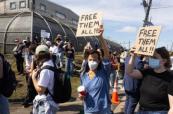
Darakhvelidze said that during the protests police used only those crowd control tools that “European or American police would use in similar situations,” adding that he was referring specifically to “mass riots, total attacks on police officers, attempted coups, and the storming of parliament.”
His comments came in response to a BBC investigation suggesting that security forces may have used bromobenzyl cyanide, a World War I–era chemical agent abandoned in the 1930s due to long-term health risks, rather than standard tear gas. The report alleged that camite may have been added to water used in water cannons.
The investigation cited research by paediatrician Konstantin Chakhunashvili, who examined symptoms reported by around 350 protesters. Nearly half, he found, experienced long-lasting effects, including headaches, shortness of breath, coughing, fatigue, vomiting and other symptoms, that persisted for more than 30 days. The BBC also reported the appearance of the toxic substances code “UN 3439” in a December 2019 special forces inventory list.
Georgian officials strongly denied the accusations. Prime Minister Irakli Kobakhidze described the BBC’s findings as “a cheap provocation planned according to the scenario of foreign intelligence services” and intended to “inflame a fading protest movement.” The government plans to file a complaint with the UK media regulator and, if necessary, pursue the matter in international courts.
Meanwhile, Georgia’s State Security Service has launched an investigation on charges of abuse of power and cooperation with a foreign organisation engaged in hostile activities. Those interviewed by the BBC — representatives of NGOs, doctors and protesters — are among the first to be summoned for questioning.


Similar news