Georgian PM says EU has exhausted leverage except visa-free travel


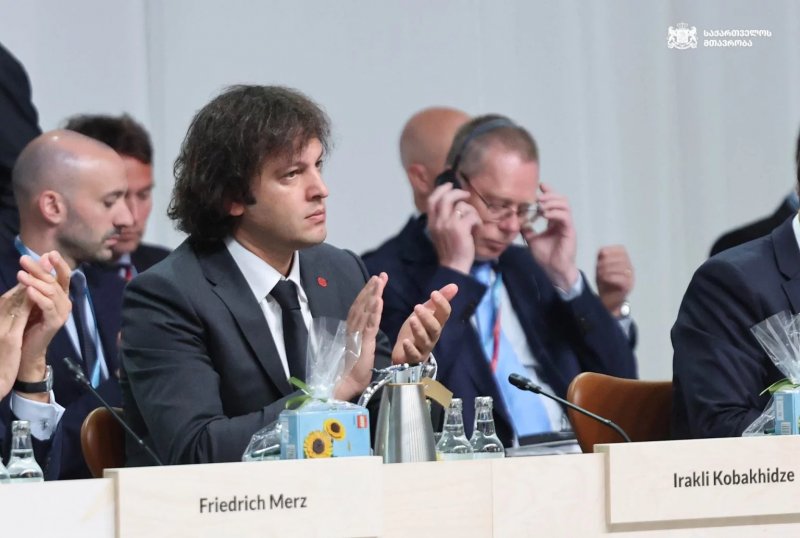
Georgian Prime Minister Irakli Kobakhidze has said Brussels has exhausted all means of exerting pressure on Tbilisi except for what he described as the "last theoretical instrument" — the possible suspension of visa-free travel for Georgian citizens.
Speaking a day after talks between Georgian and European Commission officials in Brussels on the EU's visa suspension mechanism, Kobakhidze accused certain political forces of attempting to use the issue as a tool of pressure against Georgia, News.Az reports, citing News Georgia.
"At one time, we effectively closed off all opportunities for blackmail. There is only one theoretical instrument left — the visa-free regime — and certain forces are trying to use this instrument to blackmail the Georgian people and our state. This is the wrong approach," Kobakhidze said.
RECOMMENDED STORIES
The prime minister said Georgia remained open to dialogue with the European Union but expected a change in the approach of European institutions and what he described as a more "fair" attitude towards the country.
The Brussels meeting focused on the EU's visa suspension mechanism, which could ultimately lead to the suspension of visa-free travel arrangements for Georgian citizens.
Georgian Foreign Minister Maka Bochorishvili described the discussions as the first working-level exchange under the relevant EU regulation. She said Tbilisi had presented detailed arguments on all issues that had prompted concerns in Brussels.
"This was the first meeting, not the last, and we expect the European side to take greater account of the legitimate reasons and circumstances that exist on the Georgian side," Bochorishvili said.
The European Commission, however, stressed that the meeting was technical in nature and centred on the factors that led to the activation of the visa suspension mechanism.
According to European Commission spokesperson Markus Lammert, the purpose of the process is to address the circumstances that resulted in restrictive measures against Georgia.
"It concerns breaches of commitments undertaken by Georgia under the visa-free regime in key areas of democracy and fundamental rights," Lammert said.
He added that Brussels had provided a detailed explanation of the reasons behind its decision and that both delegations had agreed to report the outcome of the consultations to their respective leaderships before discussing further steps.
The latest round of talks follows a European Commission decision that entered into force on 6 March, temporarily suspending visa-free travel privileges for holders of Georgian diplomatic and service passports for one year.
Brussels said the move was prompted by what it described as a deterioration in democracy, human rights and the rule of law in Georgia. In its annual report, the European Commission cited pressure on opposition figures and independent media, the authorities' handling of anti-government protests in late 2024, and the adoption of legislation that it believes undermines fundamental rights.
Under current EU rules, if the Commission determines that the underlying concerns remain unresolved, it may extend the restrictions on diplomatic passport holders for up to two years or propose expanding the visa suspension mechanism to cover all Georgian citizens.


Similar news