The Yerevan Macron did not see: The erased history of old Iravan - VIDEO


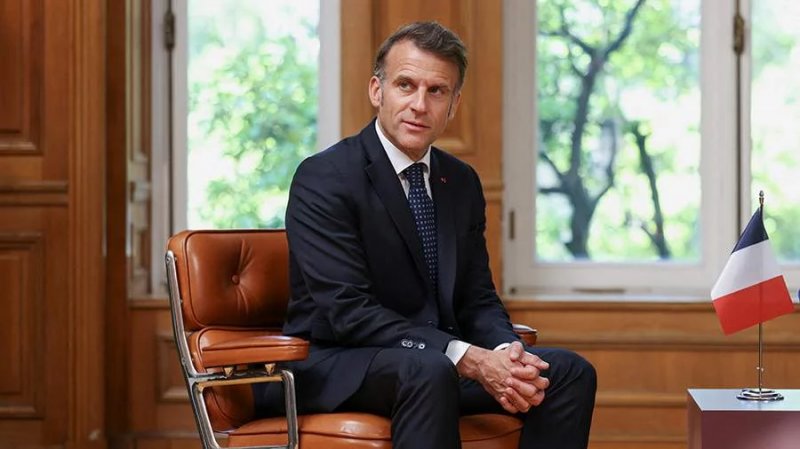
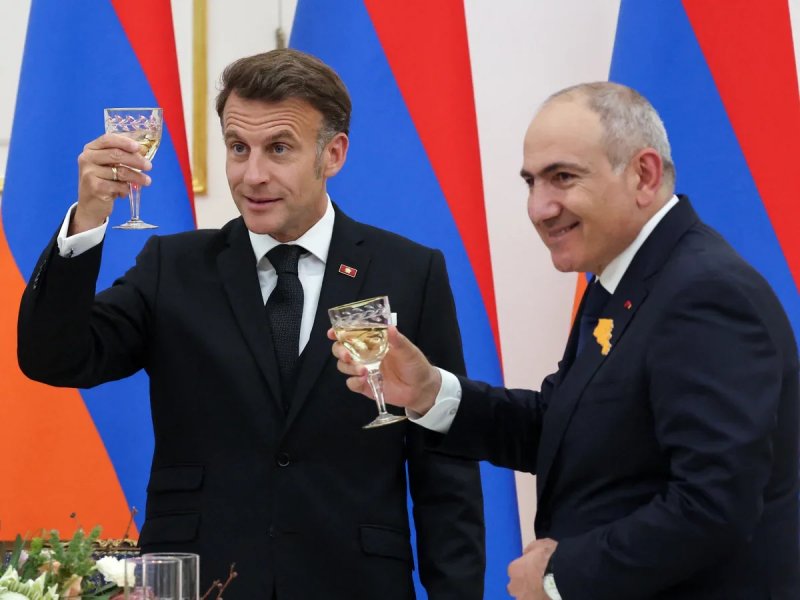
The recent visit of French President Emmanuel Macron to Yerevan was carefully staged as a demonstration of the special closeness between Paris and Yerevan. The public part of the trip included a series of symbolic gestures: Macron sang Charles Aznavour’s famous song La Bohème, an ode to old Paris, street life, bohemian freedom and the memory of the city. Armenian Prime Minister Nikol Pashinyan accompanied him on drums. The two leaders walked through the Armenian capital, Macron jogged through its streets, and the French delegation stayed at the Marriott Hotel — one of the most recognizable buildings in central Yerevan.
All of this was meant to underline the warmth of relations between the two countries, often described in Yerevan and Paris as “sister nations.” Yet behind this carefully constructed symbolism, one important detail remained unnoticed — or perhaps deliberately ignored: the hotel where the French delegation stayed stands on a site linked to the ruins of a destroyed Muslim medieval fortress and the palace of the Iravan Khan, also known as the Sardar Palace.
This historical layer lies at the heart of a new video by VMedia titled How Urbicide Shaped Yerevan: The History Macron Missed. The authors use Macron’s visit not as a pretext for political polemics, but as a lens through which to examine a deeper and more painful question: how the Muslim, Azerbaijani and Eastern past of Yerevan was almost entirely erased from the city’s public memory.
Credit: moderndiplomacy.eu
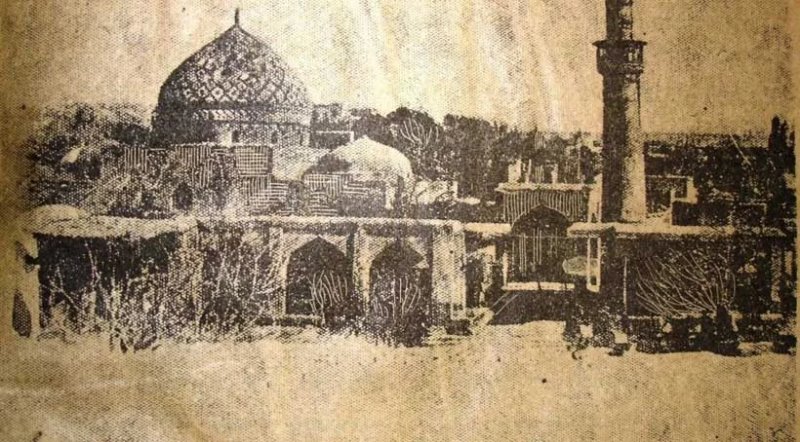
The history of this territory goes back to the early 16th century. In 1504, Safavid Shah Ismail ordered his commander Revangulu Khan to build a fortress on a rocky bank in the southeastern part of the Zangi River. Construction lasted seven years. The fortress was named after Revangulu Khan — Revan, later known as Iravan. Over time, it became not merely a defensive structure, but an important administrative, cultural and architectural center of the region.
In October 1827, the Erivan Fortress was captured by Russian troops under the command of General Ivan Paskevich, after which the Iravan Khanate was incorporated into the Russian Empire. However, the fortress itself was not destroyed immediately. On the contrary, a significant part of its architectural heritage survived for a long time. Its systematic destruction began later, after the establishment of the Armenian SSR, when the old urban fabric started to disappear. Today, almost no visible trace remains of the fortress that once shaped the identity of old Iravan.
The power of the VMedia video lies precisely in this contrast. Macron sings La Bohème — a song about Montmartre, about the memory of streets, about a city that carefully preserves its artistic and historical image. Parisian Montmartre, with its windmills, cobblestone streets and unmistakable atmosphere, has largely survived as a cultural symbol. Its past has not been erased; it has been transformed into part of French identity.
Old Iravan had a different fate. Its fortress, the Khan’s Palace — famous for its crystal hall, stained-glass interiors and refined Eastern architecture — as well as its mosques and other elements of the historic urban environment, were gradually destroyed. This process became especially extensive during the Soviet period, including in the 1960s, when entire layers of historical memory disappeared under the slogans of modernization and urban redevelopment.
In this sense, the situation appears almost paradoxical. While La Bohème became a declaration of love to urban memory in Paris, old Iravan — with its architecture, toponymy and cultural traces — was consigned to oblivion and destruction. What France treats as heritage was, in Yerevan, pushed out of public space.
The video’s persuasiveness is strengthened by the primary sources it brings together. The authors refer to 19th-century paintings by Franz Roubaud and Prince Grigory Gagarin, early photographs of palace interiors, military lithographs and accounts by travelers. These materials matter not merely as visual illustrations. They serve as historical evidence that the vanished Iravan was a real, architecturally rich and culturally significant urban space.
One of the most telling details is the fate of the Sardar Palace. The building, once described by contemporaries as one of the most beautiful structures in the East, was lost, and today a brandy factory stands on its former site. There is an almost symbolic cruelty in this fact: a space that could have become an object of restoration, study and intercultural memory was effectively erased from the city’s biography.
At the same time, VMedia does not resort to excessive dramatization. The video is not built on sensationalism or emotional pressure. On the contrary, its tone is restrained and analytical, which makes the material even more convincing. The authors do not so much accuse as demonstrate: a city can be destroyed not only by war, but also by the consistent erasure of its historical layers and by replacing memory with a new architectural and ideological reality.
That is why the term “urbicide” sounds particularly accurate in this context. This is not simply about the demolition of individual buildings. It is about the destruction of urban identity, about turning a multilayered historical space into a uniform image in which inconvenient fragments of the past are excluded from the official narrative.
Credit: The Guardian
Against this background, Macron’s visit to Yerevan acquires an additional dimension. The French president — whose country takes pride in preserving architectural heritage — found himself in a city where a significant part of historical memory had been erased. And it is precisely this history that he, in effect, did not see — or chose not to notice.
The VMedia video is important not only as a story about lost architecture. It is an attempt to return to public discussion the question of what Yerevan was before its historical image was radically rewritten. It is also a reminder that the memory of a city is not limited to what is convenient to show today to tourists, diplomats and allies. The real history of a capital is always more complex than the official picture.
In this sense, VMedia’s work goes beyond an ordinary historical video. It is an architectural elegy, a political and historical reflection, and an invitation to look at the modern South Caucasus through the prism of lost heritage. Because sometimes the most important thing in a city is not what is visible today, but what has been destroyed, forgotten and pushed out of memory.
By Ulviyya Salmanli


Similar news