Higher US tariffs push Japan into fifth-year trade deficit


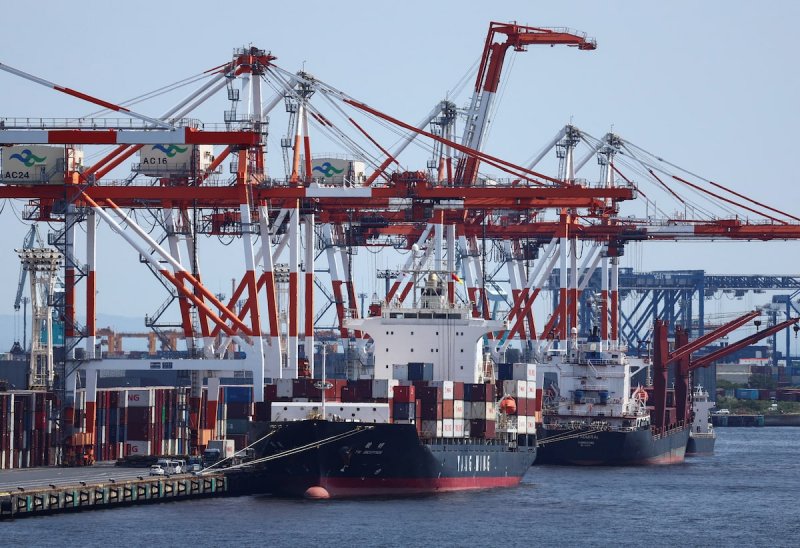
Japan recorded a trade deficit of 1.71 trillion yen ($10.7 billion) in the year ending in March, marking the fifth consecutive year in the red, as elevated U.S. tariffs introduced since April 2025 weighed on auto exports, according to government data released on Wednesday, News.Az reports, citing Kyodo.
Although the country’s trade deficit has narrowed significantly from the massive 22.09 trillion yen shortfall seen in fiscal 2022 during the COVID-19 pandemic, economists warn it may widen again in the current business year.
They cite the ongoing Middle East conflict, which is expected to increase import costs due to higher crude oil prices.
For fiscal 2025, the trade deficit contracted by 68.4 percent compared with the previous year, according to a preliminary report from the Finance Ministry.
RECOMMENDED STORIES
Exports increased by 4.0 percent to 113.24 trillion yen, supported by strong demand for semiconductors and other electronic equipment. Imports rose slightly by 0.5 percent to 114.96 trillion yen, driven by higher prices for platinum and other nonferrous metals.
Japan’s trade deficit with the United States declined by 22.1 percent to 7 trillion yen, the largest drop since fiscal 2008. This came as exports to the U.S. fell by 6.6 percent, marking the first decline in five years, while imports from the U.S. rose by 4.3 percent.
Motor vehicles, including buses and trucks, were the main factor behind the drop in shipments to the U.S., with automobile exports falling by 16.0 percent year-on-year.
Although U.S. import tariffs on Japanese automobiles were reduced in September to 15 percent from 27.5 percent imposed in April 2025 under a trade agreement between Tokyo and Washington, they still remain significantly higher than the 2.5 percent rate in place before U.S. President Donald Trump returned to the White House.
A ministry official noted that “while sales of Japanese hybrid vehicles remain strong in the United States” due to their fuel efficiency and relatively low prices, exports declined in fiscal 2025 following a sharp increase the previous year, when demand surged ahead of the implementation of U.S. tariffs.
For March alone, Japan posted a trade surplus of 667 billion yen, up 25.9 percent compared with the same month a year earlier. Crude oil imports increased by 2.4 percent in volume for the third consecutive month.
Regarding the impact of the U.S.-Israeli war against Iran on oil imports, the official said the March data reflected shipments of fuel from the Middle East that were made before the attacks began on February 28. The government has also worked to secure alternative supply sources, including from the United States.
Nonetheless, some effects of the conflict were already visible during the month. Exports to the Middle East dropped by 45.9 percent to 225.71 billion yen, while imports from the region decreased by 10.7 percent to 878.81 billion yen.
Japan’s imports of petroleum spirits—products derived from crude oil distillation and used as solvents and fuel—also fell by 25.3 percent. The official attributed this decline partly to disruptions linked to the Middle East conflict and transport issues in the Strait of Hormuz.
Koya Miyamae, senior economist at SMBC Nikko Securities Inc., said that a prolonged disruption or effective closure of the Strait of Hormuz would likely reduce Japan’s imports of crude oil from the Middle East as well as related products from Asia. He also warned that Japanese exports, including automobiles, to the region could decline significantly.
Miyamae estimated that if crude oil prices remain around $100 per barrel, Japan’s fiscal 2026 trade deficit could widen to about 10 trillion yen, with the possibility of expanding further to as much as 15 trillion yen.
By Nijat Babayev


Similar news